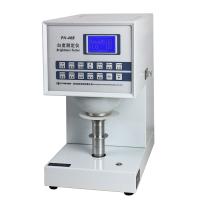
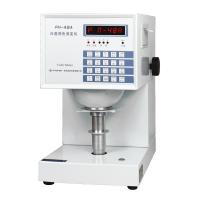
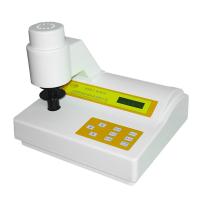
Paper performance: whiteness (brightness)
Paper whiteness is an important technical indicator of paper. Usually, the whiteness of a completely reflective diffuser (standard white) is specified as 100%. Compared with a paper sample and a standard sample on a Whiteness Meter, the whiteness with a small reflectance is low. Paper with high whiteness can increase the contrast between ink and paper, making the graphics clearer. Printing color graphics on paper with high whiteness can increase the vividness of colors. Color printing requires paper with higher whiteness and more realistic colors. However, high-whiteness paper is often not needed for book printing, because the paper has high whiteness, and the contrast of the printed matter is large. The readers' eyes look strong in contrast between black and white, and strong irritation to the eyes can easily cause eye fatigue. The whiteness requirement for general book paper is 55%-75%, the whiteness requirement for newsprint is 45%-52%, the whiteness requirement for offset color printing paper is 77%-87%, and the highest whiteness requirement for color printing coated paper is 80%-85% %.
Some printed matters, such as pictorial line text and color pictures, are printed on the same page. In order to make the color pictures bright, paper with high whiteness is used, but the contrast of the line text is too large. In order to solve this contradiction, two methods are generally adopted. One is to screen the line text to reduce the ink thickness and reduce the contrast; the other method is to add a light background color to the printed text to reduce the visual contrast. In addition, the price of paper with high whiteness is not high, because the process cost of papermaking to improve whiteness is not necessarily high.