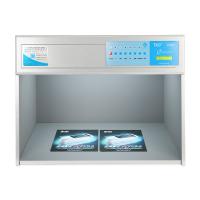
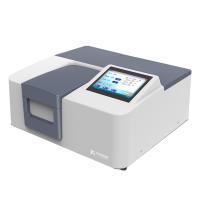
Colorimeters vs Spectrophotometers: Understanding the Differences Between Color Measurement Techniques
Color pervades every moment of our lives and influences our emotions, behaviors and beliefs in ways big and small, conscious and unconscious. Colors can set the mood, warn us of danger, provide important information, and even bring us joy. Despite the ubiquity of color, its description remains elusive, partly due to color perception that varies from person to person and partly due to the lack of descriptions for each of the millions of shades seen by the human eye.
Instrumental color measurement goes beyond human perception and vocabulary, allowing us to capture color information as objective data, creating a common language of color, which cannot be overemphasized for its importance to communication between and across industries around the world. Colorimeters and Spectrophotometer s are two types of professional color Measurement Instruments that both use sophisticated technology to accurately and precisely quantify and define color. Although these instruments are closely related, they have unique qualities that may make one more suitable than the other for certain types of measurements. 1 Understanding the characteristics of Colorimeters and Spectrophotometer s can help you choose the best tool for your application.
Colorimeter
Colorimeters are designed to perform a type of psychophysical sample analysis by mimicking human eye-brain perception. In other words, it's designed to see color the way we do. Using a set light source and CIE 10-degree standard observer combination and a tristimulus-absorbing filter that isolates a broad band, the Colorimeter extracts color information into tristimulus values to produce objective color data. If desired, this data can be compared to a standard or reference to determine acceptability.
Application: Colorimeters are so accurate that they allow direct color measurements, ideal for determining color differences, color fastness and strength, and general comparisons of like colors. Therefore, they are invaluable for color quality control and are mainly used in the production and inspection stages of manufacturing.
Cons: While Colorimeters can produce highly accurate color measurements, they also have some drawbacks. They do not recognize metamerism or colorant strength, are not suitable for use in color formulations, and cannot be used under variable illuminant/observer conditions.
Spectrophotometer
A Spectrophotometer is an instrument used for physical sample analysis by full-spectrum color measurement. By performing wavelength-by-wavelength spectral analysis of a sample's reflectance, absorbance, or transmittance properties, it produces precise data that cannot be observed by the human eye. A Spectrophotometer can also be used to calculate psychophysiological colorimetric information if desired.
Applications: Spectrophotometers offer greater flexibility and versatility than Colorimeters, in part because they offer a variety of light source/observer combinations and can be used in a variety of 45°/0° and d/8° Operate under geometric arrangement. As a result, Spectrophotometer s are able to measure metamerism, identify colorant intensities, analyze a wide range of sample types, and provide users with the option to include specular reflectance to account for geometric properties. Full-spectrum analysis also provides greater specificity for identifying color differences that Colorimeters miss. Spectrophotometers are ideal for a wide range of applications in the R&D phase, including color formulation and color system development, and color quality control throughout production.
Cons: Although historically Spectrophotometer s have grown larger and more complex instruments, making them unattractive for some, today's technological advances make it possible to manufacture smaller, easier-to-use Spectrophotometer s calculations, eliminating many of these problems. However, not all manufacturers require the capabilities of a Spectrophotometer and may find that a Colorimeter meets their needs.
Colorimeters and Spectrophotometers
Choosing a color Measurement Instrument requires an understanding of the pros and cons of Colorimeters and Spectrophotometer s described above. If you're still not sure which instrument is right for your purposes, these questions, inspired by Rochester Institute of Technology's David R. Wyble, can help you figure it out as you consider your options :2
Type of data required: Does the application require only spectral data or tristimulus values?
Instrument Geometry: Does the instrument have the required geometry for your application
Precision and Accuracy: What level of precision and accuracy is required to obtain satisfactory results?
Light source: Does the instrument have a suitable light source for your application?
Measurement Speed: How fast is the data acquisition? What kind of sample preparation is required?
Ease of use: Is the instrument designed with the user in mind for easy and fast operation?
Robustness: Is the instrument suitable for the environment in which it will be used? Can it withstand harsh factory conditions?
Software interface: Does the accompanying software allow you to easily collect, analyze and share data?
Product Quality: Not all color Measurement Instruments are created equal, whether they are Colorimeters or Spectrophotometer s. By choosing a good quality instrument, you can be sure that you will get the highest quality results.
- 1Application of Flame Atomic Absorption Spectrophotometry in Detection of Food Talc Powder
- 2Talking about the performance test of epoxy resin film coated on PET
- 3Spectrophotometer principle, structure and application do you know geometry?
- 4Principle, characteristics and application of ultraviolet Spectrophotometer
- 5Spectrophotometer Color Measurement Fundamentals
- 6Differences between visible, ultraviolet-visible, infrared, fluorescent and atomic absorption Spectrophotometer s
- 7Detection of nicotine content by Spectrophotometer
- 8How to detect the color difference of fluorescent color-changing materials?
- 9Liquid color difference detection solution