Introduction to professional terms about color difference meter color knowledge
Learning and using the Colorimeter is often met with some professional terms, for the "veteran" in the color management industry, these are a piece of cake. But for novices, these are somewhat difficult to distinguish and understand. In order to help users of Colorimeters, we share some commonly used color terms and explanations with you.

1. Brightness
Brightness is a term used in Colorimeters to distinguish the degree of lightness and darkness of colors. Generally, lightness is one of the important factors that determine the color direction, and the lightness value is also one of the key measurement data values of the Colorimeter.
2. Chromaticity
Chroma is a measure used to describe the intensity of the visual perception of color by the naked eye. This data value is also the main focus of the Colorimeter to measure the color, and it is the key factor to determine the color change. Testing with this data must not be taken lightly.
3. Chroma
The C standard chromaticity value is used in the chromatic aberratIon Meter, which is the main factor of the color display color. The main difference of the chromaticity is the vividness of the color.
4. Achromatic color
No color is non-color. The International Commission on Illumination (CIE) stipulates that the color with chroma of zero is achromatic, which is the value between black and white and gray between black and white. CIE stipulates that the world has absolute black and absolute white, which is also the basis for Colorimeters to achieve color measurement.
5. Blackbody
A blackbody is also known as a perfect radiator, an object that neither reflects nor projects light, but absorbs all the light that falls on it.
6. Blackbody radiation (blackbodyradiator)
Blackbody radiation is optically called Planckian radiation (Plankianradiator), the spectrum of black radiation is affected by temperature, and will continue to change as the temperature increases and decreases. Experiments have found that the black body radiation will change with the increase of temperature, the red, orange, yellow, green, blue color of the peak wavelength.
7. Color temperature (color temperature)
The term color temperature is rarely seen in the use of Colorimeters, but it is the most common keyword in the use of standard light boxes, which is used to mark the spectral characteristics of the light source. When the spectral distribution of some light sources is the same as that of black body radiation, the absolute temperature corresponding to the black body radiation is called the color temperature of the light source.
8. Color adaptation (chromatic adaptation)
The term chromatic adaptation comes from people's naked eyes. We know that our eyes are equivalent to a 170 million-pixel camera and can image in three dimensions. Human eyes not only have these functions, but also can quickly adjust to changes in the chromaticity and brightness of the external environment, which is chromatic adaptation.
9. Colorimeter
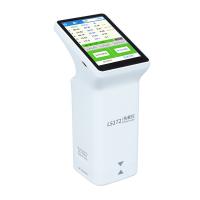
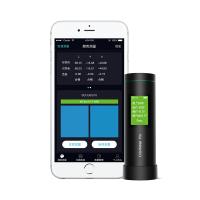
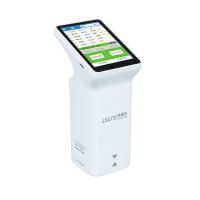
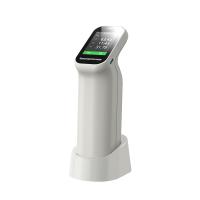
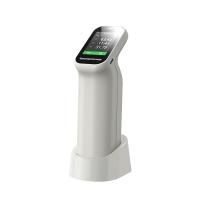
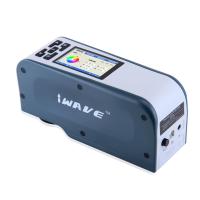
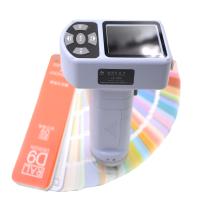
The color difference meter is the color difference meter, which is a measuring device developed to simulate the imaging principle of the human eye to analyze and measure the three-color data from the reflected or transmitted light of the object standard. This instrument is mainly to avoid errors caused by external environment, subjective consciousness and other factors in visual detection of color.
10. Colorimetric values
The chromaticity value is the three data of the third excitation value of the color stimulus characteristic of the color measured by the color difference meter. The ultimate goal of the Colorimeter measurement is to obtain the chromaticity value, and analyze the color change and color difference formation based on the chromaticity value.
11. Chromaticity diagram
The concept of the chromaticity diagram is derived from the Colorimeter, which refers to the graphic display of the color value obtained after the measurement and processing of the Colorimeter in the form of chromaticity coordinates on the plane. This is also an important form of Colorimeter data analysis, which can intuitively and quickly find color difference problems.
12. Calibration
Calibration is very important for the use of precision instruments. The purpose is to ensure that the precision instruments used meet the specifications or standards of manufacturers, users, or industrial construction industries.
13. Characterization
This refers to the process of pre-inputting a full color gamut or reproduction characteristics when we use a Colorimeter, and then using the instrument to perform precise output.
14. Complementary color (complementary color)
In fact, this optical concept means that when two colored lights are added together, they will be mixed in equal amounts to produce white light, or when added, they will be mixed in equal quantities to produce black. We call these two colors complementary colors.
These nouns and spellings are not particularly difficult to understand, but they are often used in industrial color testing, so mastering the meaning of these nouns and understanding them will help us analyze color information.

- 1Color difference meter and its application in Coating production
- 2Application of color reader in paper color difference control
- 3Principle, characteristics and application of Spinning & weaving precision color difference instrument
- 4Detection of film color retention with color reader
- 5Optical inspection structure for color readers: D/8 D/0 45 °/0
- 6Application of color reader in inks industry
- 7What is the difference between tristimulus Colorimeter and Colorimeter?
- 8FAQ of computer color reader and its solution
- 9Tristimulus Colorimeter:principle, application, operation and selection