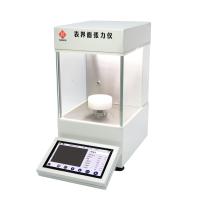
What is surface tension?
We all know that we can explain the properties of liquids in terms of the mutual attraction between molecules. This intermolecular attraction is called molecular cohesion or van der Waals force. Surface tension, interfacial tension, and similar phenomena are the basic physical phenomena used to explain molecular cohesion.
Specifically, the molecules that make up a liquid experience different forces on the surface than in the bulk. The forces suffered by the molecules in the body are symmetrical and balanced. And the molecules on the surface are attracted by the molecules in the body without reverse balance force. That is to say, it is subjected to the force of being pulled into the body. That is to say, try to reduce the surface area, so that this unbalanced state tends to a balanced state. Thermodynamics says: To minimize the surface energy of this system, this force is called "surface tension", also known as the free energy per unit area (J/m2), that is, the interface formed or expanded per unit area Minimum energy required. Its value is consistent with surface tension (N/m). Due to habit, the surface tension is commonly used to express the surface free energy, which plays an important role in the physical and chemical phenomena of the liquid surface. In daily life, the dewdrops on lotus leaves in the morning and the curved water surface in a cup are surface tension phenomena.

- 1Water surface tension measurement based on Electronic Balance
- 2Working principle of mechanical liquid meter interfacial tensIon Meter
- 3Comparison of Liquid Surface/Interfacial Tension Testing Methods: Plate vs. Ring Method
- 4Selection guide for Surface Tensiometers
- 5Application principle and precautions of platinum ring Surface Tensiometer
- 6Coating surface tension and its effects
- 7Coating process surface tension factor
- 8Three commonly used detection methods for surface tension
- 9Ceramic ink-jet surface tension, viscosity and solutions