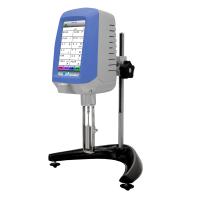
What is a torque rheometer? How does a torque rheometer work?
Torque rheometer is a satisfactory device for material flow research, plasticization, and thermal shear stability. It can be widely used in scientific research and production, and is an important instrument for scientific research and production guidance. The torque rheometer provides a dynamic measurement method closer to actual processing, which can be similar to actual processing, continuous, accurate, and reliable, and measures the rheological properties of materials, such as multi-component mixing, thermoplastic resin crosslinking, elastomers Effects of vulcanization, material dynamic stability and screw speed on system processability. It can also measure the curing properties of thermoset materials during processing, which is similar to the actual process. Typical samples are PVC, PE, PP, rubber, etc.
Torque rheometers are suitable for testing the rheological properties of polymers. Typical applications in polymer processing include:
Identify processing behavior
Evaluate Machinability
Mixing polymers with additives
Extrude profiles, films, etc. for further testing
Rheological test
Optimizing process parameters or performing quality control, etc.
We use torque rheometers for the following reasons:
Polymer processing in the molten state, e.g. extrusion, injection molding
Fluidity (viscosity) affects processability and product quality
Torque rheometers and measuring sensors are miniaturized production devices
The testing process is similar to the actual process
How is a torque rheometer used?
1. Installation
Torque rheometer DW5300 is used to study the thermal resistance and thermal stability, shear stability, dynamic rheological properties and plasticizing behavior of polymers. The mixing of multi-component materials, the curing of thermosetting resins, the vulcanization of elastomers, the influence of dynamic stability of materials and screw speed on the processing performance of the system, mainly used to determine and analyze the rheological behavior and processing performance of polymer materials , including thermoplastic resin, rubber and thermosetting materials, various premixed samples are also prepared for other physical and chemical performance tests.
When installing the machine, the staff should complete the following tasks: prepare and choose a brightly lit place; need to be well grounded; stay away from vibration sources;
The foundation should be level and can withstand a force of 7×10³N/m2;
1) Ground wire
Good grounding is required, and the grounding resistance should be less than 4Ω;
2) Power connection
Total power supply: three-phase, AC380V, 50Hz, output power: 12kw
3) pay attention
Compressed air source (0.7MPa) and cooling water source (for plastic extruder) should be prepared at the installation site;
There are precision instruments in the host, so please operate carefully, do not hit or shake violently, so as to avoid accidental damage.
2. Structure
This machine is composed of drive system, control system, frequency control system, temperature control system, test system and computer.
Drive System
1) It is driven by a variable frequency motor, with stepless speed regulation, and the speed is reduced by a reducer (speed ratio 1:23.12). It has high efficiency, good stiffness and a wide speed range.
Control System
2) Using AC220V power supply and "KM1" contactor, the control buttons "SQ1" and "SQ2" are installed on the operation panel of the host to control the opening or closing of the machine. The computer operating system should be selected for the test.
3) Frequency conversion speed regulation system, temperature control system and test system are controlled by computer.

- 1Application of Rheometer in Viscosity Test of Tomato Paste
- 2Understanding Rheometers in One Article - Principle, Application, Selection & Maintenance
- 3Rheometer polymer rheological performance
- 4Influencing factors of asphalt rheological performance
- 5How to calibrate the Rheometer? With calibrating steps
- 6Difference between Rheo-meter and Rotational Viscometer
- 7How to test rheological properties of colloidal materials
- 8Paint rheology phenomenon: What is the effect of viscosity change after coating?
- 9Influence of Leveling on Rheological Phenomena of Coatings