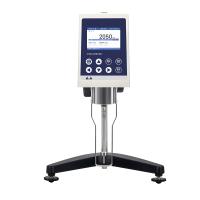
The Importance of Viscosity Testing in Chocolate and Cakes
Viscosity determines the quality of many foods
The last time you let a chocolate bar melt in your mouth, sliced into a moist cake, poured honey into your tea, or sliced into a delicious pizza, I bet you weren't thinking about viscosity. You probably didn't specifically think about quality either. You might just be thinking about the delicious taste and texture in your mouth, and maybe the calories! Quality is something we all appreciate, but let's face it, we're not thinking about the tiny details that make our food the quality we expect when we eat it. Fortunately for us, manufacturers are thinking about quality at every step of the manufacturing process, which is why viscosity is so important to them. Many factors can affect the quality of the food produced. during production,
Viscosity describes a fluid's internal resistance to flow. A fluid with a higher viscosity will pour more slowly and appear thicker than a fluid with a lower viscosity. When the properties of a material change, such as molecular weight and density, both of which affect how a liquid flows, viscosity changes and mass changes.
Why viscosity is so important
The texture of food can be greatly affected by changes in viscosity. The chocolate industry particularly relies on viscosity testing because the texture and fluidity of chocolate can be difficult to manufacture and maintain. The thickness of the chocolate in its molten state affects the final solid state. To get the right density, texture and flavor as the chocolate solidifies, the viscosity of the liquid chocolate needs to be carefully considered. After all, who wants to eat a block of chocolate instead of smooth and creamy?
In the baking industry, viscosity plays a very important role as it will affect the chances of phase separation and thus the products made from batter and dough. Precise positioning and maintaining the correct viscosity when baking or working with dough ensures that phase separation occurs at the right time in the baking process, affecting the quality of baked goods. If the batter is less viscous, the phases will easily separate at the wrong time, resulting in a poor quality cake. Have you ever had a cake that was crumbly, dry or flat? What a disappointment!
Viscosity testing is a tool used in nearly every food and beverage production process. This is a very important test that provides repeatable and reliable results, ensuring not only achieved but also guaranteed product quality between batches.
Measuring Viscosity Using a Viscometer
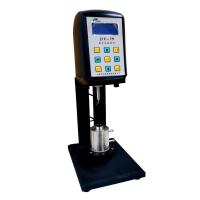
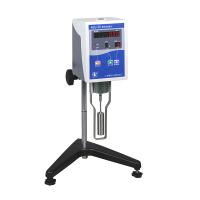
A common way to measure and track viscosity is with a viscometer. Today's viscometers are very easy to use and powerful technology thanks to Rotational Viscometers. These viscometers measure a wide range of viscosities from 200 to 106,000,000 with an accuracy ranging from ±1% to ±0.2%. The measurement of product viscosity is based on dipping a specifically selected spindle into a product sample. While the mandrel is spinning at a specific speed, vigorously agitated to create a vortex, the torque required to spin the mandrel at the set speed will be measured, based on the resistance created by the mandrel moving through the liquid. The instrument senses rotational resistance and then converts the measured torque mathematically to a viscosity value in centipoise (cP) or milliPascal seconds (mPa.s). Water is the base material with a viscosity base value of 1 cP. The viscosity of all materials relative to water was then measured. The Rotational Viscometer device will record and store up to 10,000 data points. Using the supplied software, flow curves can be viewed instantly, up to four data sets can be plotted simultaneously, and data can be displayed graphically. These results can be downloaded to an excel spreadsheet and the user has unlimited reporting possibilities. It is very important to track batches to ensure they have the same viscosity level throughout production to achieve a very good quality. These results can be downloaded to an excel spreadsheet and the user has unlimited reporting possibilities. It is very important to track batches to ensure they have the same viscosity level throughout production to achieve a very good quality. These results can be downloaded to an excel spreadsheet and the user has unlimited reporting possibilities. It is very important to track batches to ensure they have the same viscosity level throughout production to achieve a very good quality.
Flow resistance increases with the speed and size of the spindle. Different samples and materials require different types of spindles, depending on the number of samples available, the torque range used, temperature requirements, and material consistency. Due to the complete flexibility and configurability of today's equipment, users can interchange different spindles as required. For thicker and more viscous samples, parallel plate or conical spindles can be used. For thinner, less viscous pourable liquids, a concentric cylindrical spindle should be used. For gel-like materials, T-bars are an option.

The importance of temperature
Temperature will play a very important role in the game when measuring viscosity, as the sample will measure viscosity differently depending on the temperature it is exposed to. For example, the viscosity measurement of honey tested at room temperature may be very different from that of honey cooled or heated in the refrigerator. The test conditions for measuring viscosity should be strictly controlled, as temperature can seriously affect the results. For accurate viscosity measurements, the temperature of the food sample should be controlled within ±05°C. To help users maintain accurate sample temperatures, many viscometers have built-in RTD temperature probes and will display the temperature on the unit.
It is obvious that viscometers play an important role in the food industry. Viscosity is measured during the process or at the end of processing so that the final product meets acceptability and quality standards. Many times, samples are picked from the production floor and sent to a quality control laboratory for testing to ensure quality is maintained throughout the process.
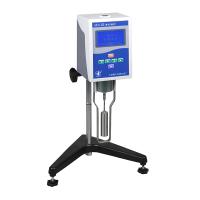


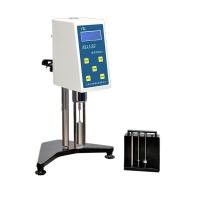
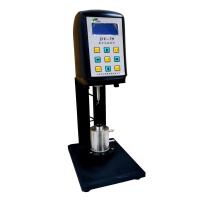


- 1Rotational viscometer - principle, classification, application and calibrating
- 2Application of NDJ-8S digital Rotational Viscometer in viscosity measurement of cosmetic raw materials
- 3NDJ-5S digital Rotational Viscometer accurate measurement of natural oil viscosity
- 4Viscosity of polypropylene (PP) amide measured by NDJ Viscometer
- 5Application of HBDV-1H swirl/spin High Temperature Viscometer in Viscosity Determination of Plastic Particles
- 6Rotational viscometer selection guide: How to choose the right viscosity equipment for you?
- 7Principle, type and accuracy control of Rotational Viscometer
- 8Which Viscometer to Choose for Licorice Extract Viscosity Testing? How to Test?
- 9Application of Rotational viscometer in Waterborne Polyurethane Adhesive