Application of Gloss Meter in Detection of Appearance Color of Color Rubber Barbell Sheets
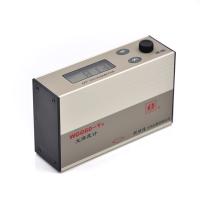
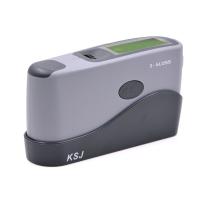
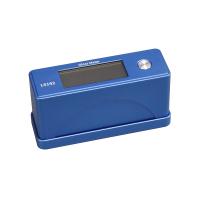
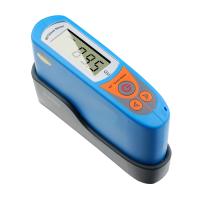
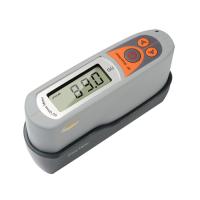
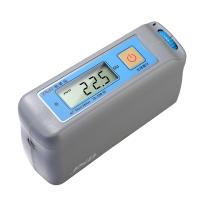
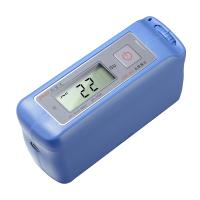
The barbell is very familiar to fitness enthusiasts, and of course ordinary people also know it. Rubber barbell plates are accessories and props for barbells. Generally, in order to improve their aesthetics, high-gloss rubber is often preferred to make them. In the production process, the gloss detection of rubber is one of its important quality indicators, which is generally measured by a gloss meter.
Commonly used fitness equipment is mainly composed of steel, rubber and other materials. The surface of the steel is usually painted to achieve a satisfactory appearance and color effect. The rubber is modified natural rubber, which is filled and cured with imported azo pigments. Uniform color. If the rubber barbell has color difference or dull luster, it will affect the overall appearance of the equipment. Especially for some customized high-end gym equipment products, the requirements for the appearance quality of the product will be stricter. In order to control the appearance color and gloss of the rubber barbell , it needs to be detected by special instruments.
The glossiness of the rubber barbell refers to its ability to reflect light on the specular surface of the illumination light. It is often compared with a standard plate with known glossiness. The larger the reading, the stronger the ability of the material to reflect light. The surface of the commonly used rubber barbell plate has a high gloss, which makes its appearance more colorful. Of course, the glossiness requirements of different materials will be very different. When testing, the glossiness standard negotiated by the supplier and the buyer shall prevail.
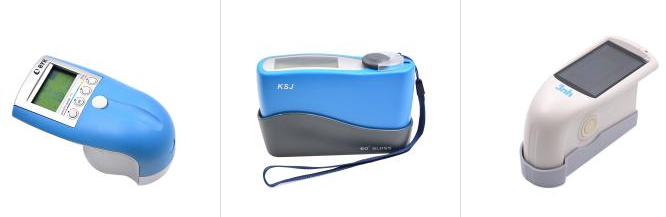
For the measurement of the glossiness of colored rubber barbell sheets, a sophisticated photoelectric Glossmeter is generally used. The measurement method is to irradiate the light of the standard light source on the surface of the sample at a specified incident angle, and use a photocell to measure the reflection component in the mirror direction (that is, the reflection direction symmetrical to the incident angle direction).
Before using the gloss meter to measure, first use the instrument to calibrate the instrument with a standard gloss plate. At present, many gloss meters on the market are intelligent, and they can be automatically calibrated when they are turned on. Then use the calibrated gloss meter to measure the sample, and put the instrument directly on the sample to take the reading. Take the arithmetic mean of the three tests as the test result. If there is more than 2 gloss units between the two values, the test should be resampled. The unit of gloss is generally expressed in GU, and the angle of incidence is recorded in parentheses.

- 1Gloss inspection method of slurry inks
- 2Principle and Application of Glossiness Tester
- 3Working Principle and Application of Metal Gloss Meter
- 4Basic principle and application analysis of insulating paint gloss Detector
- 5Working principle and application analysis of film Glossmeter
- 6Principle and application analysis of microporous gloss meter
- 7 FZ/T 01097 Analysis of fabric gloss test method
- 8Evaluation and Application of Optical Properties of Powder coatings
- 9Coating coatings - Determination of surface gloss and Gloss meter
-
![KSJ WGG60-Y4 high-precision Glossiness Meter, special for thin film industry, built-in lithium battery]()
-
![KSJ MG68-F2 intelligent Gloss meter, projection angle 60 °/85 °]()
-
![KSJ MG268-F2 Intelligent Gloss Meter 20 °/60 °/85 ° Gloss + Haze + reflectance]()
-
![CHINA LS192 high-precision Glossmeter 60 °/1000GU Measurement]()
-
![DONGRU DR268 color screen three angle Glossmeter 0-2000Gs]()
-
![DONGRU DR61S Glossmeter 0-200Gs]() DONGRU DR61S Glossmeter 0-200Gs$ 314.00
DONGRU DR61S Glossmeter 0-200Gs$ 314.00