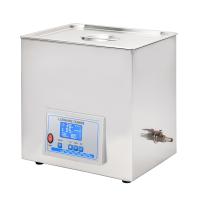
10 Tips for Ultrasonic Cleaner Choice
When choosing the right ultrasonic cleaner for your job, you should do it and think carefully. Like which features are important to you? When you master these 10 tips below, you can choose an ultrasonic cleaner to get the job you need it done at a great price. The 10 tips are as follows:
1. Ultrasonic cleaning tank size
In other words, how many parts are being cleaned or how many samples are being processed?
Measure the dimensions of the largest part to be cleaned (or number of flasks or beakers to be processed)
Choose units that have tanks that can accommodate them
Also, pay attention to the dimensions of the part or sample basket.
You also need to know how deep your cleaning fluid works, as it is related to the size of the parts being cleaned. The working depth is the distance from the basket to the surface of the liquid on the bottom surface of the interior of the filled ultrasonic cleaning tank. Because the parts to be cleaned need to be completely submerged in the liquid. On the other hand, sample preparation may require less depth since the entire container does not have to be submerged in the solution.
Product specifications for benchtop ultrasonic cleaners may not contain this information. If not, feel free to ask the manufacturer or supplier. Manufacturers of large industrial tanks, on the other hand, often report tank depths and working depths.
2. How do you use the ultrasonic cleaning equipment?
Ultrasonic cleaners do much more than clean parts like gears, carburetors, PCB boards, and surgical instruments. In the laboratory, they are widely used for degassing solvents, dispersing nanoparticles and emulsifying, dissolving, dispersing and preparing laboratory samples.
If you're cleaning parts, here are some things to consider before you start choosing:
1. The type of pollutant to be removed. As you can imagine, there is a big difference between removing coolant from machined parts, varnish deposits from carburetors, ink from printing, and blood and tissue debris from surgical instruments.
2. The composition of the product to be cleaned. Different parameters apply to cleaning aircraft engine components and glass capillaries. Requires compatible cleaning fluid and ultrasonic cleaning frequency.
3. How to use the parts after cleaning?
4. How do you define "clean"?
5. Do you want to clean batches or individual parts?
6. Component size and weight
Once you've determined what you want to accomplish, these points will help you narrow down the options to make a good ultrasonic cleaner choice. Then it's time to contact NBCHAO Mall for specific advice.
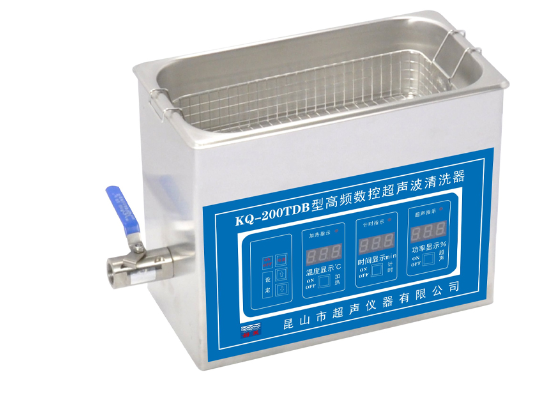
3. Add the sample basket to the specification sheet of the ultrasonic cleaner
Baskets support parts and sample containers in ultrasonic cleaners. They affect cleaning and sample handling efficiency, and remember: protect tanks from damage.
Baskets with insulated handles allow easy placement and removal of parts cleaned in hot liquids. They also keep parts, flasks, and beakers off the bottom of the tank, dampening vibration and reducing cleaning effectiveness.
Regarding tank life, remember that the bottom of the tank is the diaphragm. Any solid object, especially a metal part or metal shavings, can act as a drill while the ultrasound is running. Over time, this can punch holes in the tank. This is a good enough reason to use a basket.
Some baskets hang from the rim of the jar. Others feature rubber-coated feet that sit near the corners of the tank bottom for minimal vibration. Fine mesh baskets for small parts can be placed in beakers or standard baskets.
4. How to specify the ultrasonic frequency
The frequency of an ultrasonic cleaner is generated by a generator-powered transducer bonded to the bottom of the tank. They vibrate in kilohertz (kHz or thousands of cycles per second) above the hearing range (about 20 kHz).
Most ultrasonic cleaners operate at a frequency of 35 to 45 kHz. This frequency range is ideal for most cleaning tasks.
Lower frequencies such as 25 kHz produce larger bubbles. When these bubbles burst, they release massive amounts of cleaning energy. A good ultrasonic cleaner for rough cleaning, such as removing abrasives or polishing pastes, will run at a lower frequency to be more effective.
Note that the lower the frequency, the louder the cleaning operation will be. When running at 25 kHz, a soundproof can lid with insulation is a good idea. Another useful accessory is a noise-proof box in which to place the unit.
Higher ultrasonic cleaning frequencies produce smaller cavitation bubbles. They cover fine, complex surfaces more effectively and are softer than low frequencies.
For fine cleaning of very delicate jewelry, electronics, and soft metals with polished surfaces, consider equipment that operates at 80 – 130 kHz. If cleaning capillaries or Spectrophotometer cuvettes, use a sonic cleaner operating at 80 kHz or higher.
If cleaning a variety of materials, consider a dual-frequency ultrasonic cleaner. It can be set to 25 kHz for basic cleaning and 45 kHz for fine cleaning.
5. How to manage the temperature of ultrasonic cleaning solution
Ultrasonic cavitation generates heat, and many cleaning tasks are faster and more efficient when using a heated solution. For example, thermal cleaning solutions are suitable for removing oils, process coolants and a host of other contaminants from almost any surface you can think of.
如果满足您的要求,则超声波清洁器可以通过使用恒温器控制的加热器来提高生产量。台式超声波清洁器就是例子,它们可以逐步调节至80⁰C。
请注意,高于80⁰C的气穴现象被抑制,清洁效率趋于稳定。
加热溶液无法增强某些清洁操作。一个例子是从手术器械中去除血液。冷却盘管可作为附件提供,以帮助控制清洗液的温度。
6. Degas模式加快了解决方案的准备
新鲜制备的超声波清洗液中含有抑制气蚀的夹带空气。
可以通过两种方式清除残留的空气-让设备在无负载的情况下运行一段时间,或指定具有脱气模式的清洁器以获得更快的结果。
脱气模式通过打开和关闭使气泡聚结,上升到表面并破裂而发挥作用。
7.扫描模式的好处
扫频会在清洁器的超声波频率上产生轻微的±波动,并起到使清洁作用均匀的作用。这样可以避免所谓的
一、“热点”或更强烈甚至可能破坏空化作用
二、“死区”或没有清洁的地方
三、谐波振动会损坏PCB等精密零件。
8.脉冲模式增强超声波功率
如果您要清洁污染物特别顽强的产品,请指定配备脉冲模式的超声波清洁器。在某些型号上,脉冲模式可将超声波功率提高到20%,以去除顽固的污染物。
如果要对溶剂进行脱气,请选择具有脱气模式或脉冲模式的型号。没有这些模式的超声波清洗器也会使溶剂脱气,但速度会较慢。
9.了解超声波功率
超声波清洁器运行时,会平均消耗电能,但会定期释放电能,以产生可塑造超声波信号的声波。
一些制造商会报告超声波峰值功率,还有一些制造商会报告平均功率,而另一些两者都会报告。比较设备时,您需要According to相同的标准进行比较。
通常,更大的功率表示清洁更快,更有效,但不一定总是更好。过多的功率会损坏电子零件,软金属(例如铝)和其他易碎物品上的表面光洁度。 溶液量越大,清洗所需的超声波功率就越大。大多数清洁器的平均功率为每加仑50至100瓦,因此水箱越大,所需的功率就越多。
Do not attempt to increase the effective power of an ultrasonic cleaner by underfilling the Water Tank. The ultrasonic cleaner generator of the power converter is tuned to a specific fill level. Operating the unit with less fluid can damage the generator and result in less effective cleaning.
10. Select accessories
A variety of accessories are available to support the use of ultrasonic cleaners. Mixing, dissolution and dispersion are aided when suspending samples in a Water Bath with surfactants. Use Erlenmeyer flask holders, flask clamps, test tube racks or specially designed lids to secure beakers.
Beakers and beaker holders are also useful when cleaning small parts with volatile media. If a high bath temperature is a concern, a cooling coil connected to the cold water line can be used as a heat exchanger to prevent the bath from becoming too hot.
In this article, we have not covered all the points of choosing an ultrasonic cleaner. Of course, if you have special requirements for cleaning samples, the professionals of NBCHAO Mall will be ready at any time. Please give us a few minutes and we will answer your questions.
- 1Ultrasonic cleaning machine application field
- 2How does an ultrasonic cleaner work?
- 3How to choose an explosion-proof ultrasonic cleaner?