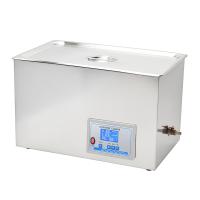
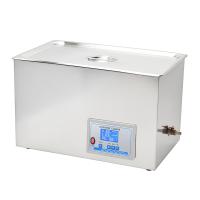
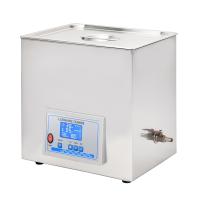
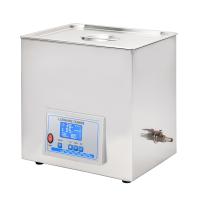
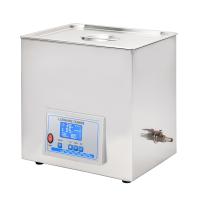
How to choose an explosion-proof ultrasonic cleaner?
Ultrasonic cleaning with volatile (flammable) solvents creates a hazardous location according to the NEC and NFPA. Compliance requires you to follow strict procedures, including selecting an explosion-proof ultrasonic cleaner or taking special precautions when cleaning with low-flash-point volatile solvents. This article describes volatile solvents, volatile solvents used in ultrasonic cleaning operations and how to comply with regulations including explosion-proof ultrasonic cleaners.
What is Flashpoint?
Flash point refers to the temperature at which a specific organic compound releases a vapor sufficient to ignite in air when a source of ignition is provided. Gasoline fumes are an example. Although you can extinguish a race by dousing it in gasoline, this practice is not recommended because it can ignite gasoline fumes.
Therefore, when choosing an ultrasonic cleaning machine, it is necessary to consider that not only the volatilized solvent will evaporate, but also the heat generated during the ultrasonic cleaning process will accelerate the evaporation of the solvent and the generation of steam.
This is a good reason to choose an explosion proof ultrasonic cleaner.
Example of using an explosion-proof ultrasonic cleaner
The following examples use IPA, but can be applied to other volatile solvents.
Surgical implants. One of the common applications is cleaning surgical implants. These are often cleaned with IPA. The reason is because it evaporates quickly and is relatively non-toxic and residue-free, but requires an explosion-proof ultrasonic cleaner.
Small X-ray tube assemblies are cleaned with volatile solvents in explosion-proof ultrasonic cleaners to produce absolutely contamination-free results. In the example using three steps, the first step uses a solvent to remove oil deposited on the stainless steel/Kovar components. After this cycle, the tank was emptied and filled with acetone in a second cycle. After evacuating the acetone, give the vessel a third ultrasonic cleaning to refill with solvent to achieve the extreme cleanliness required.
Electronic Component. Printed circuit boards, motherboards, and other electronic assemblies can accumulate flux and other contaminants during manufacturing and need to be removed before shipping. The PCB manufacturer may be required to use flammable solvents to accomplish this. The process is faster, safer and more effective than using a Spray Gun and brushes, which can damage delicate solder joints.
Regular cleaning of powder coating nozzles is an important step in maintaining a good paint finish. A supplier of powder-coated parts to the transportation industry uses IPA solvent in explosion-proof ultrasonic cleaners to effectively remove powder residue that accumulates on nozzles.
Isolate the solvent from the environment
This method works well when the parts to be cleaned are relatively small and the cleaning is done occasionally rather than as a full-time procedure.
Carefully place the parts in a flask or beaker and add enough solvent to ensure they are completely submerged. Cover the container loosely to reduce steam generated during cleaning.
Do not seal the container tightly as expansion due to heat from ultrasonic cavitation may cause the container to rupture.
In this case, you can use tap water and surfactant in an ultrasonic bath. Before proceeding, remember to degas the solution by selecting the "Degas" mode (if equipped) or by running the cleaner on empty for 15 to 20 minutes or until air bubbles no longer rise to the surface.
Flask clamps can be used to hold the flask in place in the mesh basket, and beaker lids can be used instead of the basket to support the beaker.
In either case, the bottom 1-2 inches of the container should be submerged in water. Ultrasonic energy will penetrate the glass wall and cavitation will occur in the IPA. At the end of the process, carefully remove the dry parts, which will be residue-free.
Additional Safety Precautions When Working with Flammable Solvents
As already mentioned, when cleaning ultrasonic equipment with flammable solvents, so-called danger zones can form due to the cleaning solvent and solvent fumes. Fumes require ventilation using an approved ventilation system.
- 1Ultrasonic cleaning machine application field
- 2How does an ultrasonic cleaner work?
- 310 Tips for Ultrasonic Cleaner Choice