How to choose and use precision electronic balance test weights?
Weighing accuracy is the main standard for precision scales, analytical balances and moisture analyzers, whose readout (minimum weight difference displayed) and linearity (± deviation from actual weight) are governed by GLP, ISO and other standards. When weighing scales from milligrams to tons without automatic internal calibration (see below), test weights play a role that cannot be overemphasized. The type of calibration, whether internal or external, is noted on the scale's specification sheet.
Today's precision test weights are very different from those found on traditional grocer's and pharmacist's balances, where the required weights are placed on one platform and the product is weighed on another. When the indicator of the scale points to the middle, the desired weight is achieved. Today, product scales that are sold by weight need to be certified to be legal to trade. Examples can be found on the deli counter of the supermarket. Check its accuracy regularly with test weights.
Test Weight Classification
Because a scale can never be more accurate than the test weights used for calibration, test weights are manufactured to ensure extreme precision. The choice of test weights is usually specified in the operating manual of the external calibration scale. As a general rule of thumb, the test weight should be equal to or close to the maximum capacity of the scale.
Test weights are classified by the internationally recognized Paris OIML: International Organization of Legal Metrology (Légale Internationale Métrologie Légale). Created in 1955 to promote the global harmonization of legal metrology procedures that support and facilitate international trade. The OIML specification R111-2004 divides the test weights into seven precision classes E1, E2, F1, F2, M1, M2 and M3.
What does it mean? For example:
E1 weights are specified for those customers who require high accuracy for the most demanding applications. These weights are used on balances with readings greater than 1,000,000 (1 microgram)
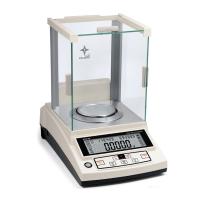
E2 test weights are accurate for high resolution analytical balances and are recommended for balances such as the ABS model above, both read 0.01 mg.
By sorting, the allowable ± tolerance increases. For example, here are the nominal ± values (in milligrams) for 1g: E1 = 0.01, E2 = 0.03, F1 = 0.1, F2 = 0.3, M1 = 1.0, M2 = 3, M3 = 10mg. As the weighing capacity of the scale increases, so does the allowable tolerance. The 50 kg scale is the larger capacity unit and is available in all 7 OIML accuracy classes ranging from ±25 mg for E1 to ±25g for M3.
As you can imagine, the test weights used to calibrate precision scales, analytical balances and moisture analyzers are manufactured to accurate standards. Materials include brass, polished stainless steel, nickel-plated polished brass, and brass. Not all material options meet all OIML conformance classifications. Configurations include profiled wire and polygonal sheets, commonly used for milligram calibration weights as formed, machined and/or polished cylinders with jacking knobs. Block weights are produced in a variety of configurations for calibrating high volume scales.
Calibration Procedure Using Test Weights
Calibration or recalibration procedures for the company's precision scales, analytical balances and moisture analyzers shall be spelled out in the company's operating manual. Professional associations, government regulations, and other standards may apply.
Calibration should be performed when the device is first installed. Recalibration should be performed when the scale or balance is relocated in the equipment. Highly sensitive weighing instrument mechanisms are affected by changes in gravity, changes in temperature, vibration and humidity, among other variables. These sensitivities should always be kept in mind.
The subject of this article is calibration using test weights. Earlier we mentioned internal versus external calibration. Internally calibrated balances and scales can handle this automatically, without user attention and without user intervention. For example, the Kern ABT series automatically recalibrates using internal weights in the following four situations: 1) four hours after a previous calibration; 2) when the temperature fluctuates by 0.5 °C (0.9 °F); 3) when the balance is switched from standby To the weighing mode and meet the conditions (1) or (2) or 4) when the balance is disconnected from the power supply.
Externally calibrated balances require the test weights described. However, the process is painless. These devices have a calibration mode which, when activated, simply requires the user to place the appropriate calibration weights on the weighing pan and initiate the calibration procedure. The device will compare the calibration weight with its reading and make an internal correction if required.
Care and Calibration of Test Weights
As mentioned earlier in this article, calibration test weights are manufactured under stringent conditions because, as stated above, the device will never be more accurate than the test weights used to adjust it. Test weights represent a considerable investment that needs to be protected with proper handling, care and regular recalibration.
Surprised? Read on.
Like the equipment they test, test weights should also be recalibrated as part of an ongoing GLP. The frequency of recalibration of test weights depends on frequency of use, conditions of use, and the organization's safety needs in terms of compliance with standards. Recalibration is performed under strict laboratory conditions. Passing weights will receive a recalibration certificate detailing the exact conditions of the recalibration.
Sometimes test weights that cannot be recalibrated can be brought back within tolerance limits through repair or remanufacturing. Otherwise they need to be replaced.
Procedures for the use, handling and storage of test weights should be clearly defined. For example, acid on your hands could cause etching, which would invalidate the accuracy of 1mg test weights, especially those with a tolerance of ±0.003mg. Therefore, gloves should always be used when handling test weights. Companies such as Kern also provide gloves, tweezers and dust brushes to facilitate safe handling. The weights themselves are stored in fully lined wooden boxes and milligram weights are stored in removable plastic boxes.
Precision scale test weights are available individually or in units. Tweezers, gloves, dusting brushes, and single or multi-unit storage containers and carrying cases are also available to maintain and protect these precision test weights. These help organizations meet internal or external directed procedures that support accurate weighing and measurement requirements.




- 1Proper Use of Electronic Balance
- 2What is the difference between 10,000-level and 100,000-level Electronic Balance?
- 3Selection scheme of solar cell slurry performance testing instrument
- 4Offset printing ink laboratory performance testing instrument scheme
- 5Method of using electronic balance and its structure
- 6How should the calibration weights of precision balances be handled and maintained?
- 7How to choose a precision digital electronic balance?
- 8Edham Adam SAB & SPB Electronic Balance Structure
- 9Effect of Epoxy Emulsion Types on Properties of Paint Film
陈深填 - 《华南理工大学 化学与化工学院 》