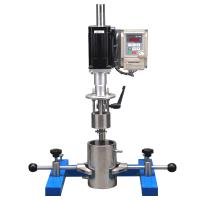
How to choose the correct paint paste grinding and dispersing equipment?
In the ground mill base, the depolymerization process of the pigment particles can not only fully make the liquid paint wet the surface of the pigment (filler) particles, improve the stability of the mill base, but also improve the coloring power of the pigment, The hiding power will be improved accordingly, and the gloss and other properties of the paint film will also be improved. Therefore, the selection of effective grinding and dispersing equipment can greatly improve the degree of dispersion of pigments in the paint, so that while improving the stability of the paint slurry, it can reduce the amount of pigments used and improve the quality of paints and coatings. The improvement of the degree of pigment dispersion is accompanied by the improvement of pigment coloring power and hiding power, so that some expensive pigments in the paint formula can be replaced by cheap fillers, reducing costs and improving economic benefits. Because in general, the savings achieved by reducing the amount of expensive pigments clearly exceed the consumption associated with a higher degree of dispersion, the intensification of the dispersion process in the production of paints, as well as the selection and application of effective grinding and dispersion equipment, and the use of pigments The improvement of dispersion requirements is a matter of great concern to paint workers.
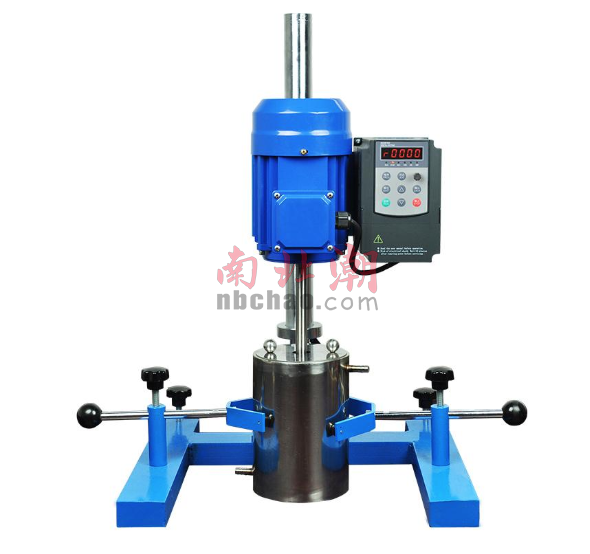
When we understand the principle of dispersion, choose dispersion equipment and evaluate the dispersion effect, we should clarify the following concepts:
①In the grinding and dispersing equipment currently used to disperse pigment (filler) material particles in liquid paint, the deagglomeration of aggregates and agglomerates is due to the grinding slurry passing through different forms of slurry passages (such as three rolls) The sub-gap of the sand mill, the double ring action area between the two dispersion discs of the sand mill), the contact stress generated during the movement plays a role in depolymerization, rather than relying on the color (filling) of the working parts of the equipment direct action of material aggregates or agglomerates;
②The selection of grinding and dispersing equipment not only considers the dispersion time, but also considers the effects of factors such as the ability of the paint slurry to reach a good stable state, and the performance of the pigment to play a good role;
③ The evaluation of the dispersion effect is to obtain good pigment performance and paint film performance as the main goal, and the fineness value of the scraper Fineness Meter cannot be used as the goal.
As mentioned earlier, the depolymerization process of pigments is the process of restoring the secondary particles of pigments to or close to their original particles. This degree of transformation from large particle size pigment groups to small pigment particles is the most important in colored paints. In production, it is expressed by the "fineness" index of the paint liquid (or ground mill base). The physical meaning of fineness refers to the maximum size of the pigment particle size allowed in the paint. It is usually measured with a scraper Fineness Meter, expressed in μm. For example, if the fineness value of a color paint product is required to be less than 20m, it means that the maximum particle size of the pigment in this color paint product should be less than (or equal to) 20m. The smaller the required value, the higher the fineness index.
Other methods for evaluating the degree of depolymerization include electron microscopy, galvanometer method, and pigment tinting strength comparison method. Although these three methods are more accurate than the Fineness Meter method, they are usually limited to use in scientific research due to time-consuming or high instrument prices.
Since the depolymerization process of the pigment is completed by means of external mechanical force, it is precisely achieved by using grinding equipment for grinding and dispersing operations. And the grinding and dispersing process of paint paste is the main process of color paint production (its output per unit time determines the output of the whole color paint process). Therefore, the efficiency of grinding and dispersing will directly affect the output per unit time and main energy consumption of the color paint production line. Therefore, how to strive to produce as much and stable ground varnish as possible in the shortest possible time with as little energy consumption as possible will be the goal pursued by the pigment depolymerization effect during the production of colored paints. For this purpose, the following conditions are usually required:
① There is a well-designed standard formula of color paint. Including the selection of pigments (fillers) with good dispersion properties, the scientific formulation of pigments and paints, the selection of suitable solvents, wetting and dispersing additives, etc.;
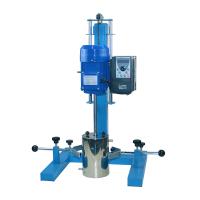
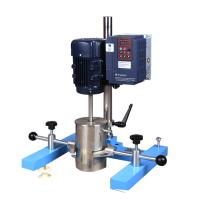
② Select effective grinding and dispersing equipment in combination with the characteristics of the paint variety, and provide good parameters and scientific operation methods for the equipment;
③ Disperse the grinding mill base with a reasonable composition of the grinding mill base (that is, the appropriate ratio of paint, pigment and solvent;
④Determine a reasonable production process combination and process operation rules, and limit the production process and operator's behavior;
⑤ Operate correctly and carefully, and manage scientifically and rigorously.
The design of the standard formula has been fully discussed above, so the following will discuss the reasonable composition of the grinding mill base, discuss the grinding and dispersing equipment and correct use, and discuss the process of color paint production.
- 1Summary of determination methods for hiding power of coatings
- 2Pigment hiding power
- 3Determination of Coating hiding power
- 4GB/T 23981.2-2023: Paints and varnishes - Determination of hiding power - Part 2: Checkerboard method - Interpretation
- 5Concept, influencing factors and determination method of Coating hiding power
- 6Mayer Rods: The right-hand man for hiding power tests
- 7Coating performance testing: ensuring the efficiency and mass of the painting process
- 8Coating hiding power measurement
- 9Application of paint film Applicator in hiding power test