Application of Spectrophotometer in Spectral Reflectance
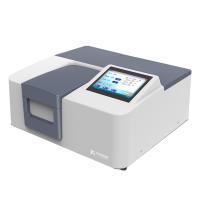
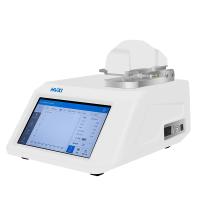
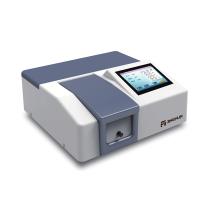
When visible light is irradiated on the coating film. The surface of the coating film will absorb part of the light and reflect another part of the light. What we With the help of a visible light Spectrophotometer , the reflected be decomposed, that is , the percentage of light reflected by each wavelength of 400-760nm can be decomposed and drawn into a curve (as shown in Figure 17-40). This is called the "spectral reflectance" curve. A coating of a color has a corresponding spectral reflectance curve, in other words, an optical harmonic reflectance curve represents a color.

If there are two colors of coating films, the Spectrophotometer measure the scene, and the spectral reflectance curves of the two colors are drawn on the same picture, and the difference in color (ie color difference) can be analyzed. If the optical harmonic reflectance curves of the two colors overlap completely in the range of 400~70onn, we call it "chromatically homogeneous spectrum", if partially overlap but do not overlap in certain wavelength ranges, we call it It is "same color and different harmony". Compared with the standard colors, most of the colors prepared by the paint industry are "same color and different harmony".
The Spectrophotometer or computer color matching system currently on the market can automatically decompose the optical harmonics of the tested sample, and print out the spectral reflectance curve of the color on the display screen or through a printer. Therefore, using spectral reflectance curves to express colors or compare the color difference between two colors is a very simple, scientific and educational method.


- 1Application of Flame Atomic Absorption Spectrophotometry in Detection of Food Talc Powder
- 2Talking about the performance test of epoxy resin film coated on PET
- 3Spectrophotometer principle, structure and application do you know geometry?
- 4Principle, characteristics and application of ultraviolet Spectrophotometer
- 5Spectrophotometer Color Measurement Fundamentals
- 6Differences between visible, ultraviolet-visible, infrared, fluorescent and atomic absorption Spectrophotometer s
- 7Detection of nicotine content by Spectrophotometer
- 8How to detect the color difference of fluorescent color-changing materials?
- 9Liquid color difference detection solution
-
![YueFeng 752N Ultraviolet-visible Spectrophotometer]()
-
![YueFeng 721 Single beam of light Visible Spectrophotometer Test Transmittance/Absorbance]()
-
![JINGHUA H300 Dual beam of light Spectrophotometer Wavelength range 190nm-1100nm]()
-
![HUXI Nano-900 UV-Visible, ultra-micro Spectrophotometer Light spectrum instrument]()
-
![JINGHUA JH752 Benchtop UV-Visible Spectrophotometer Bandwidth 4nm]()
-
![YUEFENG FP6428 Flame photometer Na/Ca]() YUEFENG FP6428 Flame photometer Na/Ca$ 1450.00
YUEFENG FP6428 Flame photometer Na/Ca$ 1450.00