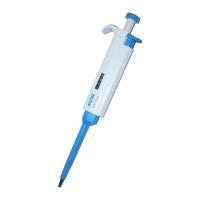
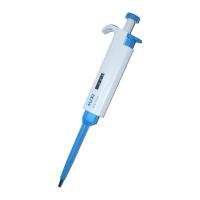
Pipette Tips - Technique and Pipette Maintenance
Here are some key points to keep in mind when pipetting that will help improve your technique and results:
immersion
It is important to ensure that the pipette tip is not submerged below the surface as it may cause the air in the tip to be compressed and excess liquid to be aspirated.
angle
The pipette should again be held vertically to ensure that too much liquid is not aspirated, which would result in inaccurate measurements.
dispensing
When dispensing, water tension can prevent some of the liquid remaining in the tip from escaping. To avoid this, hold the tip of the pipette against the inside of the container to draw out any remaining liquid.
pre-rinse
Pipette tips should be pre-rinsed 2 or more times to clean and coat the interior for more accurate dispensed volumes.
freed
The plunger should be compressed and released slowly to ensure that all air is expelled when compressed and no air bubbles are drawn in when released.
temperature
Liquids should be pipetted at room temperature, as temperature affects the volume of liquids. The pipette, tips, and liquid should all be at the same temperature for greater accuracy.
Two main techniques for pipetting
reverse pipetting
A great technology for viscous liquids, liquids that foam easily and very small volumes.
Do this by pushing the plunger down to the second stop, placing the needle tip in the liquid and releasing the plunger to its original position. To dispense liquid, push plunger down to first stop, then discard tip or dispense remaining liquid into waste or its original container by pushing plunger again to second stop.
Forward pipetting
is a good technique for mixing a reagent or sample into another liquid and is recommended for aqueous solutions.
Do this by pushing the plunger down to the first stop, placing the needle tip in the fluid and releasing the plunger back to its original position. To dispense liquid, push the plunger down to the first stop, then, after a brief pause, to the second stop to empty the tip. The tip can then be discarded or used again.


- 1How should I store the correct micropipette?
- 2Four ways to use an electronic pipette
- 3How to store micropipettes properly?
- 4Structure, principle, usage and calibration maintenance of micropipette
- 5How to use a micropipette for liquid handling?
- 6Pipette uses common sense - Dlab
- 7Pipette uses little common sense