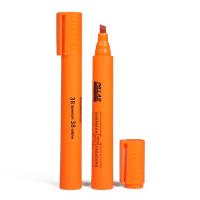
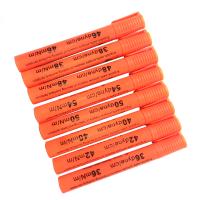
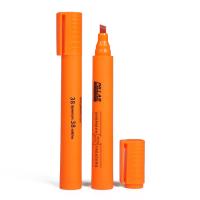
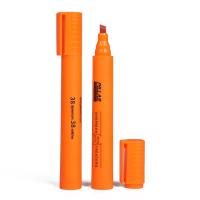
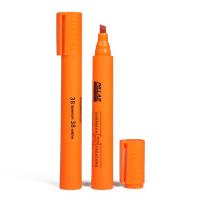
At what dyne level should I be tested?
Q: My ink requires at least 40 dynes/cm, and my film supplier says they want 56 dynes/cm for their glue. Should I use 40 as a threshold test, or does the marker dyne level need to match the material? What scope should I use?
Answer: If the actual polyethylene content was 56 dynes/cm at the time of the test, then a test using a 40 dyne/cm test mark would probably saturate well and be so attractive to the treated surface , so as to permanently leave traces on the film. This will tell you that the surface is 40 dynes/cm higher, if in fact it is only 40 dynes/cm the test fluid will start to bead up in about two seconds. However, there is much more to the story than that.
Over time and with downstream processes, polymers lose their ability to handle, especially if caused by corona treatment, so if a film is tested at 56 dynes/cm at the end of a supplier's extrusion line , you may find that its surface energy is as low as 44 dynes/cm after a few weeks when you are ready to print. (Please do not take these loss figures as gospel, they are for explanatory purposes only!) After a few months of storage in a hot and humid environment, it has likely dropped below 40 dynes/cm. Slip agents are particularly problematic when it comes to loss of treatment over time, especially at high temperatures.
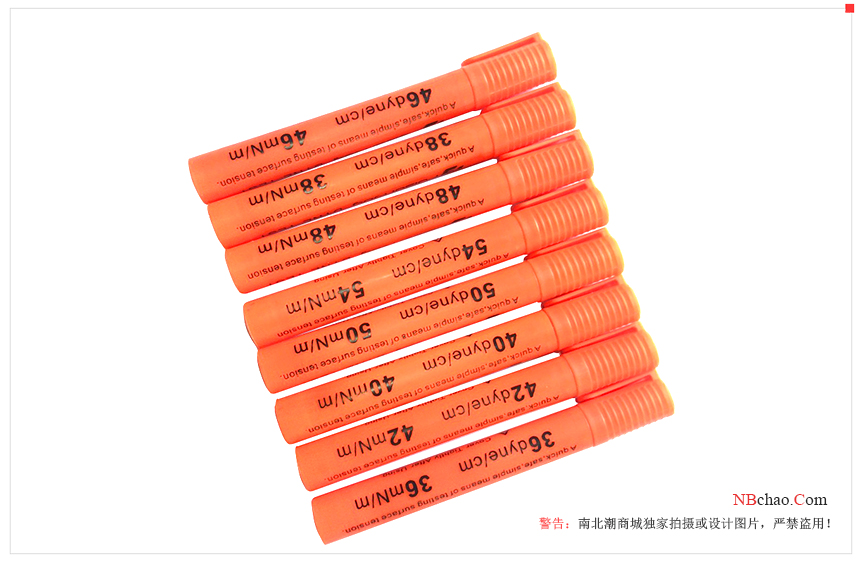
A marker measures surface energy by testing it at a range of dyne levels, starting with a level low enough that you want it to be wet for at least a few seconds. In your case, I'd recommend starting with 34 dynes/cm and having a test capability up to 56 dynes/cm, which is the limit you're likely to see.
While your ink supplier may be right about a minimum acceptable processing level of about 40 dynes/cm, it's still helpful to test the film during printing. Keeping records of dyne levels (any comments a Tester may report) along with other process data can at some point be an important tool in troubleshooting failures. Also, you may find that with a higher substrate dyne level, you can increase the printing speed slightly, or improve the print quality. Quantifying these relationships can simplify your operations and ultimately reduce costs by enabling you to develop better specifications for the coils you purchase.
-
![Fengzhiyue 54 Dyne pen]() Fengzhiyue 54 Dyne pen$ 84.00
Fengzhiyue 54 Dyne pen$ 84.00 -
![Fengzhiyue 48 Dyne pen]() Fengzhiyue 48 Dyne pen$ 84.00
Fengzhiyue 48 Dyne pen$ 84.00 -
![Fengzhiyue 56 Dyne pen]() Fengzhiyue 56 Dyne pen$ 84.00
Fengzhiyue 56 Dyne pen$ 84.00 -
![Fengzhiyue 46 Dyne pen surface tension 46]()
-
![Fengzhiyue 50 Dyne pen]() Fengzhiyue 50 Dyne pen$ 84.00
Fengzhiyue 50 Dyne pen$ 84.00 -
![Fengzhiyue 52 Dyne pen]() Fengzhiyue 52 Dyne pen$ 84.00
Fengzhiyue 52 Dyne pen$ 84.00 -
![Fengzhiyue 42 Dyne test pen surface tension coefficient 42]()
-
![FENGZHIYUE 28 Dyne pen]()
-
![Fengzhiyue 32 Dyne pen]() Fengzhiyue 32 Dyne pen$ 84.00
Fengzhiyue 32 Dyne pen$ 84.00



- 1Application of Dyne pen in surface tension measurement
- 2Dyne pen in film printing
- 3Dyne pen test method
- 4How to Use a Dyne Pen to Determine Surface Energy
- 5How to Ensure the Accuracy of the Dyne Pen Test
- 6Dyne Pen Controls Surface Tension of Printed Coatings
- 7Four simple steps to use the dyne pen correctly
- 8Dyne pens and test fluid -- how do they work?
- 9What is dyne level?