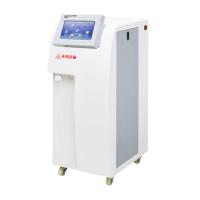
What are the adverse effects of long-term storage and concentration of wastewater in laboratory ultrapure water machines?
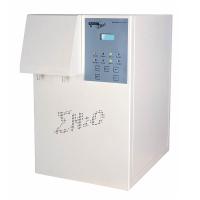
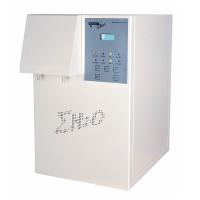
When you use the ultrapure water machine in the laboratory, we will find that while the ultrapure water machine is producing pure water and ultrapure water, concentrated wastewater is also gradually produced. What is the reason for the discharge ? Concentrated wastewater? And will it cause some waste of water resources? Let's discuss these issues with you today.
First, let’s talk about how concentrated wastewater is produced. The PP cotton filter element and activated carbon filter element in the raw water pretreatment system generally do not produce concentrated wastewater. Impurities are adsorbed on the filter element and need to be replaced every 6-12 months. The direct source of concentrated wastewater is the core component of the equipment - the RO membrane. The working process of RO membrane is a process of liquid concentration. Under the action of the booster pump, part of the water is purified into pure water through the RO membrane, and the other part of the water is taken out of the RO membrane by removing impurities such as particles and colloids and sediments covered on the surface of the membrane or in the pores of the membrane. Waste water was never formed.
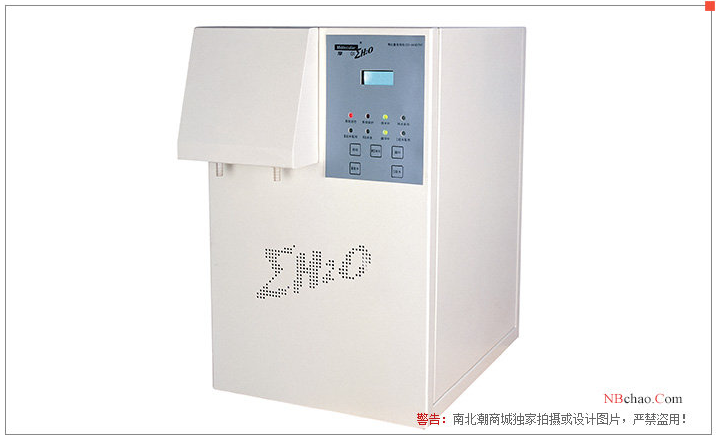
That is to say, the impurities in the raw water have not been eliminated, but have been separated and entrained in a small amount of water and discharged. Some users hope to save water resources by producing more pure water and less waste water. Is this possible? In fact, it is very unscientific. The reduction in the discharge of concentrated wastewater will inevitably increase the water flux of the RO membrane, which will cause clogging. If the waste water is not discharged, impurities will quickly accumulate and deposit on the membrane, and the RO membrane, which has a high filtration precision, will soon be blocked. In the end, there is only one result - changing the membrane. Before that, the TDS value of pure water will also be greatly affected, and it may not be able to meet the needs of laboratories in severe cases.
It can be said that it is the normal discharge of concentrated wastewater that guarantees the service life of the RO membrane of the ultrapure water machine in the laboratory. To give a popular example: Raw water is separated into pure water and waste water through a reverse osmosis membrane, just like the human body absorbs part of the water after drinking and part of it is discharged. During this process, the kidneys are like the RO membrane of the human body, separating the toxic substances and excreting them in the form of urine. If you do not urinate for a long time, it will cause irreversible damage to the kidneys, and even face the risk of kidney replacement.
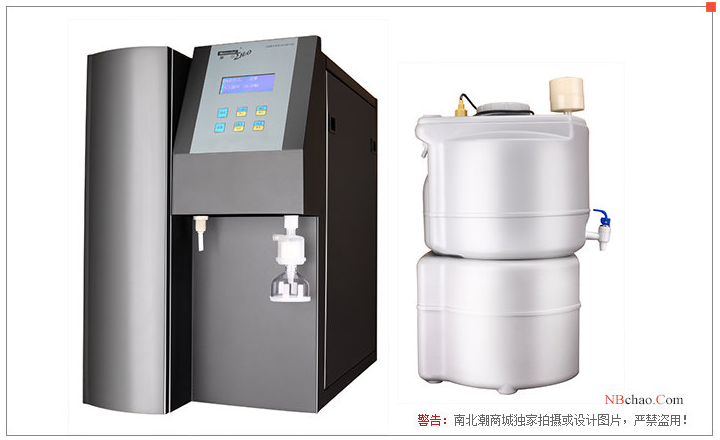
Is the concentrated wastewater in the laboratory destined to be wasted water resources? In fact, otherwise, we can collect them and make full use of them. You might as well connect the waste water in the bucket, and it can be used when mopping the floor, wiping the table, and flushing the toilet. When the bucket is receiving water, more attention should be paid to prevent the water from overflowing on the ground. Of course, we can also connect the waste water pipe to the high-level Water Tank, and the outlet of the high-level Water Tank is connected to a flush toilet, a watering faucet, etc. Not only is it environmentally friendly, it also saves a lot of worry.
In short, the discharge of concentrated wastewater from laboratory ultrapure water machines is determined by the working principle of reverse osmosis membranes. Reasonable use of waste water can avoid the waste of water resources. I will share it with you today. For more equipment usage problems, please feel free to communicate with the technical engineers of the North and South Tide!
- 1How to clean the laboratory water purifier?
- 2What are the criteria for selecting laboratory purified water equipment?
- 3Precautions for cleaning ultrafiltration membranes in biopharmaceutical pure water equipment?
- 4What are the advantages of using ultrapure water equipment for the power industry?
- 5Ultra-pure water machine - triple filter element replacement method
- 6What should I do if the solenoid valve of the experimental ultra-pure water machine encounters these failures?
- 7Detailed purchase method of laboratory ultra-pure water machine [dry goods]
- 8What is the difference between "water intake flow" and "water intake flow rate" in laboratory ultrapure water machines?
- 9How to choose the right high-quality experimental ultra-pure water machine?