What is the parameter difference between ultrapure water and pure water?
Pure water refers to H2O without impurities. From an academic point of view, pure water is also known as high-purity water; ultrapure water (Ultrapure water), also known as UP water, refers to water with a resistivity of 18 MΩ*cm (25°C). There are almost no impurities in this water except water molecules. What is the difference between pure water and ultrapure water?
1. The meaning of pure water
Pure water, also known as pure water, refers to the water that meets the sanitary standards of drinking water as raw water, and is sealed in water obtained by electrodialysis, ion exchanger, reverse osmosis, distillation and other appropriate processing methods. In the container, without any additives, colorless and transparent water that can be drunk directly. Space water and distilled water sold in the market are pure water.
Second, the meaning of ultrapure water
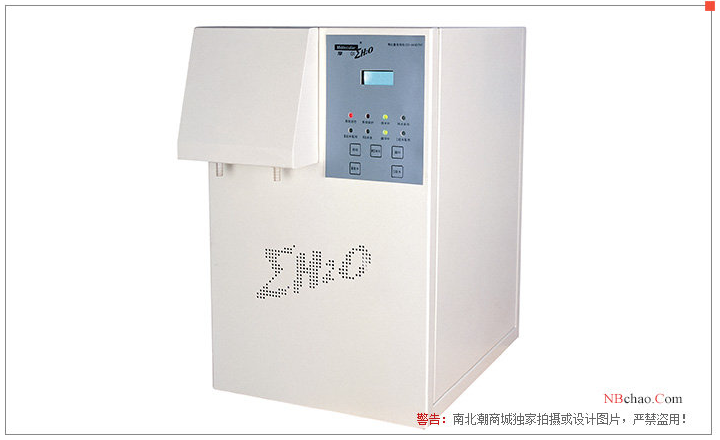
Ultra-pure water is based on pure water and further removes the conductive medium in the water almost completely, and removes the non-dissociated colloidal substances, gases and organic substances in the water to a very low level. The resistivity is greater than 18MΩ*cm, or close to the limit value of 18.25MΩ*cm. Ultrapure water is a level that is difficult to achieve by general processes. Microfiltration technology, ultrafiltration technology, reverse osmosis technology, EDI technology, and two or more technologies in ion exchange technology can be combined through reasonable process design and equipment selection. , in order to produce ultra-pure water, the resistivity can reach 18.20MΩ*cm.
3. The difference between pure water and ultrapure water
The difference between pure water and ultrapure water exists in many aspects, some of which are listed here and summarized as follows:
A. The conductivity is different. The conductivity of pure water is between 2-10us/cm, and the conductivity of ultrapure water is 0.056us/cm;
B. The difficulty of manufacture is different. The pure water used in the market is basically obtained by reverse osmosis, distillation and other methods, while the ultrapure water is based on pure water and also undergoes photooxidation technology, fine treatment and It is produced by a series of complex purification techniques such as polishing treatment.
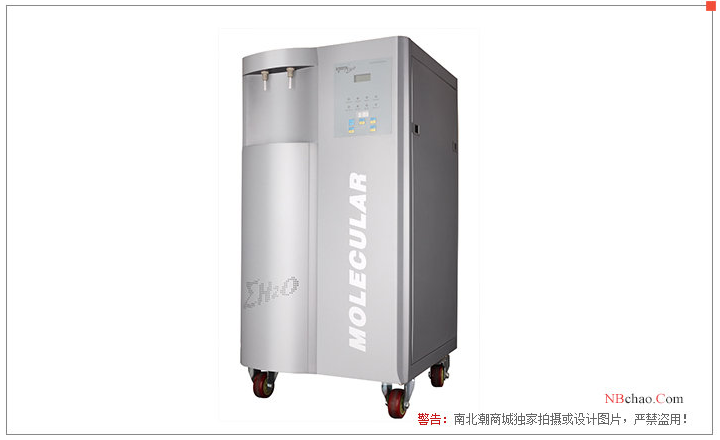
C. Heavy metals, bacteria, particles and other indicators are also very different. The impurity content of pure water is ppm level, while ultrapure water is ppb level. Simply put, there are no impurities in ultrapure water, which is close to theoretical water.
D. The fields of use are also different;
E. The requirements for the material of the pipeline are also different. The requirements for the material of the pipeline for ultra-pure water are much stricter than those for pure water.
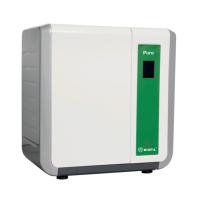
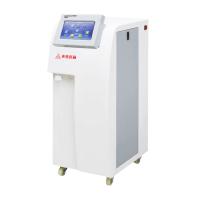
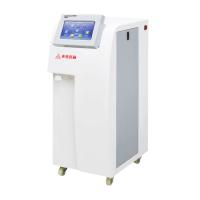
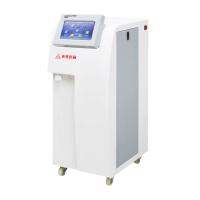
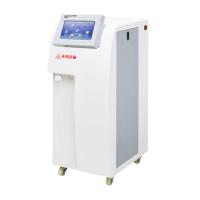
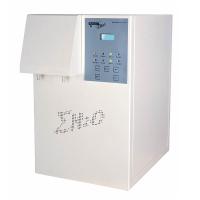
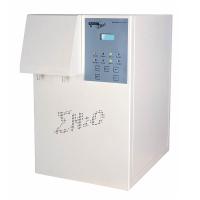
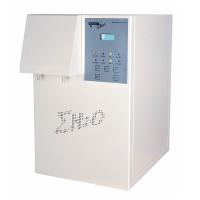
Ultrapure water equipment is a device for preparing pure water for laboratory inspection and quarantine. The laboratory ultra-pure water machine is suitable for testing centers, scientific research institutes, colleges, universities, hospitals and enterprise laboratories to provide the required water for analysis and testing, reagent water, experiment water and analytical instrument water. In inorganic and analytical chemistry experiments, according to different tasks and requirements, the requirements for water purity are also different. Pure water is divided into "pure water" and "ultrapure water".
4. How to choose equipment
In the process of purchasing ultrapure water equipment, people often confuse these two concepts, which makes it difficult to select models and increases the cost of material supply for no reason. When purchasing ultrapure water equipment, you should pay attention to the following points:
1. When purchasing ultra-pure water equipment, it is better to base on the nature of your business, the purpose of the experiment, and the water quality requirements of the effluent, so as to purchase models for you based on past sales experience;
2. The reference indicators for purchasing ultra-pure water equipment models should follow the principle of "just high and not low";

3. The water volume is generally calculated according to 8 hours per day. If the water output of the ultrapure water equipment is 15L/hour, then its daily water output should be 120L;
To a certain extent, ultrapure water can be produced by combining microfiltration technology, ultrafiltration technology, reverse osmosis technology, EDI technology, and two or more technologies in ion exchange technology through reasonable process design and equipment selection. , the resistivity can reach 18.20MΩ*cm.
- 1How to clean the laboratory water purifier?
- 2What are the criteria for selecting laboratory purified water equipment?
- 3Precautions for cleaning ultrafiltration membranes in biopharmaceutical pure water equipment?
- 4What are the advantages of using ultrapure water equipment for the power industry?
- 5Ultra-pure water machine - triple filter element replacement method
- 6What should I do if the solenoid valve of the experimental ultra-pure water machine encounters these failures?
- 7Detailed purchase method of laboratory ultra-pure water machine [dry goods]
- 8What is the difference between "water intake flow" and "water intake flow rate" in laboratory ultrapure water machines?
- 9How to choose the right high-quality experimental ultra-pure water machine?