The water quality of the ultrapure water device has declined after being used for a period of time. Why?
If you want to prolong the service life of the laboratory water purifier, choosing the right manufacturer and product is just the beginning. Scientificity and standardization in the use process are also the key to ensure the normal operation of the instrument. Once negligent, there may be problems such as the decline of effluent water quality and the appearance of moss in pure water pipes. Today I will tell you how to deal with these problems.
1. Treatment methods for water quality degradation
If you find that the water quality of the instrument effluent has declined, you can deal with it from the following three aspects.
1. Exhaust port pollution. In order to ensure the air pressure balance inside and outside the instrument, an exhaust port is generally provided in the water storage tank. However, while the exhaust port balances the air pressure, it also brings bacteria, fungi, and particulate matter in the air into the Water Tank, resulting in contamination of the ultrapure water. It is recommended that you have a filter on the exhaust port.

2. The water storage tank is not drained clean. Some ultra-pure water machines are equipped with flat-bottomed Water Tanks. If the ultra-pure water in them is not drained clean for a long time, it will accelerate the growth of bacteria in the Water Tank. It is recommended that you regularly drain the ultrapure water in the water storage tank, or use it as soon as it is opened, so as to avoid storing water in the water storage tank for a long time.
3. Disinfection is not urgent. Even the smallest microorganisms can form a bacterial film to contaminate the instrument, resulting in a decline in the quality of the effluent. It is recommended that you carry out comprehensive disinfection of the instrument regularly, such as pasteurization, ozone sterilization, ultraviolet disinfection, etc.
Second, the treatment of moss
The instrument has been used for a long time, and sometimes moss can be seen in the PP cotton of the pretreatment device or the pure water pipe connected to the pretreatment device. Why does moss appear? This also starts with the moss spores.
Moss spores are widely distributed and exist in the air and tap water, but they are invisible to the naked eye, and we generally don't notice them. The moss flows into the pretreatment device of the instrument along with the tap water, and the trace elements such as calcium and magnesium in the tap water provide rich nutrients for its growth. At this time, if the instrument is exposed to light, the photoautotrophic biological moss will accelerate growth and reproduction. Residual chlorine in tap water can inhibit the growth of moss. If sunlight decomposes residual chlorine, it will be more conducive to the growth of moss.
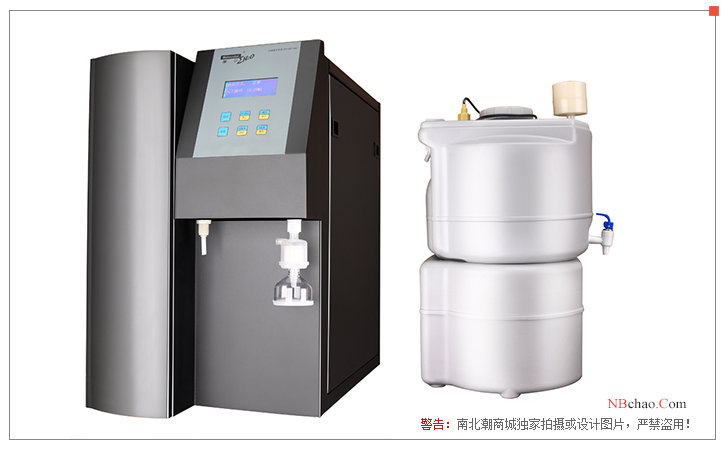
Because it is in the PP cotton of the pretreatment device or the pure water pipe connected to the pretreatment device, the moss will not adversely affect the water quality of the instrument's effluent. But it will consume pure water consumables, resulting in unnecessary waste. How to avoid this waste? The simple way is to avoid direct sunlight. You can wrap it in the corresponding position with a layer of tin foil to avoid light and heat insulation. At the same time, pay attention to choosing a pretreatment device with better sealing and light protection when purchasing in the future.
Troubleshooting of water purifiers used in laboratories will stop here today. Foshan NBCHAO has a high-quality, effective and experienced technical team. If you find any problems during the use of the instrument, please feel free to exchange experience with our technical engineers.









- 1Precautions for cleaning ultrafiltration membranes in biopharmaceutical pure water equipment?
- 2What are the advantages of using ultrapure water equipment for the power industry?
- 3Ultra-pure water machine - triple filter element replacement method
- 4What should I do if the solenoid valve of the experimental ultra-pure water machine encounters these failures?
- 5What is the difference between ordinary pure water machine and physical and chemical biological experiment ultra-pure water machine?
- 6How does an ultrapure water machine prepare ultrapure water?
- 7Four points to pay attention to when using the ultra-pure water machine!
- 8At low temperatures, several checks to be done before the ultra-pure water machine is used
- 9What routine work should be done in place during the use of the laboratory pure water instrument?