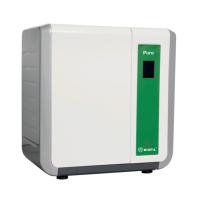
Do you want to prepare a water storage tank for the laboratory ultra-pure water machine? Are there any hidden dangers?
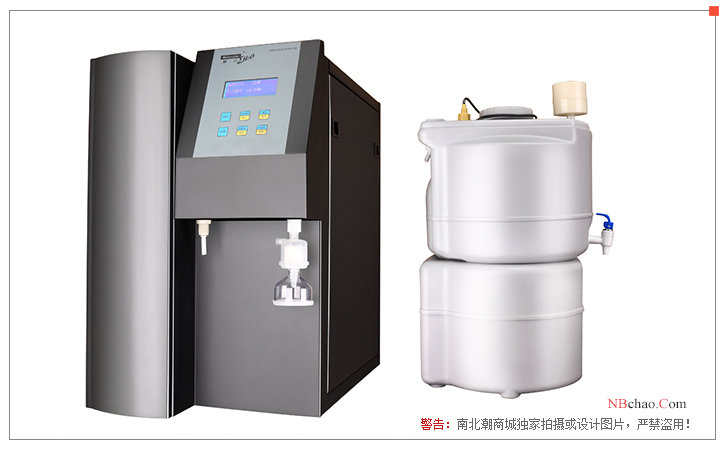
When the laboratory has a water or power outage or a large amount of water is used in a short period of time, the water storage tank can meet the temporary water demand. However, due to user habits and many objective factors, there are still certain hidden dangers in the laboratory ultrapure water machine equipped with a water storage tank.
The ultrapure water storage tank has the following hidden dangers:
1. Deterioration of water quality
After the water storage tank is used for a period of time, it is easy to leak air, which will lead to insufficient water pressure, and some pure water will always remain in the water storage tank. This part of the water has become stagnant water that cannot flow. Stagnant water is prone to breed bacteria and form biofilm. It not only reduces the water quality, but also easily leads to biological poisoning of the back-end purification unit.
2. Secondary pollution
Some water storage tanks are made of cheap industrial plastics, which not only have poor airtightness (impurities in the air enter), but also easily dissolve pollutants. The interior of the box is uneven, which is easy to hide dirt. The overflow port is connected to the underground pipeline, which is not conducive to the maintenance of water quality.
3. Potential safety hazards
The water level sensing device used in some water storage tanks makes it impossible to separate the water and electricity, and there are certain potential safety hazards.
4. Not easy to disinfect
Due to the small diameter of the water inlet and outlet, it is difficult for users to clean and disinfect it meticulously. This makes the water storage tank a breeding ground for bacterial growth, and the deterioration of water quality continues to worsen.
5. Damaged consumables
As the pressure of the water storage tank increases, the pure water quality will gradually deteriorate, which will lead to a sudden decrease in the exchange capacity of the ultra-purification column and shorten the life; the pure water output will gradually decrease, which will cause damage to the RO membrane.
How to avoid hidden dangers such as deterioration of water quality, secondary pollution, and damage to consumables in laboratory ultrapure water machines?
Users should pay attention to the following points:
1. Water storage tank material
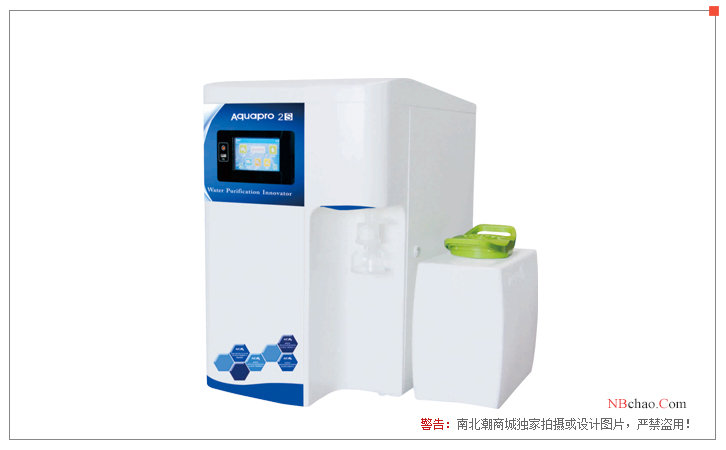
Choose a water storage tank with good material, good airtightness, and air filtration function (equipped with an air filter). While ensuring stable water pressure, it reduces air pollution and the dissolution of impurities.
2. The location of the water storage tank
Do not place the water storage tank in direct sunlight, otherwise it is easy to cause microbial pollution, or even a large number of algae.
3. Install sterilization device
Once microorganisms such as bacteria are produced in the water storage tank, the entire system will be polluted. It is recommended to install an ultraviolet sterilizing device in the water storage tank and pure water pipeline to completely disinfect microorganisms.
4. Water intake method
In order to obtain water with high purity, it should be used immediately in daily use. Pay attention to the water after the initial water is drained, and avoid air bubbles when taking the water. If there is a need for water storage, the pure water storage time should be controlled within 24 hours. If there is no water demand for a long time, the pure water in the water storage tank must be drained.
The safety hazards of laboratory ultrapure water machines equipped with water storage tanks are shared here. Choosing the right product often saves you a lot of trouble.



- 1How to clean the laboratory water purifier?
- 2 How to judge whether laboratory ultrapure water equipment needs maintenance?
- 3What are the criteria for selecting laboratory purified water equipment?
- 4Ultra-pure water machine - triple filter element replacement method
- 5What should I do if the solenoid valve of the experimental ultra-pure water machine encounters these failures?
- 6Detailed purchase method of laboratory ultra-pure water machine [dry goods]
- 7What is the difference between "water intake flow" and "water intake flow rate" in laboratory ultrapure water machines?
- 8How to choose the right high-quality experimental ultra-pure water machine?
- 9 Why do you need to replace the consumables of the ultra-pure water machine regularly?