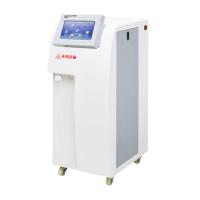
What kind of water substances can the ultrafiltration system of the ultrapure water machine filter?
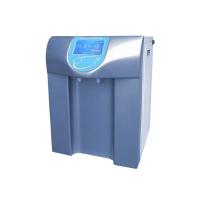
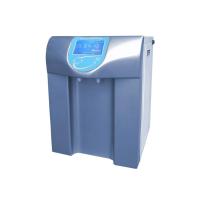
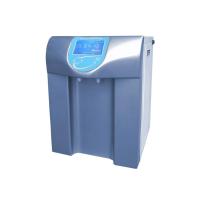
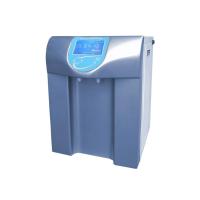
Ultrapure water machines are usually composed of pretreatment systems, reverse osmosis systems, ultrafiltration systems, etc. Among them, the ultrafiltration system plays an important role in the filtration process. Today, I will introduce you to the specific functions of the ultrafiltration system.
In general, ultrafiltration is the process of sieve separation. Driven by the external driving force (pressure), the larger dissolved particles in the water are sieved (retained) on the membrane surface, removed in the membrane pores or adsorbed on the membrane surface and the membrane pores. Water and smaller solute particles can permeate smoothly. In the membrane water treatment industry, ultrafiltration membranes (usually hollow fiber membranes) are mainly used for the final treatment of pure water and ultrapure water. The hollow fiber membrane has a simple structure, is easy to clean, has a large effective membrane area, and has high filtration and separation efficiency.
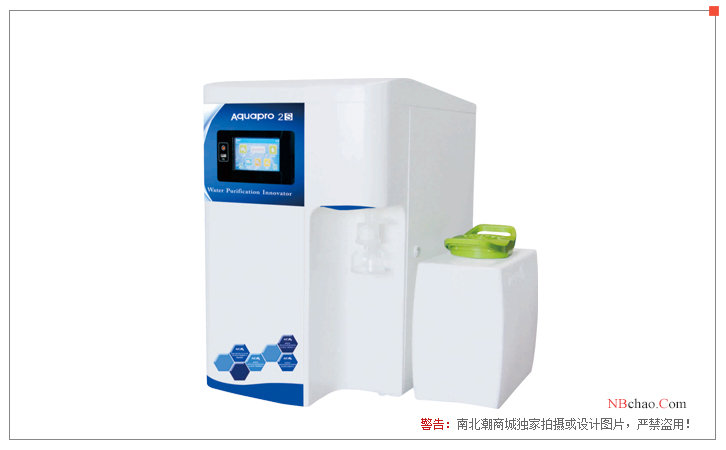
The ultrafiltration system in the ultrapure water machine can effectively remove bacteria, heat sources, algae, microorganisms, colloidal particles, etc. within the range of its rated molecular weight cut-off. Selecting an ultrafiltration membrane with a suitable pore size can achieve a removal rate of more than 99%. The ultrafiltration system effectively guarantees the stability of water production of ultrapure water equipment, and has broad application prospects. Equipped with ultrafiltration membranes generally require no heat source. UF ultrafiltration column components equipped with ULUP high-end and UPHW pure water inlet ultrapure water devices can effectively remove impurities such as heat sources in the water body. The molecular interception capacity of the ultrafiltration membrane is in More than 5000 Daltons, it is an excellent choice for electrochemical research, ICP-MS, plant cell culture, etc.
Ultrafiltration systems are generally used for terminal treatment of pure water and ultrapure water, and have certain requirements for incoming water. Only by meeting the following requirements can it play its role better:
1. Kill microorganisms: If microorganisms in the system grow and multiply attached to the surface of the ultrafiltration membrane, they may gradually block the micropores, or even completely block them and affect the filtration effect.
2. Reduce the turbidity of influent water: When the water body contains more impurities, it will be turbid to a certain extent, which will hinder the transmission of light.

3. Removal of soluble organic matter: Use oxidation method (chlorine or sodium hypochlorite is recommended for oxidation) or adsorption method (activated carbon or macroporous adsorption resin is recommended for adsorption) to remove soluble organic matter.
4. Removal of suspended solids and colloids: Although the ultrafiltration system has a filtering effect on the two, it is also harmed by it. A flocculant that is electrically opposite to the colloidal particles can be added to the water body to remove them.



- 1How to clean the laboratory water purifier?
- 2 How to judge whether laboratory ultrapure water equipment needs maintenance?
- 3What are the criteria for selecting laboratory purified water equipment?
- 4Precautions for cleaning ultrafiltration membranes in biopharmaceutical pure water equipment?
- 5What are the advantages of using ultrapure water equipment for the power industry?
- 6Ultra-pure water machine - triple filter element replacement method
- 7What should I do if the solenoid valve of the experimental ultra-pure water machine encounters these failures?
- 8Detailed purchase method of laboratory ultra-pure water machine [dry goods]
- 9What is the difference between "water intake flow" and "water intake flow rate" in laboratory ultrapure water machines?