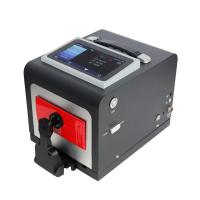
Application of CS-820 in the Measurement of Beer Chromaticity
Beer color is an important indicator of beer quality. In recent years, beer with light color and light taste has become more and more popular among consumers.
In the National Metrology Verification Regulations JJG923-2009, it is clarified that the beer Colorimeter is mainly divided into two types: visual colorimetric type and photoelectric type. Among them, the photoelectric method is based on the working principle of the spectroscopic method to realize the measurement of beer color. National Metrology recommends this method as metrological arbitration, entrusted inspection and verification of standard color chips.
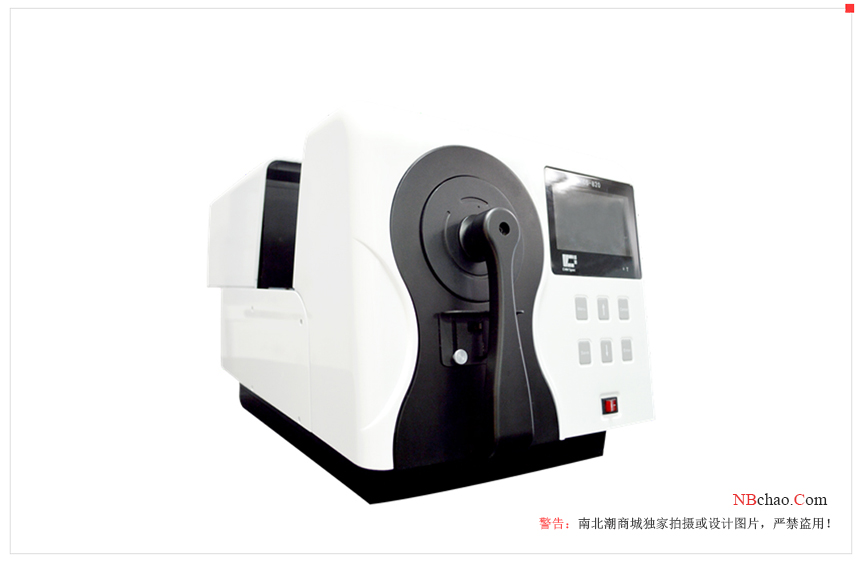
▼CS-820 adopts spectroscopic method to measure beer chroma, and complies with the national measurement and verification regulations of beer chromameter▲
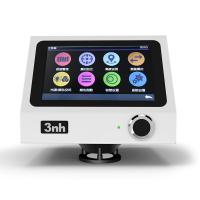
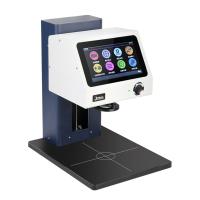
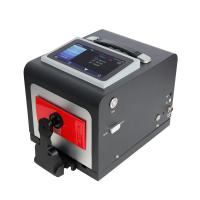
Beer Colorimeter CS-820
CS-820 adopts the principle of spectroscopic spectrometry to measure the color value of beer. The measurement is simple and intuitive, with high precision and high stability, and a national measurement report is issued.
| wavelength range | 360nm~740nm |
| light source | B light source (tungsten halogen lamp) |
| observer angle | 2° |
| color space | CIE Lab, LCh, CIE-Luv, XYZ, Yxy, Reflectance, Hunterlab, Munsell MI, CMYK, RGB, HSB |
| Measuring range | 0~30 |
Beer color (EBC: 0~30), the smaller the value, the more yellowish and lighter the color of the beer; the larger the value, the redder and darker the color of the beer.
Principle of Spectroscopy
Use a spectral Colorimeter to measure the spectral transmittance of the working color chip in the range of (380~780nm) (wavelength interval 10nm) with air as a reference. Calculate the values of the chromaticity coordinates x and z of the 2° field of view under the illumination of the B light source. Calculate the chromaticity coordinate deviation Δx and Δz according to the formulas (1) and (2), which should meet the tolerance requirements of the working color chip.
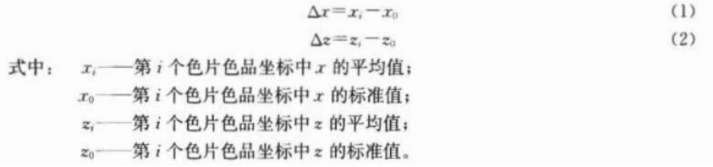
xo, zo can be found in the standard color chip chromaticity coordinates
Other parameter measurement
In addition to measuring beer chroma, the North-South Tide instrument can also measure color parameters in various color spaces, including: color spaces include CIE-L*a*b, L*C*h, L*u*v, XYZ, Yxy, Reflectance, Hunterlab, Munsell MI, CMYK, RGB, HSB, etc. The indicators include: whiteness, yellowness, Tint, metamerism index Milm, color fastness to staining, color fastness, ISO brightness, 8 gloss, A density , T density, E density, M density, APHA, Pt-Co (platinum cobalt index), Gardner (Gardner index), Saybolt (Seibert index), Astm Color, haze, etc.
Can meet all your color measurement needs.