Measurement method of hiding power of paint and ink
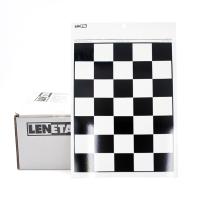
Hiding power refers to the ability of the coating film to cover the background color of the coated surface after the paint, ink, etc. are evenly coated, and is the result of the scattering and absorption of light by the pigment. Paint hiding power refers to the minimum amount of paint used to evenly coat the color paint on the surface of the object so that the background color no longer appears, expressed in g/m2. Pigment coverage refers to the minimum amount of pigment used when pigments and varnishes are ground into color paste and evenly painted on the black and white grid substrate so that the black and white grid is just covered.
The strength of the pigment's hiding power is mainly determined by the following properties: refractive index, the larger the refractive index, the stronger the hiding power; the ability to absorb light, the greater the light absorbing ability, the stronger the hiding power; The covering power of amorphous is weak; the degree of dispersion, the greater the degree of dispersion, the stronger the covering power.
For the same weight of coating products, under the same construction conditions, products with high hiding power can coat more areas than products with low hiding power. In order to overcome the inaccuracy of visually measuring the hiding power of black and white grid panels, the hiding power was measured with a reflectance meter. The tested samples were coated on transparent polyester films with different thicknesses, and placed on black and white glass plates after drying. Measure the reflectance respectively, and the ratio is the contrast ratio. When the contrast ratio is equal to 0.98, it is full coverage. The hiding power can be obtained according to the thickness of the paint film, which is suitable for white and light-colored paints. The following focuses on the measurement of hiding power by the reflectance method.
1. Scope and description
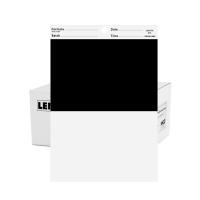
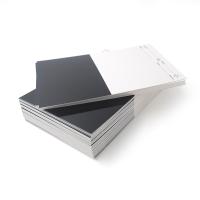
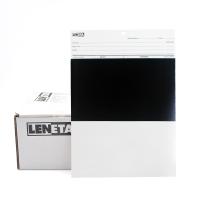
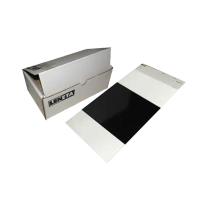
In this method, the sample is coated on a colorless transparent polyester film, or on a cardboard with black and half background colors, and a reflectance meter is used to measure the reflectance of the coating film on the black and white bottom surface. The ratio of reflectance on a white base is the contrast ratio, or its corresponding opacity. International standards recommend using a reflectance meter to test the hiding power, which has high accuracy, but this method is mainly suitable for white paint and light-colored paint.
2. Instruments and Materials
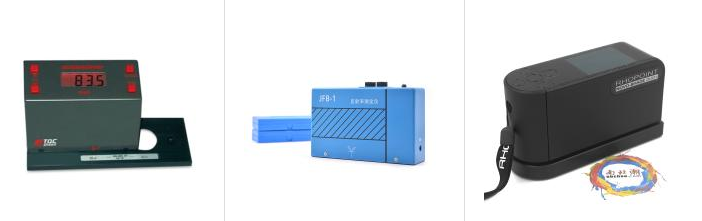
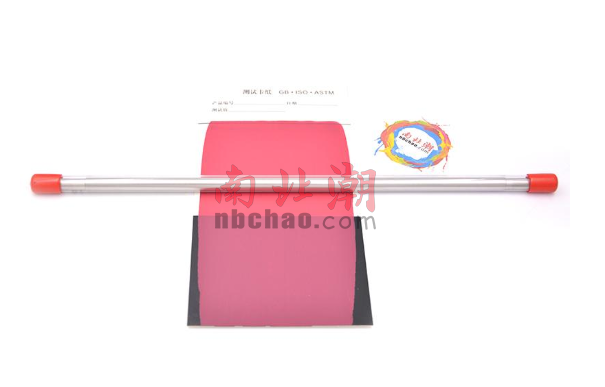
Wire Bar Coater, specification 100 (that is, wire diameter is 100μm); gap paint film Applicator, 100μm; polyester film, colorless and transparent, thickness 30~50pm; cardboard with half and half black and white background colors; reflectivity Instrument, a photoelectric instrument that can give indication readings proportional to the reflected luminosity of the tested surface, its accuracy is within 0.3%, and its spectral sensitivity is approximately equal to the relative spectral energy distribution of CIE light source C or D65 and the CIE standard observer The product of the color matching function y(), the instrument is composed of a probe, a host, a black and white standard board (one for each), black and white top ceramic boards (two for each) and so on. The probe adopts the principle of 0° irradiation and diffuse reflection reception. When the reflected light of the sample acts on the surface of the selenium photocell, an electric signal is generated and input to the DC amplifier for amplification, and the reading is displayed. When measuring with a reflectance meter, the reflectance of the white standard plate should be (80±2)%, and the reflectance of the black standard plate should not be greater than 1%. The instrument can be used for the determination of the hiding power of the paint film and the measurement of the reflectance. Note: The instrument should be preheated for more than 15 minutes before use, and zero-adjusted and calibrated repeatedly. During continuous testing, the probe should be placed on the zero-adjustment plate between tests to prevent photoelectric fatigue of the selenium photoelectric cell.
3. Measurement method
(1) Use a wire rod or a gap-type paint film preparer to evenly coat the paint to be tested on a polyester film or black and white half cardboard, at a temperature of (23±2)C and a relative humidity of (50+5) % Placed under constant temperature and humidity conditions for 24 hours before testing.
(2) If the polyester film is used as the substrate to prepare the coating film, drop a few drops of No. 200 solvent gasoline (or other suitable solvents) on the black and white work board attached to the instrument, and spread the painted polyester film on it , and ensure that there is no air gap between the polyester film and the black and white T board, then use a reflectance meter to test the reflectance at least four positions, and calculate the average reflectance Rg (on the blackboard) and Rw (on the whiteboard) .
(3) If the black and white cardboard is used to prepare the coating film, measure the reflectance directly on at least four positions of the black and white base color coating film, and calculate the average reflectance Rg (on the blackboard) and Rw (on the whiteboard) respectively .
4. Result presentation
Measure twice in parallel, if the difference between the two measurement results is not greater than 0.02, take the average of the two measurement results, otherwise re-test.
5. Reference standard
National standard GB/T 9755- -2001, National standard GB/T 9756- -2009, National standard GB/T 9757- 2001.


- 1Summary of determination methods for hiding power of coatings
- 2Pigment hiding power
- 3Determination of Coating hiding power
- 4GB/T 23981.2-2023: Paints and varnishes - Determination of hiding power - Part 2: Checkerboard method - Interpretation
- 5Concept, influencing factors and determination method of Coating hiding power
- 6Mayer Rods: The right-hand man for hiding power tests
- 7Coating performance testing: ensuring the efficiency and mass of the painting process
- 8Coating hiding power measurement
- 9Application of paint film Applicator in hiding power test
-
![Leneta Form 2DX Opacity Chart Leneta popular model sealed cardboard Drawdown Sheet]()
-
![Leneta WB sealed film, pure white]() Leneta WB sealed film, pure white$ 298.00
Leneta WB sealed film, pure white$ 298.00 -
![Leneta 5DX sealed Opacity Chart black and white in half, top white and bottom black]()
-
![Leneta Form 2C Opacity Chart]() Leneta Form 2C Opacity Chart$ 306.00
Leneta Form 2C Opacity Chart$ 306.00 -
![Leneta Form10B sealed Opacity Chart black and white check chart]()
-
![Leneta Form 7B sagging and levelling test cardboard 194 x 289 mm 250 sheets/box]()