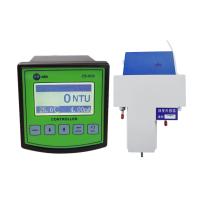
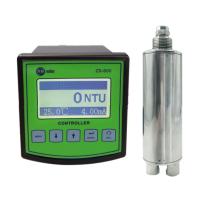
What is a turbidity meter and how does it work?
Turbidity, a measure of suspended solids in a liquid, is used as a measure of water quality and can be used as a way for processors to cut waste, improve sustainability and control consumables. Turbidimeters detect the moment a liquid medium reaches predetermined specifications.
How to use a turbidimeter?
With growing concerns about industry's impact on the environment, turbidity sensors are a desirable way to reduce waste and increase product yield. In-line turbidimeters should be installed at vantage points in the process to facilitate immediate detection of liquid media. Examples of applications for turbidimeters include:
Phase separation of products (e.g. whey – cream – milk)
Phase change, product to product, product to water and water to detergent
CIP return line (monitoring of pre-flush water)
Brewery Yeast Harvest
QC
Leak detection of filters and gaskets
raw material bin
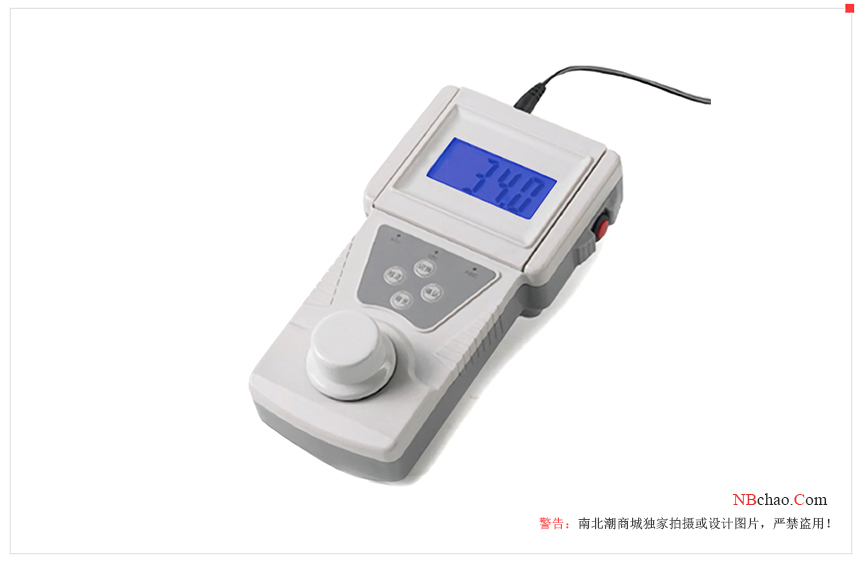
How does a turbidimeter work? What can a turbidimeter measure?
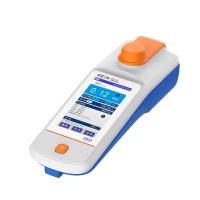
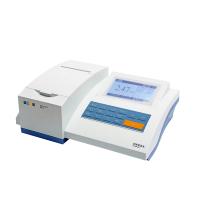
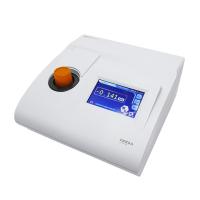
By using an LED light source, a Turbidity Meter determines the level of particulate matter in water or other fluids. Our turbidity partner, Anderson-Negele, defines turbidity as "a phenomenon in which a specific portion of a light beam passing through a liquid medium is reflected by undissolved particles. Sensors measure the light reflected by these particles to determine their presence in the liquid. concentration.” For example, pure water has almost zero undissolved particles, while ice cream mixes have a high concentration.
Measuring principle of relative turbidimeter
Infrared diodes shine infrared light into the medium. Particles in the medium reflect the radiated light which is detected by the receiving diode (backscatter principle). The electronics calculate the relative turbidity of the medium from the received signal.
-
![LEICI WZB-170 Turbidity Meter 850nm/200NTU]()
-
![LEICI WZB-171 Turbidity Meter 850nm/200NTU]()
-
![LEICI WZB-172 Turbidity Meter 850nm/500NTU]()
-
![LEICI WZB-175 Turbidity Meter 850nm/1000NTU]()
-
![LEICI WZS-180A Turbidity Meter 200NTU]()
-
![LEICI WZS-181A Turbidity Meter 200NTU]()
-
![LEICI WZS-185A Turbidity Meter 1000NTU]()
-
![LEICI WZS-186 Turbidity Meter 2000NTU]() LEICI WZS-186 Turbidity Meter 2000NTU$ 1367.00
LEICI WZS-186 Turbidity Meter 2000NTU$ 1367.00 -
![LEICI WZS-188 Turbidity Meter 4000NTU]()




- 1Common types and application differences of STIP-scan
- 2What is haze or turbidity?
- 3Turbidity Meter/Turbidity Sensor FAQ
- 4Water quality testing instrument FAQ collection
- 5Why is silicone oil important in turbidity meter measurements?
- 6How to measure the turbidity of a liquid?
- 7Testing water quality with turbidity instruments
- 8Techniques for measuring turbidity in water
- 910 Tips for Using Turbidity Meters Correctly and Keeping Accurate Measurements