How to choose the dissolved oxygen measurement method: optical method, current method, polarographic method?
Dissolved Oxygen (DO) and Water Quality
Dissolved oxygen is a key indicator of water quality that is relied upon in a variety of applications. In industrial water treatment, dissolved oxygen levels can indicate water quality issues that lead to equipment corrosion. In aquaculture, fish transport and aquarium applications, dissolved oxygen is monitored to ensure that aquatic organisms have sufficient oxygen in their habitat to survive, grow and reproduce. In municipal water treatment facilities, dissolved oxygen in wastewater is monitored during aerated water treatment.
Measuring Dissolved Oxygen Concentration
The dissolved oxygen concentration in water can be continuously sampled or monitored using a dissolved oxygen sensor. How Do Dissolved Oxygen Probes Work? The answer to this question depends on the type of dissolved oxygen sensor used. Commercially available dissolved oxygen sensors generally fall into three categories:
Electrodissolved Oxygen Sensor
Polarographic Dissolved Oxygen Sensor
Optical Dissolved Oxygen Sensor
Each type of dissolved oxygen sensor works a little differently. Therefore, each dissolved oxygen sensor type has its advantages and disadvantages, depending on the water measurement application to be used.
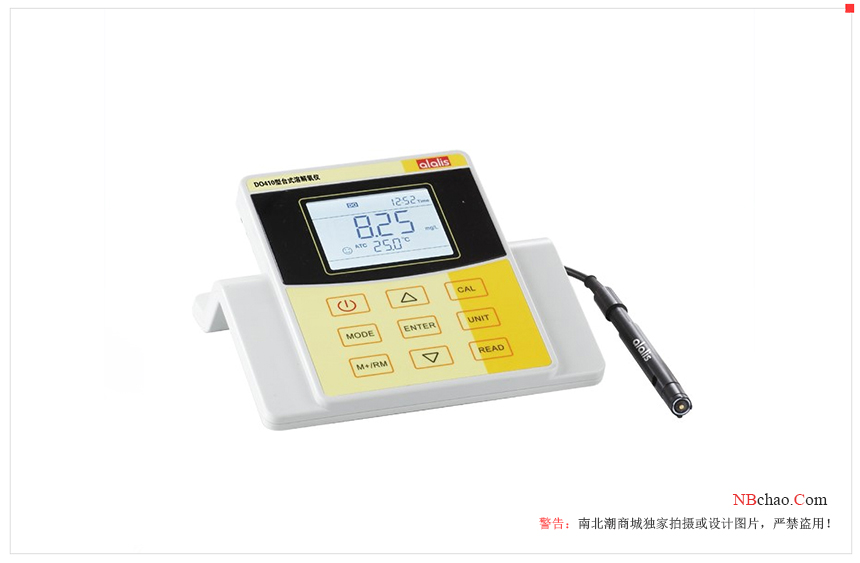
The working principle of the electrochemical dissolved oxygen sensor:
Electrochemical dissolved oxygen sensors of the two electrical DO sensor and polarographic DO sensor types. In electrochemical dissolved oxygen sensors, dissolved oxygen diffuses from the sample through an oxygen-permeable membrane and into the sensor. Once oxygen enters the sensor, a chemical reduction reaction occurs that generates an electrical signal. This signal can be read by a dissolved oxygen instrument.
Polarographic and Electrodissolved Oxygen Sensors:
The difference between amperometric DO sensors and polarographic DO sensors is that polarographic DO sensors require a constant voltage to be applied. It needs to be polarized. In contrast, galvanic DO sensors are self-polarizing due to the material properties of the anode (zinc or lead) and cathode (silver). This means that while amperometric dissolved oxygen sensors can be used immediately after calibration, polarographic sensors require a 5-15 minute warm-up time.
How Optical Dissolved Oxygen Sensors Work:
An optical dissolved oxygen sensor has no anode or cathode, and does not drop during oxygen measurement. Instead, the sensor cap contains a luminescent dye that glows red when exposed to blue light. Oxygen interferes with the luminescent properties of the dye, a phenomenon known as "quenching". The photodiode compares the "quenched" luminescence to a reference reading, allowing the dissolved oxygen concentration in the water to be calculated.

Optical and Motorized DO Sensors:
Both optical dissolved oxygen measurement and amperometric dissolved oxygen measurement have advantages and advantages. The good news is that both technologies offer similar accuracy when measuring dissolved oxygen concentrations. This holds true across a wide range of measurements: field tests have shown similar results for optical and amperometric DO sensors, from ~1mg/L to 14mg/L.
One of the differences between optical and electrokinetic dissolved oxygen sensors is that electrokinetic dissolved oxygen sensors are flow dependent. This means that a minimum inflow velocity (2 in/sec for Sensorex models) is required to maintain measurement accuracy. Optical dissolved oxygen sensors do not require a minimum inflow rate.
Some sample components may interfere with measurement accuracy. Hydrogen sulfide, a compound such as found in wastewater, lake bottoms, and wetlands, permeates the electrokinetic sensor membrane. In these environments, optical dissolved oxygen sensors would be a better choice, as these sensors are less susceptible to H2S interference.
One of the advantages of electrochemical DO sensors is the faster response time of electrochemical DO sensors compared to optical DO sensors. Depending on the membrane material, the response speed of the electro-dissolved oxygen sensor is 2-5 times faster than that of the optical dissolved oxygen sensor. This limitation of optical dissolved oxygen sensors is even more troublesome in applications where a large number of samples need to be measured. Response time is usually not the limiting factor when selecting a DO sensor for continuous monitoring applications.
Comparison of Polarographic, Amperometric and Optical Dissolved Oxygen Sensors:
The following table summarizes the advantages and disadvantages of the three main methods of measuring dissolved oxygen concentration in water:
| benefit | limitation | |
| Optical | zero warm-up time High Calibration Stability Maintenance every 1-2 years | higher power consumption slow response time |
| electric | zero warm-up time short response time cost-effective | Maintenance every 2-8 weeks Hydrogen Sulfide Sensitivity |
| Polarogram | short response time cost effective | 5-15 minutes warm-up time Maintenance every 2-8 weeks Hydrogen Sulfide Sensitivity |




- 1Common types and application differences of STIP-scan
- 2What is the importance of dissolved oxygen testing in water quality testing?
- 3Differences between several common water quality testing equipment
- 4ANLELIS DO410 Benchtop dissolved Oxygen Meter Concise operation guide
- 5ANLELIS DO300 Portable dissolved Oxygen Meter Concise operation guide
- 6Application of ONSETHOBO U24-002-C/U24-001 dissolved oxygen Recorder in natural gas development evaluation
- 7ONSETHOBO U26-001 dissolved oxygen Recorder for monitoring dissolved oxygen in endangered mussel habitat


