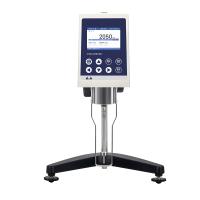
Pay attention to these two points in the measurement process of the viscometer!
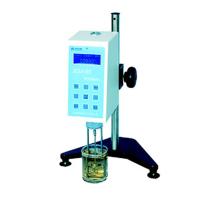
A viscometer, as the name suggests, is an instrument used to measure the viscosity of liquids. Widely used in many fields, it is of great significance to the quality of many products.
The viscosity of a liquid is a measure of the ability of the interaction between liquid molecules to hinder the relative movement between molecules. The viscometer is used to measure the conditional viscosity of the paint, that is, the amount of a certain amount of paint that flows out of a hole with a specified diameter at a certain temperature. The time is expressed in seconds. The viscometer is suitable for measuring paint products with a viscosity of not less than 20 seconds (based on this viscometer), and paint products with higher viscosity that need to be heated for measurement according to product standards.
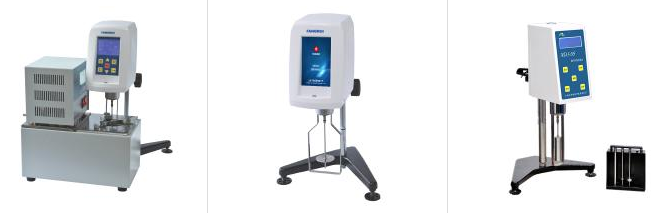
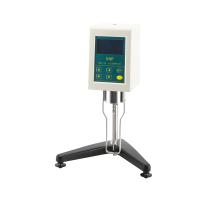
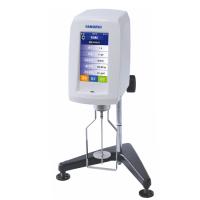
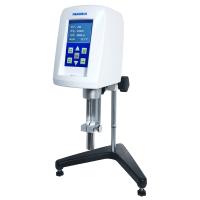
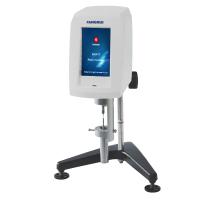
Viscometer It is suitable for laboratories and factories to measure the excellent viscosity of various Newtonian liquids and the apparent viscosity of non-Newtonian liquids. It can be equipped with special drums and standard drums to measure the rheology of non-Newtonian liquids. characteristic. The instrument can measure the viscosity of petroleum, resin, paint, ink, paste, cosmetics, cream, asphalt, etc. For liquids with different viscosities, three different measuring accessories can be selected for measurement.
According to the measurement principle of the viscometer, if you want to ensure the accuracy of the measurement results, then the following two points should be paid attention to:
1. The performance index of the viscometer needs to meet the requirements of the national metrology verification regulations. The instrument in use should be periodically verified, and if necessary (the instrument is frequently used or in a qualified critical state), an intermediate self-inspection should be carried out to ensure that its measurement performance is qualified and the coefficient error is within the allowable range, otherwise accurate data cannot be obtained.
2. Pay special attention to the temperature of the measured liquid. Many users ignore this point and think it doesn’t matter if the temperature is slightly different. Our experiments have proved that: when the temperature deviation is 0.5°C, the viscosity value deviation of some liquids exceeds 5%. The temperature deviation has a great influence on the viscosity, and the viscosity decreases when the temperature rises. Therefore, special attention should be paid to keep the temperature of the liquid to be measured constant near the specified temperature point, and the measurement should not exceed 0.1°C.
- 1Rotational viscometer - principle, classification, application and calibrating
- 2Application of NDJ-8S digital Rotational Viscometer in viscosity measurement of cosmetic raw materials
- 3NDJ-5S digital Rotational Viscometer accurate measurement of natural oil viscosity
- 4Viscosity of polypropylene (PP) amide measured by NDJ Viscometer
- 5Application of HBDV-1H swirl/spin High Temperature Viscometer in Viscosity Determination of Plastic Particles
- 6Rotational viscometer selection guide: How to choose the right viscosity equipment for you?
- 7Principle, type and accuracy control of Rotational Viscometer
- 8Which Viscometer to Choose for Licorice Extract Viscosity Testing? How to Test?
- 9Application of Rotational viscometer in Waterborne Polyurethane Adhesive