Detection principle of coating fineness and scraper Fineness Meter
Pigments, extender pigments and other solid components used in color paints should be evenly dispersed in the paint in the form of tiny particles, and no granular objects should appear . The index of fineness is commonly used in the paint industry to detect the degree of dispersion of pigments and other components in paint. Fineness is an important performance index of color paint, which has a great influence on the quality, gloss, durability and storage stability of the formed coating film . Pigment particles with fine particles and good dispersion degree can be well wetted, and the space between the particles is less filled by the paint material. The medium pigment is not easy to precipitate and agglomerate, which improves the storage stability. The simple and practical way to measure the fineness is to pinch a small amount of uniformly stirred paint with your index finger and thumb and twist it , try to feel the particle size in the paint, if you can feel the particle size, it means the fineness is poor. If you don't feel any particles when twisting, but there are still traces of pigment between the fingerprints, it means that the fineness is high. It can also be measured with a Fineness Meter, which is to spread the paint into films , and observe to what extent pigment particles can be observed when the thickness reaches. The measured thickness value (μm) is used to express the fineness, and the larger the thickness value, the higher the fineness.
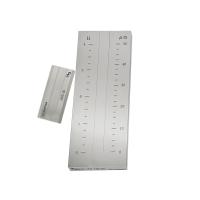
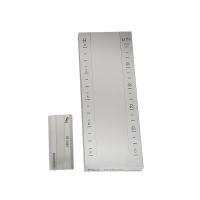
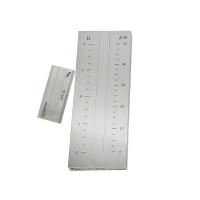
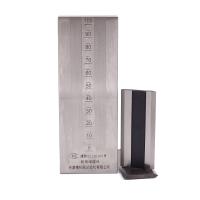
At present, all countries in the world basically use the scraper Fineness Meter to measure the fineness. The scraper fineness gauge is a polished flat plate with a wedge-shaped groove from zero to several microns deep, and there are scale marks on the edge of the groove to indicate the depth of the groove. When measuring, drop the sample into the deepest part of the groove, then use a scraper with both edges polished to touch the flat plate vertically, pull the paint across the entire length of the groove at an appropriate speed, and then along the direction of the 30° angle of the human beam Observe the uniformly exposed depth , and this thickness represents the fineness of the sample.
- 1Coating fineness of ground - Fineness gauge
- 2Coating fineness test method and influencing factors
- 3Fineness Detection of Precious Metal Slurry in Microelectronic Technology with Fineness Meter
- 4Inks Fineness gauge principle results and usage introduction
- 5Basic Principle and Application Analysis of Coating Fineness Scraper
- 6Coating Fineness Determination and Its Importance
- 7Detection Steps of Coating Fineness and Operation Method of Ground Gauge
- 8Fineness gauge detection principle
- 9How to use Fineness of Ground Gauge to measure colorants?