Determination of flash point of coatings
definition
The lowest temperature at which a flammable liquid is heated to the point at which a mixture of vapor and air on the surface of the liquid is in contact with a flame and an open flame occurs.
test methods
(1) Standard GB261-1977 Determination of flash point of petroleum products (closed cup method).
(2) Principle The temperature at which the sample is heated until the mixture of steam and air on its surface comes into contact with the flame, and when the blue flame flashes for the first time, is the flash point. There are two kinds of open cup method and closed cup method. Generally, the former is used to determine high flash point liquids, and the latter is used to determine low flash point liquids.
(3) The operating oil cup should be washed with unleaded gasoline. When drying the sample with air and pouring it into the oil cup, the temperature of the sample and the oil cup should not be higher than the dehydration temperature of the sample. Fill the sample cup to the ring mark, cover with a clean, dry cap, insert a thermometer, and place the cup in an air bath. If the flash point of the test is lower than 50°C, the air bath should be cooled to room temperature in advance, the wick of the igniter or gas should be ignited, and the flame should be adjusted to a nearly spherical shape with a diameter of 3~4mm.
The flash point Tester should be placed in a sheltered and dark place to facilitate observation of internal fires. When testing a sample with a flash point lower than 50°C, stir continuously from the beginning to the end of the test, and increase the temperature of the sample by 1°C per minute. Stir regularly. When it reaches 20°C before the expected flash point, the heating rate can be controlled at 2~3°C per minute, and constant stirring is required.
10 km before the temperature of the sample reaches the expected flash point, the ignition test is carried out every 1 °C for the sample with a flash point lower than 50 °C, and the ignition test is carried out every 2 °C for the sample with a flash point higher than 50 °C. During the test, the sample should be stirred by rotating the stirrer, and the stirring should be stopped only when the fire is turned on. Open the hole of the device when igniting, if no flash fire is seen, continue to stir the sample. Continue to raise the temperature, and repeat the ignition test as required. When the blue flame first appears above the liquid surface of the sample, immediately read the temperature from the thermometer as the measurement result of the flash point.
After obtaining the initial flash point, continue to carry out the ignition test under the above conditions, and the flash fire should continue. If, after the initial flash, no open flame is seen after ignition is made, the test shall be repeated with a different sample. The assay is only considered valid if the results of the repeated tests remain the same.
(4) Instrument
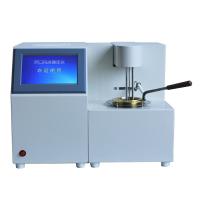
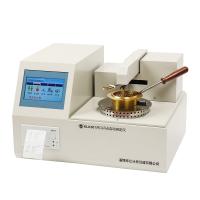
Closed flash point Tester, see Figure 2-13.
- 1Comprehensive analysis of flashpoint Tester: Definition, selection method and Application
- 2The concept of flash point, what is flash point