Several common preparation methods of disperse colloids - dispersion method
The dispersion method is a method of finely dispersing bulk materials into colloidal particles. It includes mechanical grinding, ultrasonic dispersion, peptization dispersion, electric dispersion and other methods.
The grinding method is a common method for crushing and dispersing large objects, such as grinding ink in an inkstone, grinding noodles in a millstone, springing rice in stone white, grinding sesame paste in a pulverizer, etc. are all grinding methods. Due to the different rigidity and toughness of the material, there are two ways to crush it: impact type and grinding type (smearing type). The grinding machines used in practice include both impact type, such as high-speed impact grinding machine; there are also grinding types, such as tricycle machine, stone mill, colloid mill, etc.; of course, the combination of the two is the most common type, such as ball mill, disk Mills, sand mills and other grinding equipment. The colloid can be obtained by crushing and grinding the solid to a size of 1-500nm and then dispersing it in the medium. However, directly grinding solids can only obtain micron-sized particles at most, which cannot reach the degree of colloidal dispersion. A more effective method is to aid in the wet grinding of surfactants, or co-grind the dispersed substance (such as sulfur) with another solid substance (such as sucrose) that is irrelevant but soluble in the dispersion medium, and finally grind The sol can be obtained by dispersing the substance in water, and another substance contained in the sol can be removed by dialysis. Here is a brief introduction to the colloid mill. The colloid mill is a superfine pulverizing machine. Its basic working principle is that under the action of centrifugal force, the fluid or semi-fluid material is forced to pass through the gap between the stator and the rotor. Due to the high-speed relative motion between the stator and the rotor, the material is subjected to a strong force here. The shear force, friction force, high-speed stirring and high-frequency vibration and other physical effects can effectively grind the finely divided powder to achieve the purpose of ultra-fine crushing and emulsification of the material. It is currently widely used in coatings, pharmaceuticals and food industries .
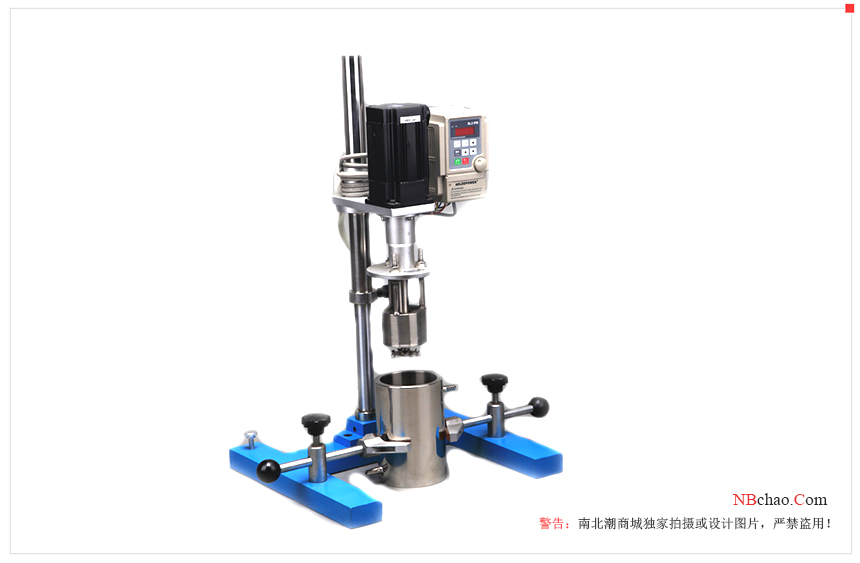
Ultrasonic dispersion is a common method for preparing colloids in the laboratory. When the frequency is higher than 16000Hz, it is ultrasonic, generally up to 1MHz. The high-frequency ultrasonic wave is introduced into the medium, which produces the same frequency of alternating density and density tearing force on the dispersed phase in the medium, so that the dispersed phase is evenly dispersed. It is widely used in emulsion preparation, colloid preparation and laboratory.
Peptization is a method of redispersing the dispersed phase that has been temporarily coagulated (precipitated). It is a method of turning insoluble precipitates into colloids by passing a small amount of soluble substances or washing away excess electrolyte in the system. After washing the newly formed precipitate, add electrolyte solution as a stabilizer, and redisperse after stirring and precipitation. The added soluble substances are called peptizers. Peptization is generally only effective for fresh and relatively loose precipitates. Once the precipitation is left for a long time, the small particles have grown into large particles, and it is difficult to use peptization to achieve the purpose of redispersion. For example, adding electrolytes such as FeCl 3 to fresh Fe(OH) 3 precipitates and AgNO 3 to fresh AgCl precipitates can quickly transform the precipitates into colloids.
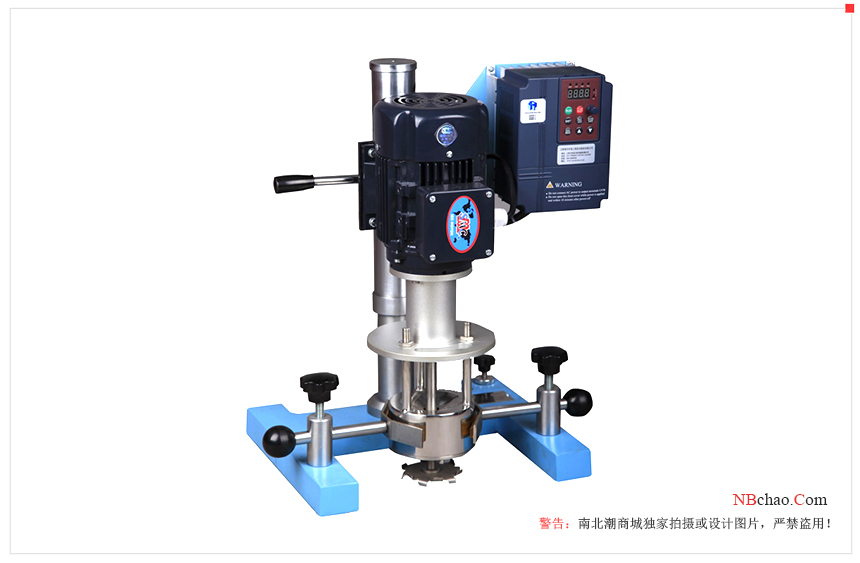
The electrodispersion method is mainly used to prepare metal hydrosol. It inserts the metal as an electrode into the solution, and then passes a high-voltage current between the two electrodes to cause the discharge between the two electrodes to form an arc. The released heat causes the metal to be heated and evaporated, and then cooled by the solution. And the metal sol is obtained. This method starts with a dispersive process followed by an agglomerative process. A small amount of alkali can be added to water to obtain a stable sol. Sometimes in order to avoid by-products (electrolysis products), high-frequency current is used instead of direct current.

- 1A Brief Discussion on the Difference between Disperser and Stirrer
- 2Several Common Coating Dispersers
- 3Inspection Contents of Chemical Plant Disperser
- 4The difference between Disperser ordinary and explosion-proof type
- 5Disperser stirring speed formula
- 6What's wrong with Disperser stirring?
- 7Main Structure of Vacuum Defoaming Disperser
- 8What oil is used in Latex paint Disperser?
- 9How to make a Disperser bucket holder?