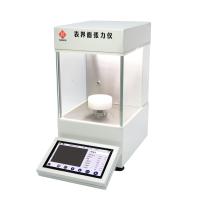
Four methods for measuring surface tension
Every shape of the liquid surface and every way of transition is related to the surface tension of the liquid, so it can be used to measure the surface tension. There are many methods of determination, and several commonly used methods are listed in Table 4-4.
| test methods | icon | Calculation formula | Features and scope of application |
| capillary rise method | 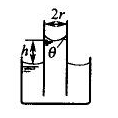 | γ=ρghr/2cosθ When θ is 0, the correction equation for the hemispherical meniscus is: γ=1/2· ρ(h+1/3)rg | Accurate, simple, slow speed, large amount of liquid; suitable for liquids with a contact angle of 0 |
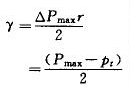
| Maximum bubble pressure method (dynamic) | 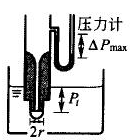 |
| Simple, fast, and convenient for remote control; independent of contact angle, suitable for inaccessible high-temperature liquids, not suitable for aging surfaces |
| Drop Gravimetry | 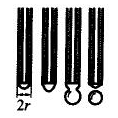 | γ =Wg/2πrf When r/V 1/3 =0.6~1.2, f≈0.6 | Suitable for very small droplets, and can also be used to measure liquid-liquid interfacial tension |
| circle method | 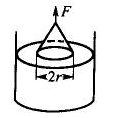 | γ=(FW ring g)/4πr | Convenient, but requires correction; suitable for liquids with contact angles close to 0 |
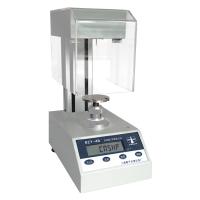
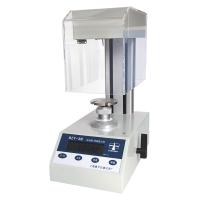
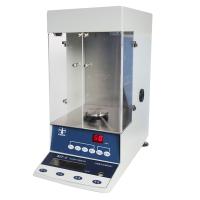
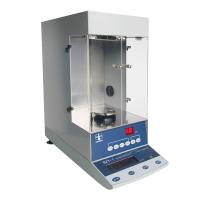
- 1Working principle of mechanical liquid meter interfacial tensIon Meter
- 2Comparison of Liquid Surface/Interfacial Tension Testing Methods: Plate vs. Ring Method
- 3Selection guide for Surface Tensiometers
- 4Application principle and precautions of platinum ring Surface Tensiometer
- 5Analysis of the difference between contact angle meter and Surface Tensiometer
- 6The working principle, application and operation steps of surface tensIon Meter
- 7Fangrui surface tensIon Meter test data deviation, how to solve?
- 8Comparison of Fangrui's different series of automatic watch interfacial tensIon Meters
- 9What is the measurement principle of surface tension?