How to detect the leakage of the anti-corrosion layer?
The detection of the integrity of the anti-corrosion layer is the detection of the leakage of the anti-corrosion layer.
The so-called leak point, English is holiday, refers to the discontinuous point on the anti-corrosion layer. The essence of leak detection is to check and discover the missing spots of the anti-corrosion coating on the metal surface, or the incomplete and defective parts of the coating film. These parts are the parts that may be corroded by corrosive media such as aqueous solution relatively quickly in the future, and corrosion damage will occur. Therefore, the inspection of the protective coating, especially the continuity or integrity of the anti-corrosion coating plays a very important role in the acceptance of anti-corrosion coating construction.
The leak detection of the outer anti-corrosion coating of buried steel pipelines is more important than the anti-corrosion coating in other industries. This not only leaves a coating leak, but also leaves a hidden danger of the coating. Since the integrity of the pipeline anti-corrosion layer directly affects the current density of cathodic protection and the economy of cathodic protection, in the construction process of buried pipeline anti-corrosion layer, whether it is the production prefabrication of anti-corrosion coating pipe in the anti-corrosion prefabrication plant During the process, or when transporting the anti-corrosion anti-corrosion layer pipe to the construction site, and implementing on-site welding, joint filling and other technological processes, the leak point detection of the anti-corrosion layer outside the pipe must be carried out. Especially before going down the ditch, 100% electric spark leak detection should be carried out on the whole line. Leak detection methods usually use a high-voltage electric spark leak Detector. A low-pressure wet sponge leak Detector can be used for a small number of thin coatings with a film thickness of less than 0.5 mm.
After the ditch is backfilled, it is still necessary to use the buried pipeline anticorrosion layer audio leak Detector to detect the leaks of the anticorrosion base outside the pipeline without excavation. The human body resistance capacitance method can also be used, or PCM technology, or so-called Qualitative positioning detection of leak coating points on the outer anti-corrosion layer of pipes that have been placed underground for the multi-frequency pipe current method.
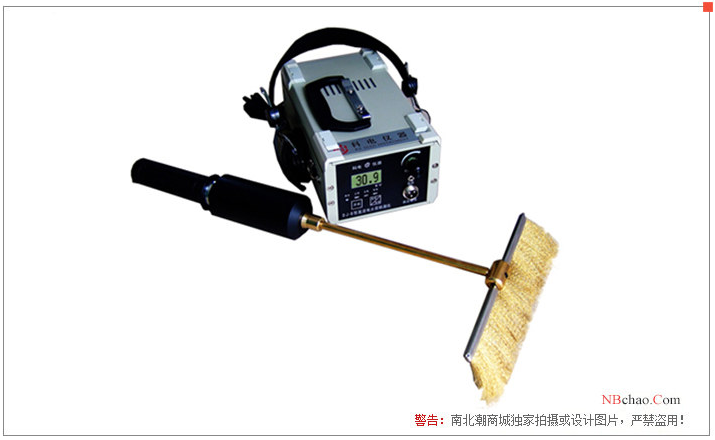
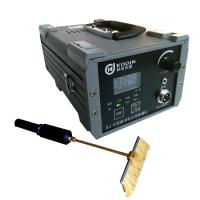
In the oil and gas industry, the detection method of the leakage point of the anti-corrosion layer is carried out according to the provisions of ASIM C62 "Standard for Leak Detection Test Method of Pipeline Anti-corrosion Layer". It can be detected by high-voltage electric spark or low-pressure wet sponge leak Detector. leak detection. Low voltage (DC voltage <100V) wet sponge leak Detector is used for the detection of leaks in thin anti-corrosion coatings with a coating film thickness of less than 0.5mm. High-voltage (900-20000V DC voltage) electric spark mountain leak Detector is used for leak detection of thicker anti-corrosion layers larger than 0.5mm. 0.5mm is also the definition standard in the American NACE RPO188-90 standard for using a high-voltage electric spark leak Detector or a low-pressure wet sponge for leak detection. Figure 1 is a domestic DJ-6 high-voltage electric spark leak Detector.
The standards of the American Association of Corrosion Engineers NACE RP 0274-74 "High Voltage Electric Spark Detection of Pipeline Anti-corrosion Coating Before Installation" and NACE RP0188-90 "Detection Method for Leakage of Protective Coating" are both about the leakage of pipeline anti-corrosion coating The NACE standard for detection, the coating quality inspection of my country's shipbuilding industry, is the standard for the detection method of protective coating film leaks on the surface of ships formulated with reference to the NACERPO188 standard.
The industry standard SY/T 0063——1999 "Test Method for Leak Detection of Pipeline Anticorrosion Layer" formulated by our country is equivalent to the American ASTM G62 standard. The Ministry of Construction CJJ95-2003 "Technical Regulations for Corrosion Control of Urban Gas Buried Steel Pipelines" stipulates the calculation of the leakage detection voltage of the anti-corrosion layer as follows:
(1) When the thickness of the anti-corrosion layer is greater than 0.5mm:
U=7900T 1/2
(2) When the thickness of the anti-corrosion layer is less than or equal to 0.5mm:
U=3300T 1/2 or 5V/μm
In the formula, T—the average thickness of the anti-corrosion layer, mm;
U——Missing detection voltage, V.

- 1Holiday Detector Coating thickness and reference voltage comparison table
- 2Method for testing the impact resistance of anti-corrosion coatings by coating impact testing machine
- 3Test principle of electric spark leak Detector
- 4Pinhole and Pore Detection: Spots in Armor
- 5Application of EDM Leak Detector on Coated Steel and Concrete Substrates
- 6How does Holiday Detector work in coating leak detection control?