What is paint solids content? How to test?
The solid content refers to the part of the coating component that becomes the coating film after the coating film is dried. It is expressed by the ratio (percentage) of the remaining mass of the coating after heating and baking at a certain temperature to the initial mass of the sample.
After the coating is formed into a film, what evaporates is the solvent, thinner and some additives in the coating. The rest are non-volatile ingredients in the paint, such as resins, pigments, fillers, etc. Therefore, the solids content is also referred to as the non-volatile content. The higher the solid content of the paint, the thicker the thickness of the first film will be when it is painted. That is to say, in order to obtain the same dry film thickness, the coating with higher solid content will consume less coating than the coating with low solid content. Therefore, when choosing a paint variety, it is often more economical to choose a paint with a high solid content.
The solid content of the paint can determine the effective use rate of the paint and the content of the agent, and also determine the environmental protection performance of the paint. It is an important performance index of the solvent-based paint. The price of the square meter is closely related.
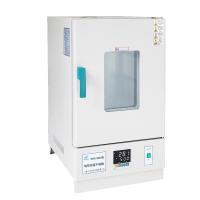
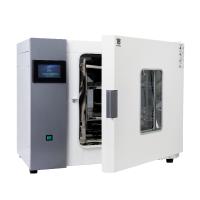
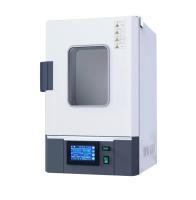
The solid content of coatings is usually measured by the oven method. The oven method can be further divided into the Petri dish method and the watch glass method. The detection standards of different countries are slightly different, but the basic principles are the same. The method used is to heat and bake the paint at a certain temperature, and compare the remaining substance amount with the original mass of the sample after the paint dries.
my country's standard GB/T 1725-88 "Determination of Solid Content in Coatings" stipulates that glass petri dishes and glass surface blood are used to measure in a blast constant temperature oven. This standard is equivalent to the international standard ISO 1515-1973.
The national standard GB 9297-88, GB/T 1725-88 " Determination of the Capacity of Non-volatile Components in Liquid Coatings" is to measure the volume fraction of non-volatile components in order to determine the amount left after the liquid coating is cured or dried at the specified temperature and time. The dry film volume and expressed as a percentage. This result can also be calculated by calculating the dry film thickness of the paint to calculate the area that can be coated with a unit volume of liquid paint. Usually called solid volume fraction.
The mass fraction of solid components and the volume fraction of solid components also use different test methods in the American ASTM standards, which are called mass solid components (test method ASTM D2369) and volume solid components (test method ASTM D2697).


- 1Principle, function and application of thermostatic Drying Oven
- 2MB35 halogen Moisture Analyzer: a tool for accurately measuring volatile matter
- 3Thermostatic Drying Oven FAQ and its solution
- 4Constant temperature Drying Oven selection method and precautions
- 5Determination of Ash and Pigment Base Ratio in Electrophoretic Coatings
- 6What subjects are generally tested for architectural paint color paste?
- 7How to prepare polymer blended solid film materials?
- 8Ball Mill vs Basket Mill - What is the application? How are they different?
- 9What are the technical requirements for latex paint for synthetic resin emulsions?