Instrument and method for measuring whiteness of paper
The so-called "white" refers to the physical phenomenon that appears when all the light of various wavelengths is reflected. In other words, when sunlight acts on the white paper and is reflected, the feeling seen by the human eye is called whiteness. Its English is White-ness, and some people translate it as whiteness. There is also an English Brightness, some people translate it into whiteness; some people translate it into brightness. The meaning of this term is the ratio of the reflectance obtained by irradiating the paper surface with light of 4S7nm wavelength (near blue light) and the known reflectance of the magnesium oxide plate under the same irradiation conditions, expressed in percentage. Comparing the two, you can see the slight difference between them. The former whiteness is a vague and qualitative concept. The latter brightness is an accurate and quantitative concept. Because it is the result of measuring with a fixed wavelength light source and under specified conditions. Therefore, the brightness should have a specific number, such as a percentage. Over the years, it has been customary to treat these two concepts as the same, and the unit is % (reading degree ) . It’s just that the instruments used are different and the methods are different, so there are several representations of whiteness: such as ZBD (whiteness of domestic Wenzhou optical Whiteness Meter), IS (whiteness recognized by the International Organization for Standardization), GE (whiteness of General Electric Company of the United States) instrument to measure whiteness), Elreplo (Testo Zeiss Elif Whiteness) and so on.
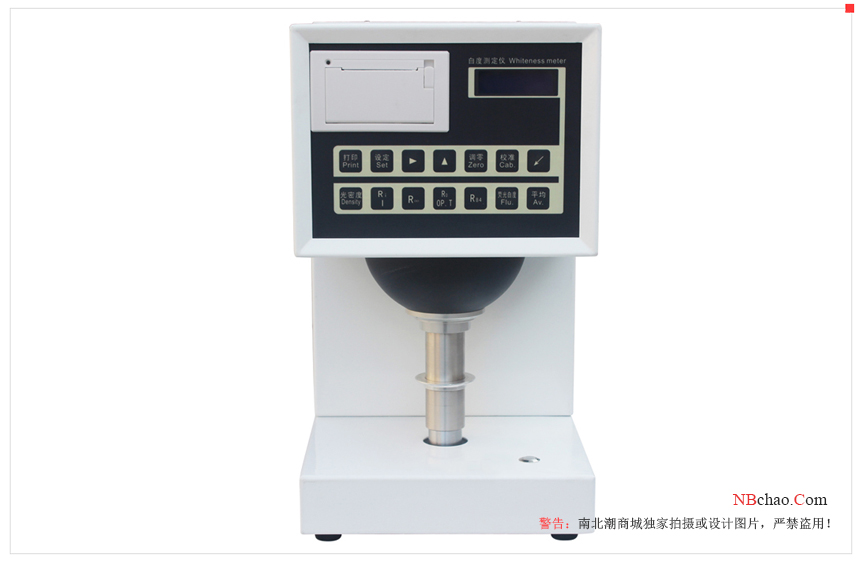
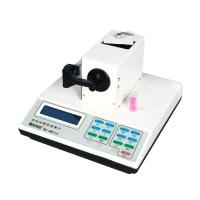
The commonly used measurement method is photoelectric Whiteness Meter. Magnesium oxide whiteness board is used as 100% standard. When constant, the light source passes through the first color filter (purple blue) and shines on the paper strip at an angle of 45°. The reflected light from the paper strip is absorbed by the selenium photocell when it passes through the second color filter (yellow) in the vertical direction. According to the intensity of the reflected light, use the adjustable potentiometer to adjust the galvanometer to zero. The number on the adjustable potentiometer is the whiteness value of the paper strip.
The whiteness of paper is closely related to printing, and it is required that the whiteness of the same batch of paper is close to each other, and the difference is not allowed to be too large. Because of the inconsistency of the whiteness, it will inevitably cause the ink color of the same batch of printed matter to be different, especially for color printing, the whiteness has a greater impact on the overprinting of the three primary colors, and if it is not done, there will be defective products. High whiteness paper, contrasted with black (color) ink, makes the text more clear. However, the whiteness of the paper used for printing general books and periodicals does not need to be very high, otherwise it will easily cause visual fatigue to readers. The whiteness requirements for various printing papers are: 45%~52% for newsprint; 55%~65% for letterpress paper; 55%~75% for book paper; 7%~87% for offset paper; 80%~85% for coated paper.



- 1How to measure Paper transparency and glossiness?
- 2Does the Whiteness Meter have detection significance on white rice?