What is ink emulsification? Features of emulsion
Ink is a stable suspension in which solid pigment particles are dispersed in a linking material. In a colloidal chemical system, it belongs to a liquid-phobic sol. The dampening diluent is a liquid added with electrolytes and gum arabic, which is a lyophilic solution. In this way, the balance of water and ink is essentially the balance of the two colloidal systems of lyophobic and lyophilic. This equilibrium system has a more complex process, not only the repulsion process of the two systems, but also the miscibility process of the dispersed phases of the two systems. At normal temperature and pressure, ink and water are very immiscible, but when the conditions change, there is a possibility of phase miscibility (or dispersion) in the process of mutual repulsion.
In the printing process, under certain conditions, water is dispersed in the ink as small droplets, or the ink is dispersed in water as a small whole to form an emulsion. The process of forming this emulsion is called ink emulsification.
(1) Characteristics of emulsion
The emulsion produced by ink and water under certain conditions has the following main characteristics:
(1) Both the dispersed phase and the dispersion medium are liquid, but they are immiscible or have very little mutual solubility. Some of these two substances are often polar water, and the other is non-polar substance or oil.
(2 ) The degree of dispersion of the emulsion is not high in the colloidal system, but it also has the contradiction between dispersion and coalescence, and the tendency of coalescence is dominant.
(3) The degree of dispersion of the emulsion can be expressed by the size of the droplet, usually the size of the droplet is between 1 and 50um.
( 2) Conditions for the formation of emulsion
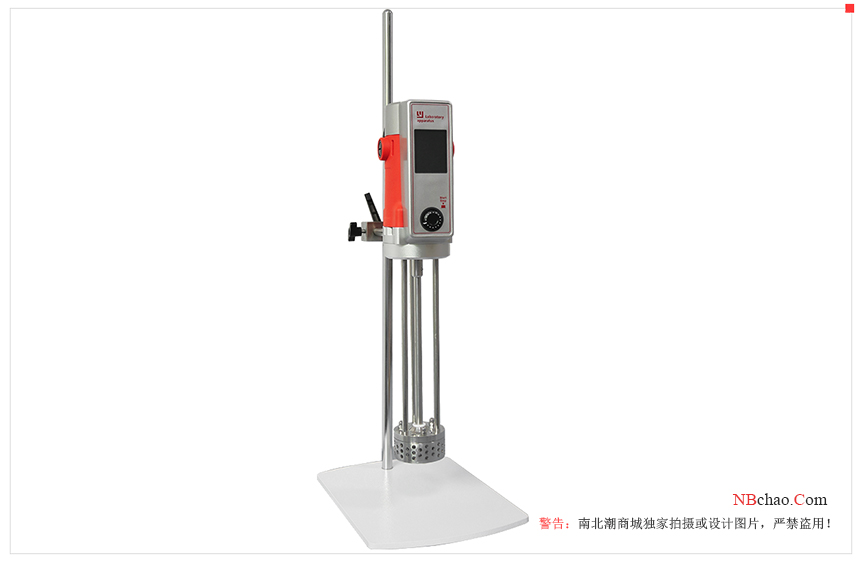
Water ( or oil) is dispersed in ink (or water) as fine droplets to form an emulsion, which requires two conditions: one is mechanical force, and the other is the presence of an emulsifier.
(1 ) Mechanical force. For two immiscible liquids to form an emulsion, stirring by mechanical force is a necessary condition. The pressure and reverse rotation between each pair of ink cartridges in the inking system of the offset printing machine are one of the reasons for the formation of emulsification and water emulsification. When the moisture on the layout is in contact with the roller, a part of the water must adhere to the surface of the ink mixed with the ink. Due to the mutual extrusion and rapid rotation and stirring between the ink kuns, the water is ground into fine droplets and dispersed in the ink forcibly to form an emulsion.
(2 ) The presence of emulsifiers. Two immiscible liquids can significantly reduce their surface tension under the action of an emulsifier, and after stirring, the two immiscible substances can be dissolved into an emulsion.
( 3) Properties of the emulsion
Emulsions can be divided into two types according to the conditions of formation: one is unstable emulsion; the other is stable emulsion.
1. Properties of unstable emulsions
The two-phase immiscible liquid, the emulsion formed under the condition of mechanical action (stirring ) force, generally has poor stability.
This emulsion is a mixed liquid that is forced to form under the action of force. It is a temporary mixture. After stopping the mechanical force and standing still for a period of time, the fine droplets dispersed in the ink collide with each other during the movement and coalesce into a smaller ink. Precipitation or delamination due to large water droplets. For example: the ink scooped off by the ink knife on the ink wheel is observed under a magnifying glass or a microscope, and it is found that the ink contains a lot of tiny water droplets. In severe cases, water droplets will roll down from the ink knife that shovels ink. This emulsification phenomenon maintains a temporary stable state on the high-speed rotating ink mix, because its speed greatly exceeds the speed at which droplets collide with each other, coalesce and precipitate.
In lithographic printing production, ink and water are mechanically stirred to form an unstable emulsion. After printing on paper, due to the capillary phenomenon between paper fibers, most of the dispersed water in the ink layer is absorbed by the paper, and part of it is evaporated.
2. Properties of stable emulsions
The emulsion formed by two immiscible liquids under the action of an emulsifier generally has better stability. The small droplets of stable emulsion are dispersed in the ink. Under the action of emulsifiers (usually surface active substances), a relatively firm protective film (or electric double layer) is formed around each small droplet, causing the liquid When the droplets collide, they cannot gather to form larger water droplets, and the water droplets are extremely stably dispersed in the ink.
In lithographic production, because the hydrophilic colloid and the hydrophobic colloid contain certain surface active substances, the ink and water will inevitably form an emulsion. The result of emulsification, on the one hand, reduces the transparency of the ink and enhances the covering power; on the other hand, the water droplets dispersed in the ink occupy the relative space in the ink, and the particles that accumulate pigments on the unit area of the dot are squeezed out by the water droplets , so as to open the distance of the original pigment particles, reduce the pigment particles per unit area of the dot, and reduce the saturation of the color of the printed matter.
In production, the performance of the emulsion formed by the action of emulsifier is relatively stable, but it will hinder production in serious cases, so it needs to be strictly controlled.
- 1How high-speed shearing Mulser works
- 2What is the difference between Mulser and Disperser?
- 3Difference between Mulser and Disperser
- 4Three properties of ink leading to emulsification
- 5Working principle of high shear hybrid emulsifier
- 6RH-II Mulser Instructions and Precautions
- 7Analysis on the blending method of waterborne epoxy floor topcoat
- 8Discussion on Quantitative Analysis of Consequences of Mulser Explosion Accident
范军政;白春光;杨家福 - 《爆破器材》
- 9On the emulsification effect and security of Mulser
杨民刚 - 《 爆破器材》