What are the packaging quality test methods?
It cannot be overemphasized how important it is to test a newly developed package to ensure that the package will meet its requirements in every situation. Outer packaging is often subjected to great physical and mechanical stress. They also need to ensure that perishables stay fresh before opening the package. In order to monitor the behavior of the package under different stresses, flexible package testing is very important.
The testing procedures for film and flexible packaging are completely different from those for rigid packaging. For flexible packaging, many other parameters also need to be tested, such as barrier properties, flex crack resistance, seal strength, etc. There are standard tests approved by the government for testing flexible packaging. Here are some flexible packaging testing methods:
Flexible Packaging Testing of Structural Materials
This flexible packaging material test will examine the physical and chemical properties of the materials used to manufacture flexible packaging. For example, flexible packaging films such as ordinary cling film or shrink film pass tests including tensile strength, elongation, surface energy, elastic modulus, moisture and oxygen transmission rates, heat seal strength, heat seal conditions, etc. .
Chemical property testing usually includes checking its reactivity with the food or product it contains under different conditions.
size test
Dimensional flexible packaging testing checks the dimensions of the package before and after packaging. Flexible packaging changes shape according to the contents inside. Therefore, it is very important to check if the pack is empty and when it is full.
Standard tests include testing length, width and depth. Dimensional testing also involves testing the grammage of the films used to make the packaging. We usually measure gram weight in grams per square meter or GSM. A higher GSM number means the film is denser and heavier.
GSM is inversely proportional to yield. The yield of the film determines the surface area per unit area covered by the package. The unit is square meters per kilogram, as opposed to GSM. Dimensional testing is required because in many cases manufacturers use assembly lines to fill packages. Dimensional testing is required to ensure that the packaging can be seamlessly integrated with the assembly line.
Mechanical property test
This suite of tests involves checking the physical and mechanical stresses a package can withstand before it breaks. This includes the following tests.
tensile strength
This test examines the force required to break a flexible package and how much it can be stretched before breaking. This also extends the range of failure data, i.e. how much material can be stretched.
Dart Shock
The Dart Impact Test (commonly known as the Drop Dart Test) checks the toughness of flexible packaging. As the name suggests, the dart is released from a certain height and falls freely on the flexible package, which is held tightly at the bottom. Darts of different weights were used in the tests.
Bond Strength (PET, Poly)
Bond strength determines the strength of the laminate. Flexible packaging typically consists of multiple layers of polymers, including sheet metal. Bond strength testing checks how much force is required to separate the layers.
seam strength
Seam Strength Checks the strength of the package where two films or sheets join.
Flex crack resistance (FCR)
Flex crack resistance tests the brittleness of flexible packaging. This flexible package testing method checks how much a package can bend or flex before it breaks.
Coefficient of friction (CoF)
CoF checks how easily two surfaces slide against each other. In other words, it tests the smoothness of a film or package. CoF brings up the idea of how easily the packaging film slides over other materials during the packaging process.
Functional characteristic test
Functional properties Test barrier properties, understand the dissolution, diffusion, adsorption of flexible packaging materials. They also help to understand the ability of the packaging in terms of preserving the product.
Water Vapor Transmission Rate (WVTR)
This test examines the permeability of materials to water vapor at selected temperatures, pressures and humidity. The transmission rate is measured in grams per square meter per day, that is, how much water vapor per unit area per unit time is transmitted through the packaging film.
Oxygen transmission rate (OTR)
The test uses wrapping film to create a barrier between oxygen-free and oxygen-filled chambers. Like the WVTR test, it is measured in moles per square meter per day.
Packaging Strength and Integrity Testing
This set of tests checks how tight the package is on the assembly line and how tight it is over time. Even if the material used for packaging has great barrier properties, an improper seal can cause the product to fail prematurely. Most of these tests are performed while the product is in the package.
Seal strength
This flexible packaging test shows how secure the seal is and how well it keeps the package closed over an extended period of time.
drop test
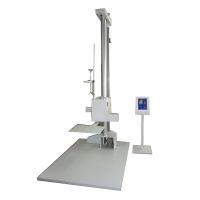
Drop testing checks whether a flexible package can withstand a drop when filled. In order to pass the drop test, neither the material nor the seal used for the packaging should break. Also, the interior of the product should remain intact.
vibration test
This allows you to check how well the box withstands vibrations.
compatibility test
Compatibility testing is very important to know the shelf life of the product in the packaging. This flexible packaging test checks that the product interior is compatible with the materials used for packaging and the sealing method. Incompatible packaging often results in leaks or product spoilage.
anti-wear
This checks the durability of the packaging for scratches.
leak test
Leak testing checks for leaks from seams, seals, or packaging materials by placing the package containing the product in a vacuum chamber. Reduce the pressure gradually and continuously check the package for signs of leaks.
global migration
Migration testing assesses the toxicological risks associated with packaging. Many of the chemicals used in food packaging are often toxic but are used for their barrier properties or to increase the strength of packaging films. Global Migration examines how all materials used in packaging can contaminate food. In other words, it checks the inertia of the material.
Environmental Stress Crack Resistance (ESCR)
ESCR checks the packaging's resistance to environmental stress cracking, or ESC. ESCs are very common in plastics because over time they become brittle from exposure to UV light and reactions with other agents.
Visibility and appearance testing
The optical properties of flexible packaging are also important. They form an important part of the brand. They also increase product visibility. Test for color, haze and gloss.
Color fastness
Colorfastness is tested by exposing the packaging to agents that may cause color fading.
Haze and Gloss
Haze is tested using a Spectrophotometer , while gloss is tested using a gloss meter.
The importance of testing for any type of packaging cannot be overstated and is an essential part of quality control. This allows manufacturers to see how long their products will last on the shelf, or if they will survive shipping. Flexible packaging testing is an investment that can save a lot of money in the long run.
To learn more about the relationship between logistics services and the flexible packaging industry, click here.


- 1A complete guide to Dropping Tester types, applications and selection
- 2Difference between static friction coefficient and dynamic friction coefficient
- 3What is the coefficient of friction and how is it determined?
- 4Vertical impact drop test for transport packages
- 5Test method of dynamic friction coefficient and static friction coefficient
- 6Why is coefficient of friction testing important?
- 7What is a paper and packaging test instrument? its corresponding standard
- 8Why use an automatic Drop Tester?
- 9How does it work to calculate the coefficient of friction of plastic packaging films?
-
![CHINA NBC-3009 coefficient of friction Tester, film paper fabric friction test]()
-
![YINUO YN-MC01 coefficient of friction, Coefficient of Friction Tester]()
-
![HUIDA HD-6004 Single wing Dropping Tester Encasement Tester 300~1500mm]()
-
![CHINA NBC-5618B Mobile phone micro-Dropping Tester drop life Tester]()
-
![CHINA NBC-1050B Double drum Drop Tester]() CHINA NBC-1050B Double drum Drop Tester$ 1139.00
CHINA NBC-1050B Double drum Drop Tester$ 1139.00 -
![CHINA NBC-1050A single drum Drop Tester repeated tumbling Drop Tester]()