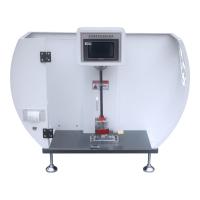
How to use an impact Tester to test the impact strength of a material?
What is a Shock Test Instrument?
Impact testing is an important procedure that manufacturers need to test. The purpose of this is to measure the strength of the material can withstand and absorb the pressure through the effect test. In this way, the test helps measure how much stacking strength the product can withstand, and also how efficiently the product can absorb energy until the material breaks when impact is applied at high speeds. This means that impact testing machines can test the constraints of specific materials and products.
This is an extremely critical test that needs to be applied when talking about giving an indication to some specific components and products. If you're a manufacturer in the automotive industry, you need to know how much force your product can withstand before it collapses so you can put some warnings on your vehicle to watch out for customers. This is a better testing technique that helps customers determine how much impact a material can withstand. This is how the manufacturer ensures the impact strength of the product.
Types of Impact Testing Machines
All impact testing machines have one basic design. Some are designed in the form of a pendulum, but all machines have different configurations in terms of which type of pendulum is used and the amount of force each machine can exert on a piece of material.
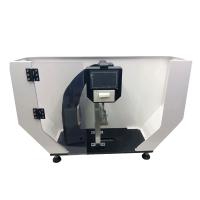
Izod Charpy Impact Tester: These machines rely on a pendulum assembly with the ultimate goal of testing loads in mind to ensure that the material can easily withstand it. The pendulum Izod Charpy impact Tester is filled with double carbon folds for greater force. The pendulum heads of the instrument are interchangeable, which means that different products may strike the surface of the product. This is perhaps one of the desirable testing machines to help test the effect of impact forces on the surface of a material. The maximum load or pressure that can be applied on the sample surface is 50 joules. For information on instrument specifications, please contact our NBCHAO Customer Service.
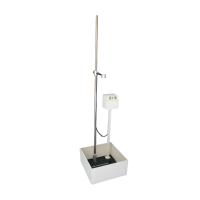
Dart Impact Tester: This equipment is used to measure the impact of a freely falling dart on the surface of a material to measure the impact strength of a product. This instrument is highly recommended for determining impact failure loads and resistance of materials under certain standard conditions.
- 1What are the test subjects for perchlorovinyl resin anti-corrosion coatings?
- 2What are the properties of automobile axle leaf spring anti-corrosion primer to be tested?
- 3Method for testing the impact resistance of anti-corrosion coatings by coating impact testing machine