How to measure the air permeability of paper air permeability meter?
Paper is a highly porous substance. In the fiber of paper, sizing agent and filler are only a small part of the composition, and the rest is occupied by air. For bulky paper, the voids account for about 60-70%, and for high-density glassine paper, the voids only account for 15-35%. The volume ratio of substantial components and voids in paper affects the paper's hardness, compressibility, elasticity and ability to absorb liquid, ink, oil and water. Paper space is mainly composed of:
1. Void or air volume, which may extend from the inside of the paper to the surface of the paper
2. Voids between fibers
3. Void, which completely penetrates the space of the paper thickness layer.
Compared with greaseproof paper with high density and filter paper with high porosity, the porosity of most uncoated printing and writing papers is between the above two. In addition, the porosity of coated printing paper is much lower than that of uncoated printing paper. Paper porosity is related to the papermaking process. The process is the same, short-fiber paper with longer fibers produces a tighter and less porous paper.

Fillers in paper have lower air permeability because they occupy the pores between fibers. The beating degree greatly affects the air permeability of paper. Increasing the beating degree of fibers can increase the link between fibers and make the paper structure more compact, thus reducing the air permeability of paper and increasing the paper density. After the surface of the paper is glued, the porosity will also decrease obviously because the pores on the surface are blocked by the glue.
The wet pressing treatment in the press water section of the paper machine will also affect the porosity of the paper. After the paper is processed by the calender, the air permeability will also be reduced due to the tighter shape of the paper. Applying mineral pigments to the printing paper will also greatly reduce the air permeability of the paper, so the air permeability of the coating layer has a great influence on the printability.
Definition of air permeability:
Air permeability refers to the average air flow rate per unit area of paper and cardboard passing through under specified conditions, under unit time and unit pressure difference, expressed in microns/(Pascal·s).
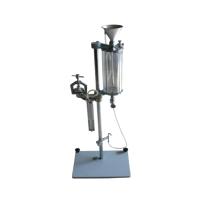
At present, there are three main methods for measuring the air permeability of paper and cardboard: the Schober method, the Gurley method and the Bendtsen method. The commonly used method is mainly the Schober method. Burr air permeability Tester.
Paper porosity Tester adopts new technology and common test method to test the air permeability of paper, cardboard or other sheet objects. This instrument is a fully automated instrument controlled by a single-chip microcomputer. Its test method meets the requirements of various methods such as Schober, Bendtsen, and Gurley. It is a professional instrument for testing paper air permeability in the papermaking, packaging and cigarette industries in CHINA, and its performance meets international standards.
-
![JINGWEN JW123 paper Air permeability meter]()
-
![YINUO YN-TQD01 Schauber Air Permeability Tester]()
-
![PUYUN PY-H614 paper Porosity Tester Schopper type]()
-
![YINUO YN-TQD03 Battery Separator Porosity Meter Gurley Bentsen Method]()
-
![YINUO YN-TQD02 Electronic Porosity Tester]()
-
![PNSHAR PN-ZQX1000 paper Porosity Tester]()
-
![YANTE YT-TQD1000 paper Porosity Tester]() YANTE YT-TQD1000 paper Porosity Tester$ 1100.00
YANTE YT-TQD1000 paper Porosity Tester$ 1100.00
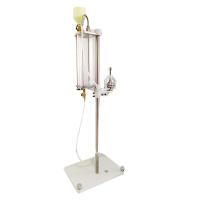
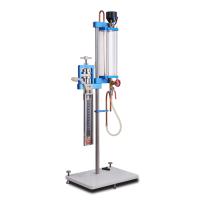
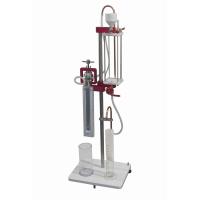


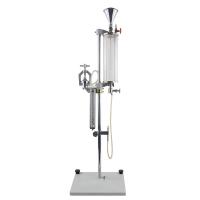
- 1Porosity Tester verification & maintenance
- 2Application of Porosity Tester in Thermal Paper
- 3How to use the differential pressure method to test air permeability?
- 4How to test air permeability with a non-porous paper air permeability meter?
- 5What is the measurement principle of microporous paper breathability meter?
- 6Principles and methods of Bendtsen breathability meter test method
- 7Principles and Methods of Gurley Air Permeability Meter Test Method
- 8Principle and method of Schopper air permeability meter test method
- 9What are the common physical properties of paper?
-
![Yunda YD-TQD-A Paper Air Permeance Tester 0~2500mL/min]()
-
![CHINA BLD-TQ20 paper Porosity Meter]() CHINA BLD-TQ20 paper Porosity Meter$ 1117.00
CHINA BLD-TQ20 paper Porosity Meter$ 1117.00

