Difference Between High Shear and Low Shear Stirring Dispersion
The goal of essentially all industrial mixing applications is to achieve a process result of a homogenous fluid product, ie a consistent physical composition throughout the batch. Depending on the nature of the liquids and solids contained in the ingredients, this can be achieved using a rotating mixer using low or high shear mixing techniques. The term shear refers to the pressure imparted to the liquid and suspended particles (if applicable) due to encountering the mixing blade or impeller. The amount of shear is determined by the blade design and its rotational speed.
Flowing and turbulent foreign materials in tanks are often easily mixed with the low shear mixing arrangement. There are many hybrid Eppler designs available for hybrid hybrids and solid suspensions. Hydrofoil propellers, marine style mixing propellers, axial flow turbines and radial flow turbines are all black wheel designs that generate water flow.
Hydrofoils provide gentle agitation with minimal shear. Its blade profile creates nearly uniform flow with the minimum required horsepower input and is especially effective for materials that can damage the high speed and therefore higher shear impellers. Large diameter hydrofoils that drive one-third of the vessel diameter at low RPM are typically chosen for agitation of large messy batch applications. Marine style propellers and axial flow turbines are also common. Axial flow turbines are built in a similar way to hydrofoils, but with large flat blade surfaces angled at 45 degrees so they can contact and push more viscous materials. Blade edges are primarily used in more viscous flow control processes, providing higher shear and requiring more horsepower to drive them.
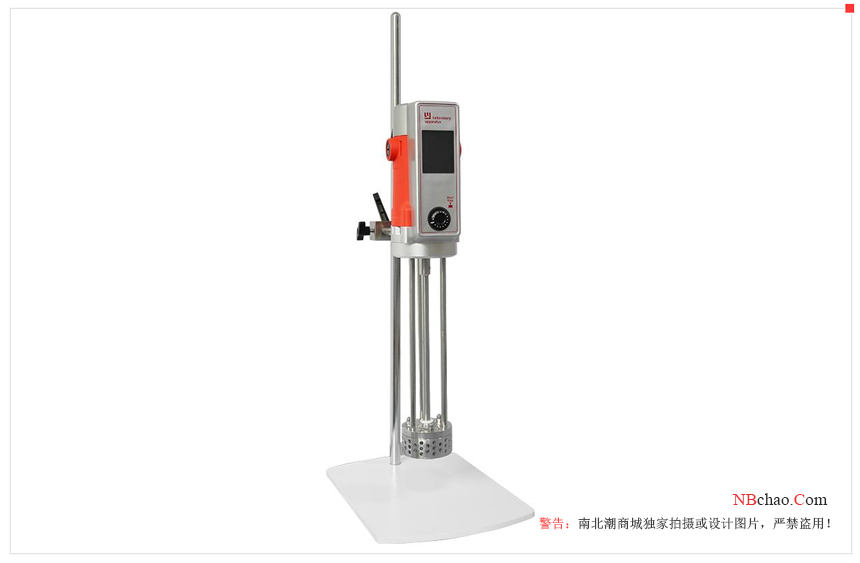
High shear mixing is used for ingredients that tend to resist mixing. Examples include liquids of varying viscosities or liquids containing solids that need to break up or require vigorous action to distribute evenly.
Dispersive high shear mixing example is a common form of high shear mixing. Dispersion is a high-speed, high-shear process that requires more horsepower to successfully achieve similar batch sizes than simple agitation. Desirable is a deep vortex visible towards the top surface of the sharp edged blade. When the dispersing blade turns, the particles come into contact with the blade and break down. In the intense turbulence around the blades, the particles collide at high speed and are further fragmented. Beyond the tip of the blade, the reduced-sized particles are dissolved or dispersed by the horizontal laminar flow extending from the blade. The flow is then divided into upward and downward components at the ship's walls, ensuring complete circulation.
These descriptions of low-shear and high-shear mixing represent the end of the spectrum between flow-driven processes and virtually all shear-driven processes. The truth is that there is a whole continuum between these extremes, achieved through proper design choice, size and agitator shaft speed.
- 1Introduction of Working Principle and Application of Electric Oscillator Stirrer
- 2A Brief Discussion on the Difference between Disperser and Stirrer
- 3Several Common Coating Dispersers
- 4Inspection Contents of Chemical Plant Disperser
- 5The difference between Disperser ordinary and explosion-proof type
- 6Disperser stirring speed formula
- 7What's wrong with Disperser stirring?
- 8Main Structure of Vacuum Defoaming Disperser
- 9What oil is used in Latex paint Disperser?