The difference between ink fluidity and fluidity
Liquidity
Fluidity is an item listed as a production control index in the production of paste (glue, stereotyped) ink in CHINA's ink industry. At present, it has been generally considered by most people that it can represent the fluidity of ink, but it is actually not accurate.
Fluidity is to put 0.1 cm³ of ink in the center of , and then press a round glass weighing 50 grams and about 70 mm in diameter on the round glass Add a weight weighing 200 grams, after 15 minutes , remove the weight, and measure the value obtained after the spreading diameter of the ink.
It can be seen that this method is almost the same as the measurement method of the parallel plate viscometer , the only difference is that the amount of ink is different (the parallel plate viscometer uses 0.5 cm3 ink), and the pressure on it is different (the parallel plate viscometer The weight of the upper plate is 115 grams, and in the determination of fluidity, the total weight of the upper plate is 250 grams).
We call it fluidity because it is a measure of the spreading diameter of the ink under such conditions.
There is also a method to measure the "flow" of ink in the world, which is to use the ink spread diameter measured by a parallel plate viscometer at one minute as the fluidity data of the ink. In fact, it is basically similar to the concept of mobility in my country.
fluidity
According to our concept, the fluidity of the ink is the flowing performance of the ink itself. It is different . It is related . This performance is more important for thinner inks such as liquid inks, rotary news inks, etc. , especially the latter.
The main physical quantities affecting the fluidity of oil bases are viscosity, yield urgency and thixotropy.
Flow has a strong dependence on temperature.
For inks that are Newtonian or near-Newtonian with very small yield values, the viscosity data seem to explain their flow behavior to some extent. Therefore , for this type of fluid, you can use the 3-28 formula to establish their fluidity concept . is more important, especially the latter.
The main physical quantities affecting the fluidity of oil bases are viscosity, yield urgency and thixotropy.
Flow has a strong dependence on temperature.
For inks that are Newtonian or near-Newtonian with very small yield values, the viscosity data seem to explain their flow behavior to some extent. Therefore , for this type of fluid, you can use the 3-28 formula to establish their fluidity concept .
Φ=1/η
In the formula, φ is the fluidity of the fluid, and the meaning of this formula is exactly: the fluidity of the fluid is the reciprocal of the fluid viscosity. This concept does not apply to fluids with large yield values.
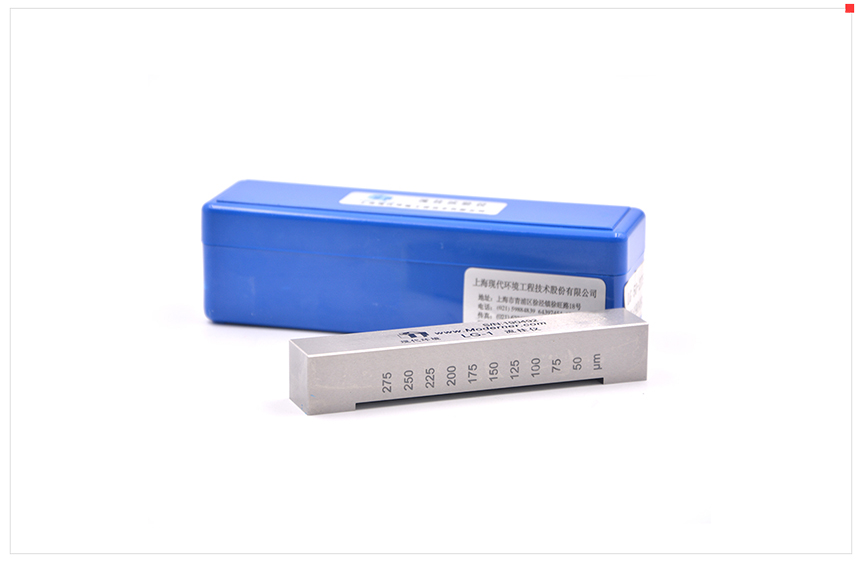
The fluidity of the rotary press ink can be measured as follows: prepare a brass rod with a diameter of 5 mm and a length of 150 mm (it is also possible to get a ), and the end of the rod is made into a hemispherical shape. Make a place 30 mm from the topTicks (markers). Prepare again - a flat glass plate about 120 mm X 165 mm and a frame for placing the glass plate . When the glass plate is inserted on the frame, the glass plate should be perpendicular to the horizontal plane. When measuring conditions should be strictly fixed), then insert the stick into the ink and immerse it to the 30mm scale, lift the stick, and let the ink flow down the stick until When the ink filament is disconnected, put the second drop of , and then quickly insert the glass plate on the frame. At this time , the ink will flow down against the glass plate. After 10 minutes Remove the glass plate and measure the length of the ink flow (expressed in centimeters). This length value is the fluidity or fluidity of the ink.
It should be noted that it is the value measured after the thixotropy of the ink has been destroyed. This is an aspect that should be noted.
If you want to measure its intrinsic fluidity, you can dig two grooves on the glass plate ( other steps are the same as above), put the ink to be tested in the grooves, and let it stand for a few thousand time (for example, 1 hour) ), and then insert the glass plate on the shelf, and the other procedures are the same as . Care should be taken to strictly control the conditions in this assay.
Another product related to fluidity is the fluidity of so-called roller coating inks (or coatings). In fact, the ink that is rolled (printed) on the container or metal is mainly a flow
Leveling problem, of course, leveling and fluidity are closely related. It is generally believed that the force it receives comes from the gravity of the ink itself and the force of molecular motion (such as surface tension, etc.). It can be understood that the leveling property is also related to the molecular weight of the polymer in the binder and the escape equilibrium time of the solvent used. related. Therefore, the leveling property of the ink is actually the fluidity of the ink under certain conditions. This property is very important in the ink of roller coating type . The ink with good leveling property can be leveled before drying after roller coating to make the surface of the printed matter smooth and smooth; if the leveling property is not good, ugly ripples will appear In severe cases, even an orange-peel-like surface will appear, which not only has an ugly appearance, but also affects the gloss . The extremes of things will reverse, and the ink with too good leveling property also has disadvantages, it will appear sag phenomenon. The so-called sagging phenomenon means that if the ink layer coated by the roller is not placed horizontally before it is dried and solidified, the ink will continue to flow in one direction due to the relationship of leveling , so that there will be flow marks or ink will appear on one side of the printing surface. thicker layers . Therefore, the leveling of this type of ink should be strictly controlled .
Generally speaking, when the ink is a low-viscosity Newtonian fluid, its leveling property is better , and the sag phenomenon is correspondingly more serious. When the ink is a plastic fluid, since the gravity of the ink itself and the kinetic force between molecules cannot overcome the yield value, the leveling property is lower than that of the ink.
poor. For thixotropy, if it cannot return to the original consistency (that is, structural reconstruction) within a short period of time (generally 300 seconds) , then the leveling property may still be good, and the sagging phenomenon will not be too serious.
From a rheological point of view, pseudoplastic fluid is more satisfactory. It not only has good leveling and no sagging, but also can reduce the sedimentation rate of pigments in the system.
- 1what is the coating Leveling and Sag resistance
- 2How to assess the sag resistance of paints and varnishes according to ISO 16862
- 3Why does the coating have orange peel defects? How to solve sagging and leakage?
- 4What is the interaction between flow and viscosity?
- 5Influence of Leveling on Rheological Phenomena of Coatings
- 6Wetting, coalescing and hanging of paint rheological phenomena
- 7What is leveling? What parameters affect leveling?
- 8What is the fluidity of screen printing inks?
- 9Common paint film defects and solutions of container coatings