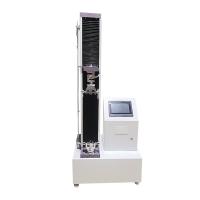
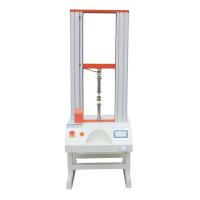
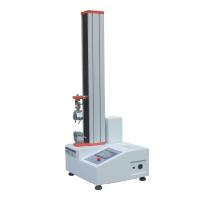
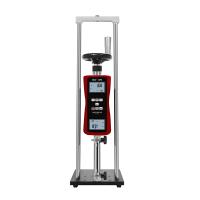
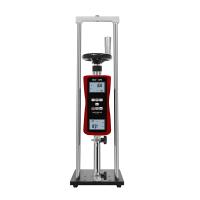
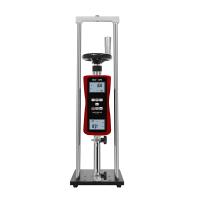
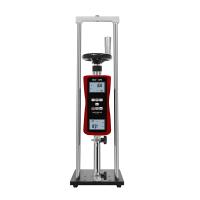
Single column Tensile Testing Machine ASR-1001A operation manual
Tips on how to use
| 1 | First turn the speed knob (clockwise) to the minimum; |
| 2 | Place the object to be tested on the workbench and use a fixture to clamp it firmly; |
| 3 | Adjust the height of the upper and lower bars to make the distance between the fixtures appropriate. |
| 4 | Adjust the "speed knob" to make the speed meet the requirements |
| 5 | Use the lower clamp to clamp the lower end of the test piece, and raise the lower cross bar to an appropriate distance, then stop the machine, and then use the upper clamp to clamp the top of the test piece. |
| 6 | Turn on the power, start the operation, adjust the experimental schedule, and stop after adjustment; |
| 7 | When everything is ready, press the rising or falling push-pull test to start the test. |
| 8 | Repeat the above operations when repeating the experiment, press the stop switch when you need to stop in the middle, and continue after pressing the start button; |
| 9 | After the test, adjust the displacement to the minimum and the speed to the minimum, and then turn off the power. |
Precautions
1. When adjusting the displacement, adjust slowly, and the maximum displacement shall not exceed 5CM to prevent impact;
2. Slowly speed up the speed adjustment. If you find that there is an impact sound, you need to reduce the displacement or speed;
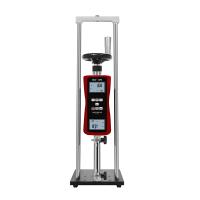
Products required
Relevant knowledge
- 1Tensile machine application in various industries
- 2Technical analysis of key parameters of Tensile machine: Scientific selection from force measurement accuracy to Power system
- 3Tensile machine purchasing guide [dry version]
- 4Talking about the performance test of epoxy resin film coated on PET
- 5ASTM D5019 Single-layer roofing film reinforced CSM board (chlorosulfonated polyethylene (PE)) standard interpretation
- 6Common problems and solutions in tensile testing
- 7What is tensile strength testing and which products can be tested?
- 8Factors Affecting the Performance and Accuracy of Tensile Testing Machines
- 9Classification of Tensile Testing Machines
Guess you like it
-
![Patek Jushi LY-7012C Tensile Tester 1000KG]()
-
![BaidaJUSHI LY-7012A Small Tensile Testing Machine 200KG]()
-
![CHINA NBC-1024-2 Tensile Tester 5T]() CHINA NBC-1024-2 Tensile Tester 5T$ 6635.00
CHINA NBC-1024-2 Tensile Tester 5T$ 6635.00 -
![CHINA NBC-6820 Ring type initial tacking machine Tensile Tester]()
-
![CHINA NBC-1023-1 Computerized Double Column Tensile Testing Machine]()
-
![CHINA NBC-1021 Touch screen single column Tensile Strength Tester 10KG]()