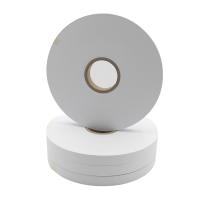
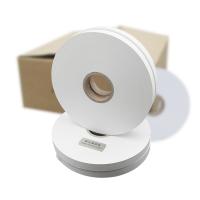
Official Instructions for Inconsistent Wear Resistance Coefficient of RCA Test Tape [Translation]
Situation: NormanTool's standard abrasion test papers have been very stable for over 30 years, but new changes in the paper industry have forced our suppliers to make changes beyond our control. For paper manufacturers, meeting today's government and environmental requirements has become a difficult and complex endeavor while maintaining quality, consistency and profitability and meeting customer expectations. Their variables include wood source and type, other sources of cellulose (vegetable, recycled paper, etc.), chemical versus mechanical pulping processes, acids, bleaches, deinking processes, chemical additives (chalk, clay, etc.), whitening / brightening ingredients etc.
We understand these challenges in the paper industry and always test every batch of test paper we receive. Our tests identify a "factor" number for you to use to make your tests more consistent. The factor deviates from our historical norm of 1.00. A factor above 1.00 means that the test paper is slightly more abrasive, so fewer cycles and fewer test papers are required. Conversely, a coefficient of less than 1.00 means that the test paper is slightly less abrasive, thus requiring more cycles and more test paper.
This factor adjustment system has worked well for many years, but the aforementioned changes in the paper industry created some surprising new results for our test strips that required additional testing and validation. First, the changes made by our longest-running test strip supplier yielded a 0.70 coefficient, which is too low for a long-term solution. After unsuccessful attempts to resolve the situation, we conducted an exhaustive search for a new supplier of test strips. As the industry has changed, no company has met our original 1.00 standard, but we have found that manufacturers can consistently provide test strips with a 0.90 factor.
Question: The 0.90 factor has been based on our internal testing on test panels coated with organic paint. In the past, this factor could be applied consistently to other paints, but this is not always the case with today's test paper. We have learned that for certain types of coatings, our new test papers are more abrasive with a factor as high as 2.00 and require fewer cycles and fewer test papers.
Solution: To eliminate any potential inconsistencies in testing, you should develop test panels using the exact coating and determine a "standard" abrasion test number. You can then identify your own individual factors to adjust for when using new test strips or confirming yours. See instructions below.
instruct:
Develop test panels for each coating you test.
Run several wear tests on these test panels to determine the average number of failures and use this as a standard.
To confirm or determine the coefficient of the test paper, test the board again with another test paper.
Example: If your standard fail number is 300 and your new paper has a standard fail number of 250, your factor would be 1.20 (ie 300/250). Always divide the new number by the standard number.
![Official Explanation of Inconsistent Abrasion Coefficients of RCA Test Tape [Translation] with Figure 1](http://img.nbchao.com/upload/editor/image/20210520/1621496299600034703.png)
- 1How to properly store NORMANTOOL RCA tape in different environments?
- 2Application of rca test paper tape in resin for waterborne industrial anti-corrosion baking paint
陈耀财,贾孟宏 - 《《上海涂料》》
- 3RCA paper tape testing wear resistance of polyurethane coating for silicone rubber buttons
朱鹏,刘桃凤,吴绥菊,马海燕 - 《《硅橡胶按键用聚氨酯涂层的性能研究》》
- 4Do you think the difference between genuine and counterfeit RCA paper tapes is just 0.1 coefficient?
- 5Application of RCA paper tape wear resistance test in wearable equipment decorative film wear resistance test
龚国华 - 《武汉工程大学》
- 6What are the application fields of tape Wear testing machine?
- 7Precautions for RCA tape testing (inconsistent test results)
- 8RCA tape Wear testing machine maintenance method
- 9How to assemble the rca paper tape wear Tester?