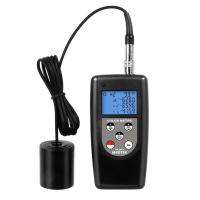
What instrument is a Colorimeter? What types and applications are there
A Colorimeter is a light-sensitive instrument used to measure how much color an object or substance absorbs. It determines color based on the red, blue and green components of light absorbed by an object or sample, just like the human eye. When light passes through a medium, a portion of the light is absorbed, so less light is reflected by the medium. The Colorimeter measures the change so that the user can analyze the concentration of a particular substance in that medium. The device works according to the Beer-Lambert law, which states that the absorption of light transmitted through a medium is proportional to the concentration of the medium.
type
A Colorimeter measures only red, green, and blue light, while a Spectrophotometer can measure the intensity of any wavelength of visible light.
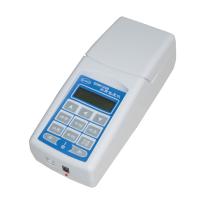
There are many different types of Colorimeters, including color densitometers that measure the density of primary colors and those that measure reflected and transmitted color. Styles include digital, also known as laboratory and portable. Digital versions are often used for laboratory sampling or classroom teaching. The portable version can be taken anywhere to test things like water and soil samples in the field, no matter the environmental conditions.
The Spectrophotometer A photometer is a light meter that measures light intensity and is often combined with a Colorimeter, but technically it is a different device. Both methods rely on the Beer-Lambert law to calculate the concentration of a substance in solution, but they do it differently. Colorimeters only measure red, green, and blue light, while Spectrophotometer s can measure the intensity of any wavelength of visible light. In general, Spectrophotometer s are more complex and less rugged than most Colorimeters; they should be handled with extra care and require periodic recalibration.
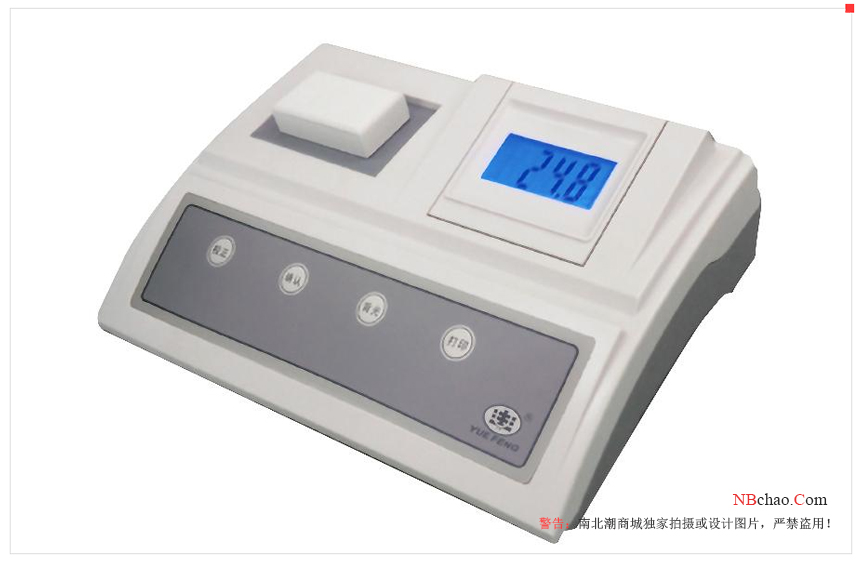
How Colorimeters Work
At its most basic, a Colorimeter works by passing light of a specific wavelength through a solution and then measuring the light that passes through the other side. In most cases, the more concentrated the solution, the more light is absorbed, which can be seen in the difference between light rays at their point of origin and after passing through the solution. To find out the concentration of an unknown sample, first prepare and test a solution sample of known concentration. These data are then plotted on a graph with concentration on one axis and absorbance on the other to create a calibration curve; when testing unknown samples, the results are compared to known samples on the curve to determine the concentration. Certain types of Colorimeters will automatically create a calibration curve based on an initial calibration.
use
Colorimeters are used in a variety of industries and environments. A small, portable device that analyzes the color contrast and brightness on a television or computer screen, allowing the user to adjust settings to get a picture of the right quality. In the printing industry, a Colorimeter is an essential element in a color management system. Other printing industry applications include checking the quality of electronic components and pulp paper, and measuring the quality of inks.
Diamond dealers use Colorimeters to measure the optical properties of gemstones. In cosmetic terms, the device is used to measure the sun protection factor of products. Colorimeters can analyze skin and tooth color to help diagnose certain diseases, and hospitals even use the instruments to test the concentration of hemoglobin in the blood.



- 1What is the difference between Color Reader and Colorimeter?
- 2CS-810 Desktop Spectrophotometer Application Case Cleaner Color Detection
- 3Gardner Color: The color scale of translucent liquids
- 4Did you know that the maturity of fruits and vegetables can be quantified?
- 5Color measurement of tomatoes
- 6Calibration of Spectrophotometer s and Colorimeters
- 7Look at this, what is the difference between a Colorimeter and a Spectrophotometer ?
- 8Differences between several common water quality testing equipment
- 9Definition of water hardness and how to measure water hardness value?
-
![LANDTEK CM-200S Portable Colorimeter]() LANDTEK CM-200S Portable Colorimeter$ 259.00
LANDTEK CM-200S Portable Colorimeter$ 259.00 -
![YUE FENG SD-1 Beer Colorimeter high-precision chroma measurement Instrument]()