Why measure the folding resistance of paper and cardboard?
Paper and cardboard need to withstand multiple folds during use. For example, when making cartons/cartons of different specifications with white cardboard and cardboard, it is required to withstand reciprocating folding without breaking. After the corrugated box is formed, the indentation parts of the box body and the flap need to be bent. The four indentation lines of the box body are generally parallel to the corrugation direction, and some special-shaped boxes have a local indentation line at 45° to the corrugation direction. It is necessary to bend 90° or even 180° toward the concave surface of the indentation, while the indentation line of the flap is perpendicular to the direction of the corrugation, and it must be bent to the concave-convex surface of the indentation many times during use (the maximum angle reaches 270°) , it is easy to cause damage to the carton/carton.

The folding endurance of paper and cardboard refers to the number of times the tested sample is folded back and forth at a certain angle under a certain tension. The longitudinal folding endurance is obtained by testing the longitudinal specimen, and the transverse folding endurance is obtained by testing the transverse specimen. In general, the longitudinal folding strength is higher than the transverse folding strength, which is due to the arrangement of fibers and the strong binding force of longitudinal fibers. But there are also anomalies, which relate to the flexibility and fluidity of paper and board. Folding endurance is a tensile strength test in disguise, the results of which are greatly affected by the flexibility of the paper.
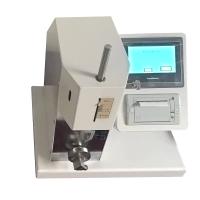
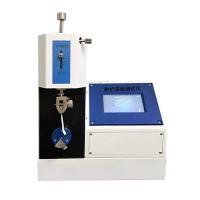
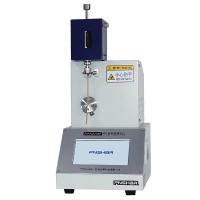
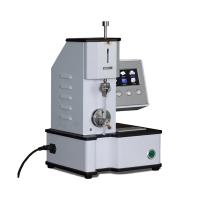
Commonly used folding Testers include Schopper folding Tester (approximately 180°), MIT folding Tester (135°), and FRANK horizontal folding Tester (180°).



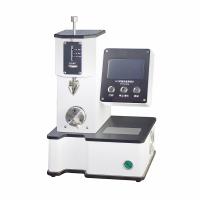
- 1Folding Tester - paper folding performance test
- 2Talking about the application of folding resistance Tester in metal foil
- 3Plastic film folding resistance testing by folding resistance Tester
- 4How is the folding resistance Tester used for the detection of tissue paper?
- 5Analysis on the Application of Folding Tester in Cardboard
- 6What is the folding resistance of paper and cardboard?
- 7What are the factors that affect folding endurance?
- 8Test method and principle of corrugated cardboard folding resistance meter
- 9FRANK horizontal refractometer test method