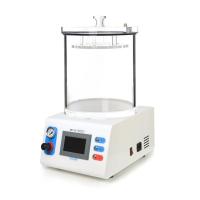
Sealing performance test of glass bottles
The sealing test is to test the sealing structure composed of glass bottles, lids and seals, mainly including air tightness, water leakage, continuous pressure resistance, continuous negative pressure resistance and instantaneous internal pressure resistance and other test contents.
(1) Air tightness
Put a certain amount of calcium carbonate desiccant in the glass jar, then seal the lid, place it in a test environment with a relative humidity of 100% for more than one week, then measure the quality of the desiccant with a balance, and use the increment of the desiccant to express the glass. The airtightness of the bottle.
(2 ) Leakage
Pour a certain amount of water into the glass jar, then cover it, and place it horizontally in a temperature and humidity control box. The temperature in the temperature and humidity control box is controlled by the water temperature standard (about 20~30°C) when the lid of the glass bottle is opened. After 24 hours, the lid is opened to measure the water volume, and the water leakage of the glass bottle is indicated by the reduction of the water volume.
(3) Continuous pressure resistance
There are two methods for testing continuous pressure resistance. One is to dilute 40.5g of 98% concentrated sulfuric acid with 7.57L of water, and put 200mL of the diluted solution in a 210ml glass bottle. Then put 3g of sodium bicarbonate in a small carton without a cover into a glass bottle jar, and seal the lid before the sodium bicarbonate in the carton dissolves. Then turn the glass bottle upside down. After the sodium bicarbonate is completely dissolved, put it into water at 65°C. After 1 hour, observe whether there is gas escaping from the glass bottle and the cover.
Another method is: inject carbon dioxide gas produced by the action of sodium bicarbonate and dilute sulfuric acid into the glass bottle jar, place it in a test environment at 40°C after sealing the cap, and observe whether it leaks after a week.
(4) Continuous negative pressure resistance
Pour a certain amount of hot water into the glass jar, the water temperature after sealing is 90°C, then put it into a vacuum Tester at room temperature, and measure the change of vacuum degree after 24 hours.
(5) Instantaneous internal pressure resistance
After the glass bottle is sealed, inject 0.9MPa water or nitrogen into the container to pressurize it, and observe whether it is sealed.
- 1Application of Sealing Tester in chemical industry
- 2Application scheme of Sealing Tester in pharmaceutical industry
- 3Application of Sealing Tester in food industry
- 4Low/high Temperature Test Chamber for high-low temperature resistance test of rubber pads
- 5Low/high Temperature Test Chamber application test sealing strip temperature resistance
- 6Sealing performance test of soft packaging bags
- 7Sealing performance test of plastic packaging containers
- 8ASR-MFY-02 Vacuum Sealing Performance Tester Instruction Manual
- 9What are the standard test methods for hard packaging?