Sealing performance test of soft packaging bags
The sealing performance test of flexible packaging bags includes hot water test, decompression holding capacity test, vacuum chamber test, pressure holding test , squeeze leak test and static leak test, etc.
(1) Hot water test
The test method is to seal the sample bag, and then immerse the sample bag in hot water at (60±2)°C. The distance between the highest surface of the sample bag and the water surface should be kept at least 25mm, and the surface should be wiped gently and quickly. bubbles. Then turn the sample bag under the water surface. Within 2 minutes, no more than two continuous air bubbles should be generated in any part of the sample bag.
(2 ) Decompression holding ability test
The test method is to open a small hole on the top of the sealed sample bag, and then choose one of the following two methods for the test.
①Exhaust until the pressure difference inside and outside the package is 20~30kPa, observe the measuring instrument or pressure gauge after 10 minutes, the pressure recovery rate shall not exceed 25%.
② Pump air until the packaging film is close to the contents, then seal the air hole, and keep it at room temperature for 4 hours. If the packaging film is still tightly attached to the contents, the airtightness is qualified. If the tension of the packaging film decreases, causing slack, and no longer clinging to the contents, there must be air leakage holes or poor sealing in the packaging bag.
(3) Pressure maintenance test
The pressure maintenance test is also called the inflation test. The test method is to connect an inflation tube to the sample bag and install a pressure gauge, seal the connection port, and then inflate the sample bag. After reaching the specified pressure, keep the sample bag under the pressure condition for 30min. You can also immerse the sample bag in water after it is inflated, or apply soapy water to the seams, and observe whether there are bubbles coming out. If continuous air bubbles emerge, the sample bag is unqualified.
If the inflation pressure of the flexible packaging bag is too high, the heat-sealed part will be broken. For flexible packaging bags without specified inflation pressure, take 0.5 times the bursting strength as the inflation pressure during the pressure maintenance test. If the heat seal strength of the flat edge heat-sealed flexible packaging bag is known, the inflation pressure during the pressure maintenance test is:
P=S(L+W)/LW
In the formula, P—inflation pressure, that is, the pressure difference inside and outside the sample bag, Pa;
S - the heat seal strength of the sample, N/m;
L - the length of the sample, m;
W——sample width, m;
(4) Vacuum chamber test
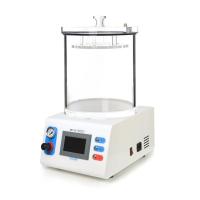
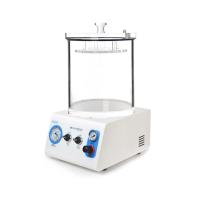
For small sample bags, a glass vacuum desiccator can be used, and a vacuum gauge, Vacuum Pump and valve can be connected externally, or a vacuum Sealing Tester can also be used. For large sample bags, special test equipment can be processed according to sample conditions and test requirements. For the test method and test device, please refer to the relevant content in Section 4.3.2. If there is no specific regulation on the degree of vacuum, the degree of vacuum can be calculated according to formula (4-9), or 0.5 times of the bursting strength can be used as the degree of vacuum.
If the sample cannot be immersed in water, the vacuum chamber may not be filled with water. The corresponding test method is: first put the sample into the vacuum chamber, then pump the vacuum chamber to the same vacuum degree as above, and close the valve of the air pump and the vacuum chamber. , keep for 30 minutes, the vacuum degree of the vacuum chamber does not drop by more than 25% of the test vacuum degree as qualified. When using this method to test, the tightness of the vacuum chamber system should be checked before the test.
(5) Squeeze leak test
The test method is to seal as much air as possible into the sample bag when the sample bag is heat-sealed. The sample bag is then immersed in water at room temperature with its top about 50 mm from the water surface. Squeeze the sample bag by hand or a mechanical device, and observe whether there are bubbles coming out of the sample bag, especially the heat-sealed part. When using a mechanical device to squeeze, it should be ensured that the device does not damage the sample bag.
For large sample bags, you can also apply a foaming agent to the heat-sealed parts of the sample bag and the parts that are prone to air leakage, and then squeeze the sample bag to observe whether there are bubbles coming out of the sample bag. If continuous air bubbles emerge, it indicates that the sample bag is leaking.
(6) Static leak test
The test method is to first fill the sample bag with water or other liquids, such as edible vegetable oil, soy sauce, etc., and seal the sample bag as required. Then place the sealed sample bag for 15 minutes in 6 ways: upright, inverted, one side on the ground, one end on the ground, the other side on the ground, and the other end on the ground, and check whether the sample bag leaks. When the sample bag cannot be placed stably according to the placement methods such as upright, inverted, one end face on the ground, and the other end face on the ground, etc., appropriate baffles, blocks, etc. can be used to keep the sample bag placed stably.
(7) Comparison of test methods
When testing the sealing performance of flexible packaging, the appropriate test method should be carefully selected according to known conditions such as the specific packaging structure and size, the nature and characteristics of the contents, and so on.
①Using the water immersion pressure maintenance test and vacuum chamber test, the sealing performance of the package under the specified pressure difference can be measured, with high sensitivity, and the air leakage part of the package can be found. However, these two test methods have high requirements on equipment, and the packaging bags with large sizes are limited.
②Extrusion leak test and hot water test methods are simple, but they cannot control the pressure difference between the inside and outside of the packaging bag, and are suitable for airtight packaging bags.
③ The decompression holding capacity test cannot be used to determine the leakage site, nor can it determine whether there is a slight air leakage in a large-sized packaging bag. It can be used as a test method for the airtightness of a small vacuum packaging bag.
④ The static leak detection test is only applicable to the quality inspection of liquid packaging bags to determine whether the liquid inside leaks when the samples are placed in different positions.
- 1Application of Sealing Tester in chemical industry
- 2Application scheme of Sealing Tester in pharmaceutical industry
- 3Application of Sealing Tester in food industry
- 4Low/high Temperature Test Chamber for high-low temperature resistance test of rubber pads
- 5Low/high Temperature Test Chamber application test sealing strip temperature resistance
- 6Sealing performance test of plastic packaging containers
- 7Sealing performance test of glass bottles
- 8ASR-MFY-02 Vacuum Sealing Performance Tester Instruction Manual
- 9What are the standard test methods for hard packaging?