Color spectrum computer color scheme software color scheme effect? Xiaotiao takes you to see
For industries such as paint, ink, and color paste, color matching is a very important task, and color difference will affect the quality of the final product. Today, I will share a precise color matching software, the color spectrum computer color matching software, to see how the color matching effect is, and to show you how to operate the color matching.
First of all, let me briefly introduce this computer color matching software. Traditional manual color matching needs to find the formula and test repeatedly, and the color spectrum color matching software can provide a more convenient and effective color matching process. After the instrument measures the color of the sample, the system searches for the formula in its own formula center and automatically corrects the color, finally achieving an accurate match. It can provide a variety of formulations, which can be selected according to cost and actual situation. Waste and old materials can be used for color matching to save costs.

Let's take a user's example to see how this computer color matching software works, and what is the final effect?
First, test the color of the sample with a Spectrophotometer to obtain color data.


Second, calculate the formula. Select the color paste library to be used on the computer, and the software will automatically calculate the color formula close to this color based on the tested color data.


Third, choose a recipe. You can choose the formula with the smallest color difference, or you can choose the formula with the lowest cost.


In this test, we choose the formula with the smallest color difference, and then make a proof.

Fourth, first use a coloring machine to color.

The coloring machine accurately weighs the corresponding weight of the color paste according to the formula.

Stir the different color pastes evenly with a mixer.

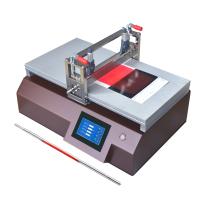
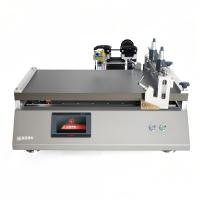
Perform automatic coating proofing on the adjusted color paste, and choose an automatic coating machine.

Then put the proofed Color Chart into the oven for quick drying.

After drying, test the color data of the printed sample, and compare the data with the software.

The color difference tested in this case is only 0.18, which is very good.

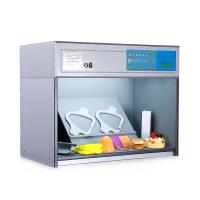
For verification, we put the formula sample and the target sample in a standard light source light box for comparison.

Overall, the operation is very simple and fast. The accuracy of the key color matching is relatively high. I hope this article will be helpful to users of color matching, and can color match satisfactory samples at a lower cost and more effectively.

- 1How Flat Film Applicators Can Build a New Generation of Functional Materials on Fabrics
- 2NVP anode film FAQ and solution
- 3Application Technology of Laboratory Film Applicator in Dielectric Thin Film
- 4Comparison of Advantages and Disadvantages of Three Heating modes for Laboratory Film Applicators
- 5Application and selection of laboratory coater in PDMS thin film prepative
- 6Scraping machine selection case: film substrate large size high accuracy scraping solution
- 7Application of Film Applicator in PEM Research and Preparation
- 8Application of Film Applicator in PVDF-HFP Material Research
- 9Application of Film Applicator in Cosmetic Base Body