What are the research methods for the properties of temperature-sensitive membranes?
In order to understand the relationship between the structure and performance of temperature-sensitive membranes, it is necessary to characterize them, mainly including the characterization of the chemical structure and surface morphology of the membrane and the characterization of the structural changes caused by the environment. For the characterization of the chemical structure of the film, infrared spectroscopy and x-photoelectron spectroscopy are mostly used. Through the determination of these two methods, it is possible to understand whether the functionalized group has been successfully introduced into the membrane. The characterization of the membrane surface morphology and structure generally uses scanning electron microscopy, which is the main method to characterize the pore structure of microporous membranes, but for nanoporous membranes or subtle structural changes on the membrane surface, more sophisticated surface observation instruments are required, such as atomic force microscope. Structural changes caused by the environment are generally characterized by infrared spectroscopy, because under different external environments, the strength or peak of functional groups on the infrared spectrum is different.
For the research methods of temperature-sensitive substances, there are ultraviolet-visible spectroscopy, differential scanning method, light scattering method, fluorescent probe method, rheological method and so on.
1. Ultraviolet-visible spectroscopy
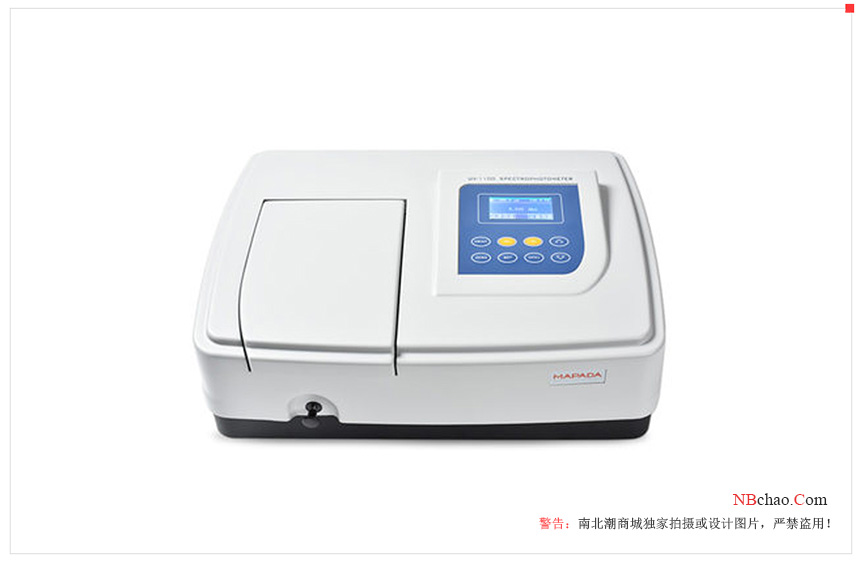
Simple light transmittance has become a common method for studying LCST, because the solution becomes cloudy when it rises to LCST, so this point is also called cloud point, and the method of measuring light transmittance with an ultraviolet-visible photometer to determine LCST is also called cloud point method .
The cloud point is the temperature at which the light transmittance changes suddenly, but the standards for determining the cloud point in the literature are not completely uniform. There is a standard light transmittance of fixed wavelength (500nm or 600nm), and an average light transmittance of 400-800nm is standard. The choice of measurement wavelength determines the minimum size of polymer precipitates that can be detected. For homopolymer aqueous solution, the light transmittance changes in all visible light parts are basically the same. However, when additives such as active agents and salts are added to the system, or hydrophobic groups are copolymerized into the polymer chain, the particle size obtained by the shrinkage and aggregation of the molecular chain may be smaller than the observation wavelength, so the cloud point will vary with the observation wavelength. In addition, the determination of cloud point is affected by the heating rate. If the solution is not too dilute, the cloud point will not change very much when the concentration changes.
2. Differential Scanning Calorimetry (DSC)
DSC measures the thermal effect of phase transition, so it can more directly and accurately reflect the phase transition. The LCST determined by DSC is basically consistent with the cloud point method.
3. Light scattering method
The light scattering method can obtain information about the size, shape and interaction of macromolecules in the solution, and can provide more microscopic information than the cloud point method and DSC method, and can study the gel phase transition process.
4. Fluorescent probe method
Different conformations of molecular chains in different environments can be detected by fluorescent probe method. Since the fluorescence spectra of many fluorescent active substances are very sensitive to changes in the polarity of the environment. If the fluorescent probe is dispersed in the temperature-sensitive polymer, when the conformation of the macromolecular chain changes, it will change from a highly solvated state to a hydrophobic aggregation state. The polarity difference between the hydrophobic micro-area and the solution is large, and the fluorescent probe diffuses into the hydrophobic micro-area, and its fluorescence spectrum changes accordingly , so that the LCST value can be detected. It is also possible to modify the molecular structure of the fluorescent probe and copolymerize it with a temperature-sensitive monomer, so that the measured LCST value is more sensitive and accurate than the previous one.
5. Rheological method
His work on the compatibility and phase separation of polymer blends has received much attention for many years. In recent years , the use of dynamic rheology methods to study the phase behavior of polymer blends has gradually emerged. The theoretical basis is: for a polymer blend system with critical phase behavior (LCST or UCST type), the dynamic rheological response of the system very sensitive to the formation and development of the morphological structure during the phase separation process. The generation of phase structure makes the system exhibit special viscoelastic relaxation behavior, which is manifested as a significant increase in elasticity and a significant increase in relaxation time, as well as time-temperature superposition failure. The physical nature of these rheological behaviors is that when the phase separation temperature is approaching, the system has obvious concentration fluctuations.
The unique advantages of the dynamic rheology method are: (1) the structural characteristics of the polymer melt are hardly affected or destroyed during the measurement process ; (2) the phase behavior of most multi-component polymer systems can be reliably determined (3) The dynamic rheology method reflects the phase behavior , and there is almost no interference from external factors. The uniqueness of dynamic rheology in studying the compatibility of polymer blends should be paid enough attention to. Determining the rheological behavior in a small strain state is a better way to obtain the compatibility of polymer blends .
This article is excerpted from " Research on PVA Blended Temperature Sensitive Film ". The copyright belongs to the original author. If there is any infringement, please contact us immediately, and we will deal with it in time!