What is Viscosity and How to Use a 4-Cup Viscometer?
 Viscosity is a measure of the ability of the interaction between liquid molecules to hinder the relative movement between molecules, that is, the resistance of liquid flow. This resistance, also known as internal friction, is usually calculated as the force-shear stress per unit area.
In paint production plants, viscosity is an important indicator to control product quality; and for users, knowing the viscosity of paint makes it easy to control the thickness of paint film during construction. The main factors affecting the viscosity are the molecular weight of the polymer, the additives added, the solvent, the type and amount of the filler, the temperature and the storage time of the coating, etc. The user's requirement for the viscosity of the paint depends on the construction method, the surface of the object to be coated, etc.
Viscometers used in coatings can be classified as follows according to their measurement principles:
(1) Outflow viscometer
Includes capillary viscometer, Tu-1 1 cup, Tu-1 4 cups. Among them, Tu-1 cup is mainly used to measure the paint varieties with higher viscosity, while Tu-4 cups is usually used to measure the paint varieties with viscosity below 15° seconds.
(2) Falling ball viscometer
Including falling ball viscometer, Heberer viscometer, etc.
(3) Rotational viscometer
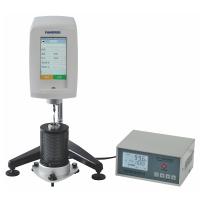
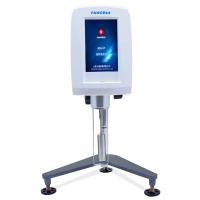
There are rotary paddle viscometers, coaxial cylinder rotary viscometers, conical plate viscometers, etc.
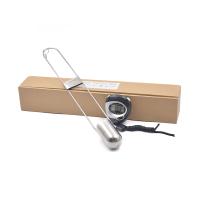
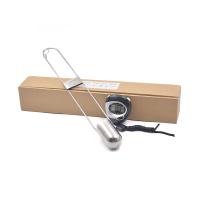
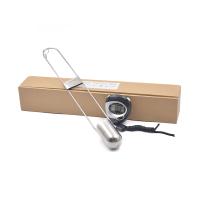
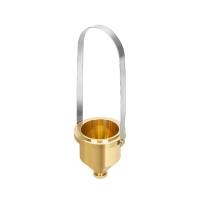
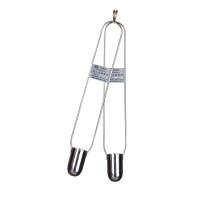
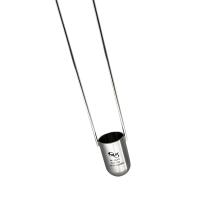
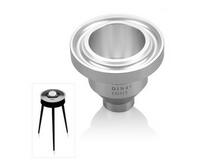
Currently, outflow viscometers are widely used to measure viscosity. Tu-4 viscometer (also known as Tu-4 cup) is the most widely used, it is made of metal or plastic, simple in structure and easy to use.
During the test, block the leak with your finger, fill the viscometer with the sample, then remove your finger and start the stopwatch at the same time. Turn off the stopwatch when the first interruption occurs in the sample flow line. The total time (seconds) for the sample to flow out of the viscometer is the viscosity (conditional viscosity) of the coating, expressed in seconds.
If you have not painted 4 cups, you can use a simple method to check empirically: open the paint bucket, stir it evenly, dip it into the paint with a stick or paint brush and lift it up, the paint on the stick or brush and the paint in the phase are within a short time Time will continue to connect. Generally, the connection distance is 3o ~ 5o cm, which is the viscosity suitable for brushing; less than 3o cm, indicating that the viscosity is too small, that is, the paint is too thin; greater than 5o meters, indicating that the viscosity is too large, that is, the paint is too adjusted. This kind of viscosity is subject to meet the construction requirements, and at the same time through many practical applications, without the viscosity measured by a viscometer, also known as the working viscosity.



- 1Paint transparency detection method
- 2Coating viscosity determination - viscosity cup Yiwen
- 3Principle, application and selection of ZAHN5 viscosity cup
- 4Corrugated fibreboard starch viscosity cup its principle, application and selection introduction
- 5Decryption paints original juice viscosity cup, principle, application and selection
- 6Wood lacquer viscosity cup, principle, application and selection introduction
- 7Analysis of the principle, use and application of Ford6 viscosity cup
- 8Principle, Structure, Usage and Application of QNB Viscosity cup
- 9Introduction to the use and application of No. 4 viscosity cup