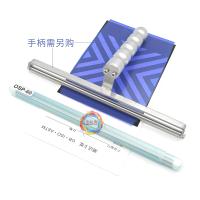
Testing the Adjustability of Resin-Free Color Paste on LENETA Black and White Card Paper
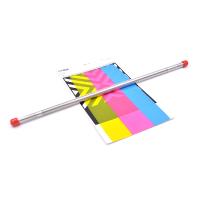
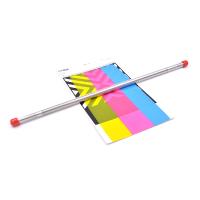
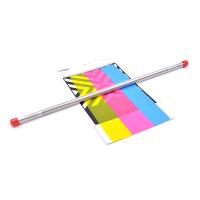
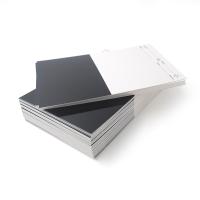
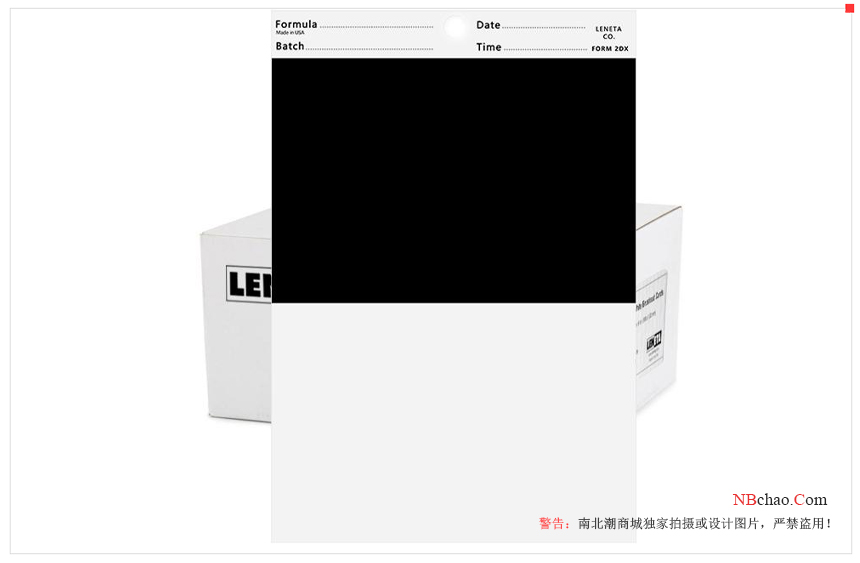
Dilute the above resin-free color paste with PMA at a ratio of 1:1, and then add it to each resin system at a ratio of 30% (Kronos2310 at a ratio of 50%). μm wire rod) on LENETA black and white cardboard, after drying, observe its surface leveling, granulation, transparency or hiding power, color development, etc., use a gloss meter to test its gloss, and use a Spectrophotometer to test its color data. The result is as follows:
(1) Almost all pigments have excellent transferability in most resin systems (except thermoplastic acrylic resin systems); 60° gloss is usually above 90, 20° gloss is usually above 80, transparency or hiding power Excellent performance, excellent color development, and no or little graining phenomenon. When the prepared resin-free color paste is mixed into various resin systems, except for 2K PU and alkyd amino resin systems, the rest of the coating gloss are slightly lower.
(2 ) In the thermoplastic acrylic resin system, especially the B805 resin system, the gloss of the coating film is slightly lower. But the 60° gloss is usually above 70. Individual pigments have granulation, but it can be avoided, eliminated or alleviated through the improvement of the paint mixing method.
(3) The effect of the transferred method on the coating film result: the method used in the test is to weigh the resin-free color paste and resin base material in a plastic bottle, and then put it into an oscillating disperser to vibrate for 10 minutes. Most of the colorants can be well blended into most of the resin systems, and some pigments (such as FW200) have graining phenomenon in some resin systems with poor wettability (such as B805). Dilute the resin-free color paste with a solvent such as PMA, and then add it to the resin system, which can effectively improve its transferability and avoid the occurrence of granulation. At the same time, a certain shearing force is given when transferring, which can also avoid the occurrence of granulation.
- 1Advantages of Bar Spreader in corrosion coating prepative
- 2Summary of determination methods for hiding power of coatings
- 3Pigment hiding power
- 4Determination of Coating hiding power
- 5GB/T 23981.2-2023: Paints and varnishes - Determination of hiding power - Part 2: Checkerboard method - Interpretation
- 6Concept, influencing factors and determination method of Coating hiding power
- 7Mayer Rods: The right-hand man for hiding power tests
- 8Coating performance testing: ensuring the efficiency and mass of the painting process
- 9Coating hiding power measurement