Application Case of Adhesion Tester Gravure Ink Adhesion Test on PET Film Surface
At present, in the domestic packaging printing market, film packaging printing occupies a certain share, and most film packaging printing mainly adopts gravure printing, and the main substrates are PET, BOPP, PP and other films. With the gradual enhancement of people's awareness of environmental protection and health, the use of water-based gravure inks in film printing has become an inevitable trend. However, water-based gravure inks cannot safely meet the printing requirements in terms of adhesion, drying speed, and scratch resistance. In addition, the surface of the film is a low-energy surface, and the adhesion of oil residue on the surface is not good. Therefore, the application of water-based gravure inks on films has not been promoted. Therefore, improving the adhesion of water-based gravure inks on the surface of low-energy substrates will greatly promote the wide-scale promotion of water-based gravure inks.
The adhesion of water-based ink refers to the ability of water-based ink and the surface of the substrate to bond and attract each other through physical and chemical interactions. Factors affecting ink adhesion include mechanical bonding, adsorption, chemical bonding, and diffusion between the ink and the surface of the substrate, which are mainly related to the pigment-base ratio, film-forming resin, and additives in the ink components. In this study, the experimental analysis of the adhesion of water-based gravure inks with different pigment-base ratios, different resins and different additives on PET films was carried out, in order to lay a foundation for the further promotion and application of water-based gravure inks.
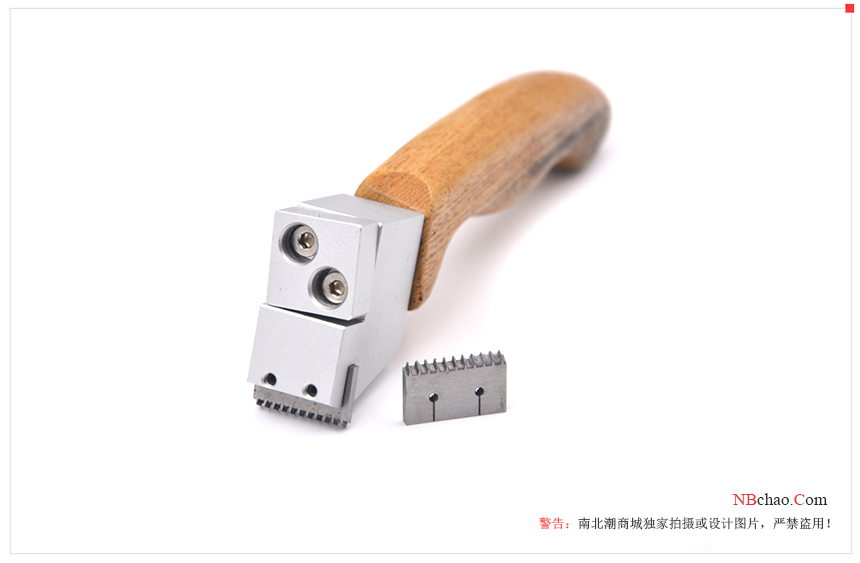
proofing
Use the IGT F1 printability Tester to make a sample on the surface of the PET film, where the anilox pressure is 300N, the printing pressure is 150N, and the printing speed is 0.8m/s.
Performance Testing
1) Viscosity test
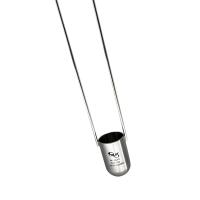
According to the ink viscosity requirements of gravure printing, use 3# Chain cup to test the ink viscosity at room temperature , and take the average value of 3 tests.
2) Surface tension test
Using a Surface Tensiometer, test the surface tension of ink samples containing 5 different mass fractions of leveling agents at room temperature.
3) Adhesion test
Use 20mm x 20mm 3M adhesive tape to cover the 48um mesh depth of the proofing strip, place a piece of 10mm x 10mm graph paper under the sample, and use a constant pulling force to peel off the tape from the plastic surface at 90° after the sample is adhered. Calculate The number of grids occupied by the remaining ink film is used as the evaluation standard of adhesion.


- 1Zahn Cup Method for Determination of Coating Viscosity
- 2How to ensure that the anti-corrosion coating of the product does not peel off?
- 3The composition of the circle adhesion instrument? How to judge the test results?
- 4Why handle the substrate? What does it do?
- 5Two Methods of Adhesion Testing
- 6What is the coating pull-off strength?
- 7What is the cause of poor coating adhesion?
- 8Coating Adhesion Test FAQ
- 9Concrete Coating Adhesion Tensile Strength Test (ASTM D4541)