Five steps to choosing the right Air Compressor
A reliable source of compressed air is key to high-quality screen printing with a pneumatic press.
Shopping for an Air Compressor for your shop can seem overwhelming with so many variables. To help you navigate the world of Air Compressor shopping, we've compiled five steps to choosing the right Air Compressor for your store.
1. Choose the right power
When choosing an Air Compressor, one of the things you absolutely need to do is choose one that will provide enough air power to power your screen printing shop. Most screen printers require at least a 7.5 horsepower Air Compressor. You also need to consider the cubic feet per minute (CFM) output required by the press. CFM requirements vary by machine and your press manufacturer will provide the CFM requirements for your press.
If you plan to power multiple presses from one Air Compressor, you will need to calculate the CFM required for all the machines. We recommend adding together all the CFM requirements for your printing presses and other equipment, and adding an additional 25 CFM to help ensure that all of your machines are getting enough power from the compressor when running simultaneously.
2. Select the type of compressor
When choosing an Air Compressor for your screen printing shop, you will consider buying a reciprocating Air Compressor or a rotary Air Compressor. In a reciprocating Air Compressor, the piston moves up and down to increase air pressure. In a rotary compressor, the work is done by two rotors; as the rotors turn, air is compressed between them.
Rotary Air Compressors can be more powerful than reciprocating Air Compressors, although there are plenty of reciprocating Air Compressors that can do the job of operating a screen printing press. Rotary compressors provide continuous air pressure, while reciprocating compressors have intermittent pressure, and reciprocating compressors tend to be noisier. Rotary compressors generally require less maintenance and last longer than reciprocating Air Compressors; however, reciprocating Air Compressors are usually a less expensive option.
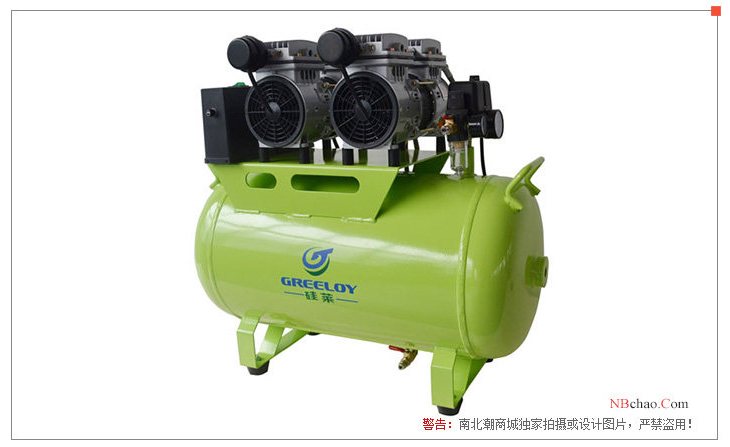
3. Consider your options
Besides power and type, there are a few other options to consider when choosing an Air Compressor. Because of their moving parts, Air Compressors require lubrication, usually in the form of oil. For reciprocating Air Compressors, splash or pressure lubrication options are available. In a rotary compressor, one of the rotors is constantly coated with oil to keep the machine running smoothly. There are oil-free options that use non-stick metal to avoid friction.
Another decision you need to make is about how to cool your Air Compressor. One of the by-products of compressed air is heat, which can damage an Air Compressor or screen printing machine. Most reciprocating compressors are water-cooled, but there are also air-cooled compressors, which are considered more environmentally friendly and easier on the store's utility bills. In rotary compressors, the oil that lubricates the compressor is also used as a coolant. Even rarer are oil-free rotary compressors that use water as the coolant.
4. Add Chiller
We mentioned that heat is a by-product of the Air Compressor. Another by-product is water, which can rust or damage your screen printing press if it gets into the system. To combat the water created during compression, many screen printing shops will equip their Air Compressors with aftercoolers or coolers. A chiller is added to the Air Compressor between the compressor itself and the air receiver. A chiller lowers the temperature of the compressed air, forcing the water out as condensed air, which then enters the storage tank and enters your press.
5. Select professional settings
We recommend hiring a professional contractor with experience working with Air Compressors when installing a new machine. When installing an Air Compressor, electrical outlets may need to be changed, and electrical or gas lines may need to be routed. Your contractor can also make sure you have adequate air lines from the compressor to the screen printing machine, and adequate water lines to the Air Compressor if the Air Compressor is a water cooled machine. Remember, you should buy an Air Compressor before you deliver your new screen printing machine. You will need to fully install the compressor and all necessary connections so your press installer can get your screen printing press fully up and running.
All in all, there are a lot of decisions to make when purchasing an Air Compressor to go with your screen printing press, but as long as you follow the press manufacturer's recommendations and choose to have the Air Compressor professionally installed, you should be able to have your Air Compressor and your screen printing presses The screen printing press was up and running smoothly in no time.



- 1Principle, structural characteristics and application of piston Air Compressor
- 2Basic Principle and Application of Permanent Magnet Air Compressor
- 3How does the Air Compressor work?
- 4What is the structure of the Air Compressor?
- 5Air Compressor troubleshooting
- 6How to maintain the Air Compressor?
- 7What kind of Air Compressor do you generally choose for air Spray Gun spraying?
- 8Air Compressor selection of Fusheng
- 9Air Compressor application industry one table


