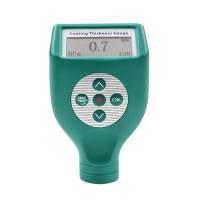
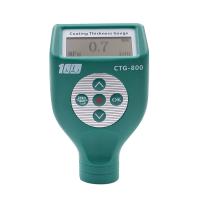
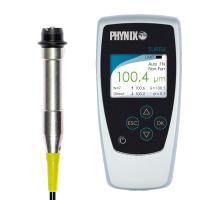
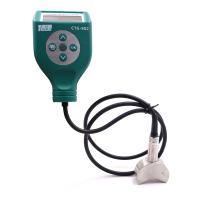
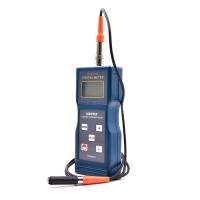
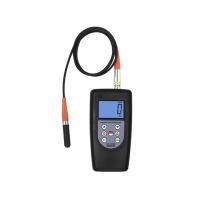
What coating thickness instrument is used to measure thickness on rough surfaces?
Shot blasting (including shot blasting, the same below) is a common method for surface cleaning before painting in the steel structure coating industry. Various depressions and protrusions will appear on the surface after shot blasting, and the thickness measured by the general coating thickness measurement method is not accurate. So how should it be measured correctly?
Surface roughness will affect the measurement accuracy of the Thickness Gauge. If a Thickness Gauge calibrated on a flat surface is used to measure the thickness of a coating on a very rough surface, the reading on the Thickness Gauge will differ from the actual thickness of the coating by 40 to 50 μm. There is a very simple method that can be used to eliminate the influence of surface roughness on the measurement accuracy: adjust the Thickness Gauge so that it can correctly measure the coating thickness on the flat surface, and the coating thickness displayed on the rough surface by the Thickness Gauge The layer thickness reading minus a value is the thickness value of the coating, and the value depends on the size of the surface roughness.
The effect of surface roughness on coating thickness measurement limits the use of magnetic and electromagnetic Thickness Gauges. If the thickness of the coating is equal to or less than the distance between the surface roughness peaks/troughs, the thickness of the coating cannot be obtained by direct measurement. Typically, Thickness Gauges cannot be used to obtain the correct coating thickness if the coating thickness on the shot-peened surface is less than 50 µm.
In the case of the above situation, a flat and smooth test plate can be placed on the surface of the workpiece first. After painting, the coating on the surface of the test plate is consistent with the coating on the surface of the workpiece. After the coating on the test plate is completely cured, measure its thickness with a Thickness Gauge, which is regarded as the thickness of the coating on the surface of the workpiece. One advantage of this measurement method is that it produces a permanent coating thickness record. The surface covered by the test panel shall be painted after the test panel is removed.
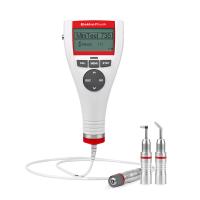
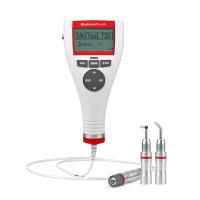
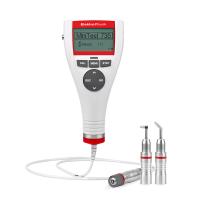
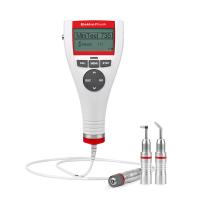
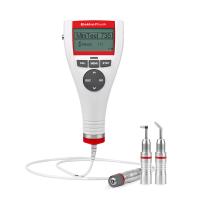
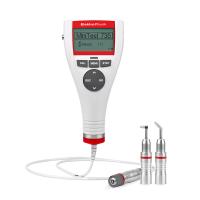
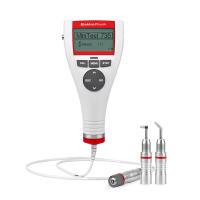
Of course, these are technical methods. With the advancement of technology, some coating Thickness Gauge manufacturers have gradually developed some coating thickness measurement dedicated to rough surfaces, such as EPK's MiniTest 735 N coating Thickness Gauge, which can Perform thickness measurement directly on rough surfaces, and obtain accurate thickness measurements quickly by taking the average value of multiple measurements.

If you have other techniques and methods for measuring roughness surface coating thickness, welcome to communicate.

- 1Nondestructive measurement Coating thickness
- 2Principle, application and selection of traffic coatings Coating Thickness Gauge
- 3Principle, Application and Selection of Eddy current Coating Thickness Gauge
- 4Principle, Application and Type Selection of Electronic Coating Thickness Gauge
- 5Explore the principle, application and selection of phosphating layer Coating Thickness Gauge
- 6Principle, Application and Type Selection Analysis of Chrome Coating Thickness Gauge
- 7Principle, Application and Selection of Coating Thickness Gauge for inner wall of small pipe
- 8Basic principle and application scenario of steel Coating Thickness Gauge
- 9Principle and Application Analysis of Coating Thickness Gauge